
Trier: Things to Do in Germany’s Oldest City
This article contains affiliate links to GetYourGuide. If you book through them we may earn a small commission, at no extra cost to you.
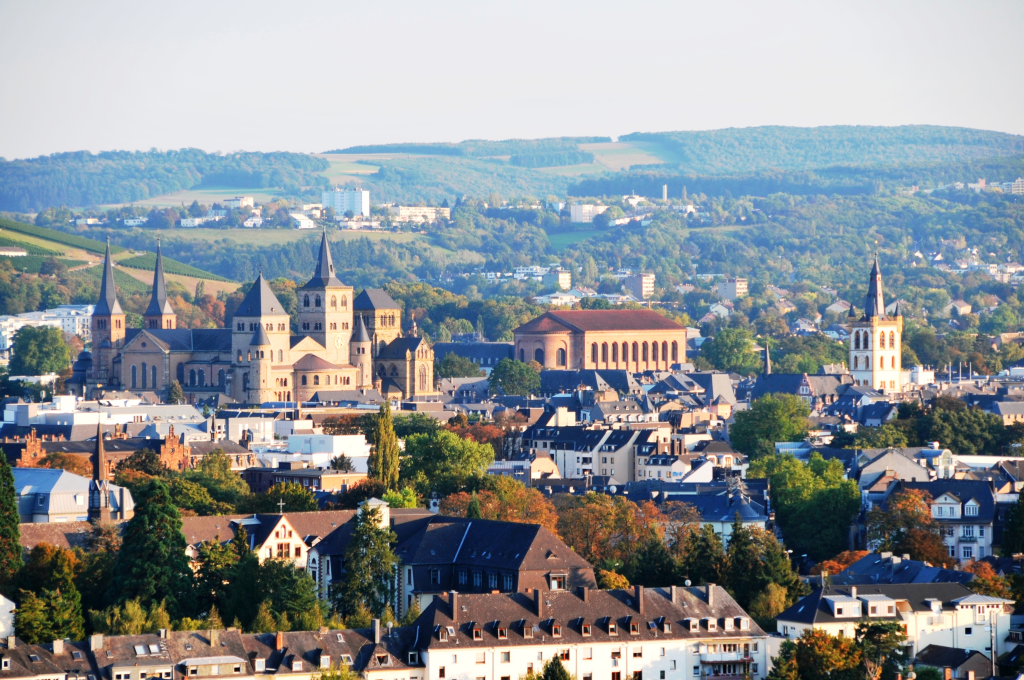
Trier bills itself as Germany’s oldest city, and it has more Roman buildings than anywhere else north of the Alps. You can walk through a 1,850-year-old city gate, head down into the emperor’s baths and stand in Constantine’s throne room – then finish the day with a glass of Riesling from the Moselle or the Saar. This guide covers the best things to do in Trier, how the Antikencard works, where to stay and how many days you need.
Three experiences we recommend
Roman Trier comes alive with a good guide – these are the tours visitors rate most highly.
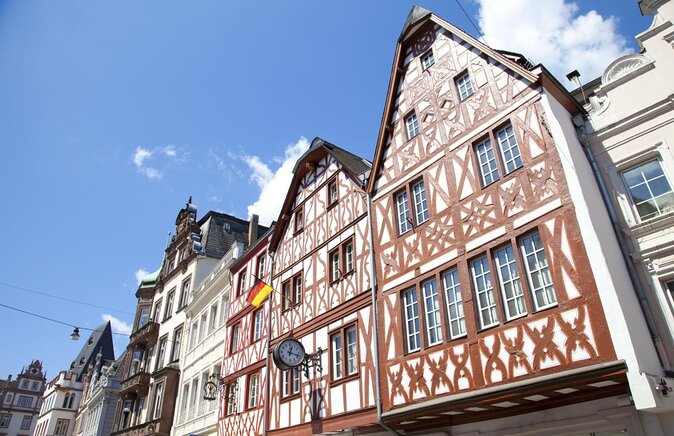 Old town walk with wine tasting
Romans, the Middle Ages and Moselle wine on one stroll – the easiest way to get both the history and the taste of Trier in two hours.
Check prices & dates →
The Secret of the Porta Nigra – adventure tour
A Roman centurion in full costume leads you through the city gate. Good fun for adults and ideal if you have children with you.
Check prices & dates →
Top rated
 Valerius the Gladiator – family tour
The gladiator himself tells you about life in the arena. The highest-rated tour in Trier – and the one the kids will still be talking about at dinner.
Check prices & dates →
Why Trier is called Germany’s oldest city
The Romans founded Augusta Treverorum at a crossing point on the Moselle just over 2,000 years ago. In the 4th century it was one of the imperial residences of the Western Roman Empire – Constantine the Great ruled from here for a time – and that era still shapes the city today. No other German city can show you a city gate, an imperial throne room, two bath complexes, an amphitheatre and a bridge from Roman times, all within walking distance of each other.
Plenty of German cities have Roman roots, but none has kept so much – and in Trier the buildings are still in use: the basilica is a church, the bridge carries traffic and the cathedral has welcomed worshippers for around 1,700 years.
The UNESCO World Heritage Site – nine monuments
The “Roman Monuments, Cathedral of St Peter and Church of Our Lady in Trier” have been on UNESCO’s World Heritage List since 1986, and in 2026 the city is marking the 40th anniversary. The site is made up of nine monuments:
- Porta Nigra
- Kaiserthermen (Imperial Baths)
- The amphitheatre
- Barbarathermen (Barbara Baths)
- Basilica of Constantine (Aula Palatina)
- Römerbrücke (Roman Bridge)
- Trier Cathedral (St Peter’s)
- Liebfrauenkirche (Church of Our Lady)
- Igel Column (Igeler Säule) – a Roman funerary monument in the village of Igel, about 9 km upstream
Things to do in Trier – from Porta Nigra to the amphitheatre
Almost everything lies along a stretch of less than two kilometres, from Porta Nigra in the north to the amphitheatre in the south-east. A logical walking route runs Porta Nigra → Hauptmarkt → cathedral → basilica and Palace Garden → Kaiserthermen → amphitheatre, with the Roman Bridge and the Barbara Baths as a detour towards the river.
Porta Nigra
The “Black Gate” is Trier’s symbol and the best-preserved Roman city gate north of the Alps. Work began around AD 170, using roughly 7,200 sandstone blocks laid without mortar and held together with iron clamps. In the 11th century the hermit Simeon had himself walled up in the tower; after his death the gate was converted into a church, until Napoleon had the church additions removed in 1803 and the Roman structure restored. That’s why you can now climb through the storeys and see both Roman vaults and traces of the church.
Admission is about €6 for adults (€3 for children aged 6–17). Open daily 9am–6pm April–September, 9am–5pm in March and October and 9am–4pm November–February, with last entry half an hour before closing.
Porta Nigra is being restored in stages over several years, so parts of the façade may be covered in scaffolding. The gate stays open at its usual times, but some passages inside may be closed. Restoration work is also under way at the Kaiserthermen and the amphitheatre, so individual areas may be off-limits.
Hauptmarkt and the Jewish quarter
A five-minute walk from Porta Nigra along Simeonstraße brings you out onto the Hauptmarkt, the main market square and one of the loveliest in Germany. The market cross was put up in the 10th century, when the archbishop granted the town the right to hold a market. Around the square stand half-timbered houses, Renaissance façades, the Gothic Steipe (a former civic banqueting house) and St Peter’s Fountain (Petrusbrunnen). A narrow gateway leads off the square into Judengasse, the old Jewish lane – a reminder that Trier had one of the earliest Jewish communities in the Rhineland.
Trier Cathedral and the Church of Our Lady
The cathedral describes itself as the oldest bishop’s church in Germany. Its Roman core has been added to in almost every style since – a Romanesque west front, Gothic details and a Baroque interior. It houses the Holy Robe (Heiliger Rock), by tradition the tunic worn by Christ, which has drawn pilgrims since it was first shown in 1512. Entry is free; the cathedral is open daily 6.30am–6pm April–October and 6.30am–5.30pm November–March, though not for sightseeing during services.
Right next door is the Liebfrauenkirche, begun around 1230 and, together with St Elizabeth’s Church in Marburg, considered the oldest Gothic church in Germany. Its plan is unusual – a cross set inside a circle. Stand in the centre and watch the pillars “disappear” behind one another. A passage links the two churches.
Basilica of Constantine and the Electoral Palace
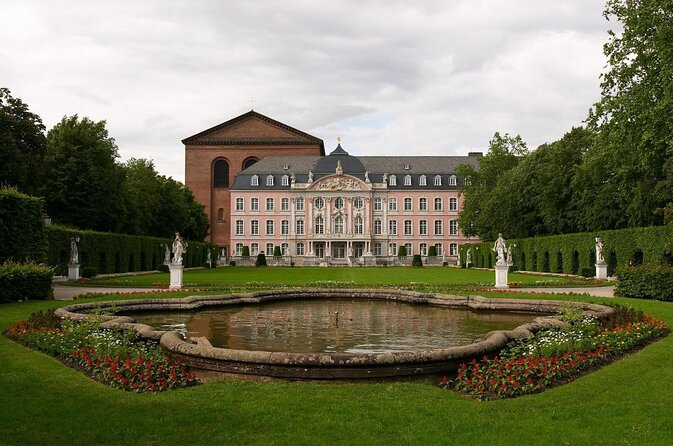
The Basilica of Constantine was built around AD 310 as the emperor’s throne room, the Aula Palatina. The hall is roughly 67 metres long and 33 metres high – without a single column – and it’s that sheer emptiness that stops you in your tracks when you walk in. Since the mid-19th century it has been a Protestant church. Entry is free (except during concerts). In summer it’s open Monday–Saturday 10am–6pm and Sunday 2pm–6pm; winter hours are shorter, with a lunchtime closure.
Next to it stands the pink Rococo Electoral Palace, once the residence of the archbishop-electors of Trier. The building now houses government offices, so what you’ll mainly enjoy is the façade and the formal French-style Palace Garden (Palastgarten).
Kaiserthermen, Barbarathermen and the Viehmarkt Baths
Work on the Kaiserthermen (Imperial Baths) began in the late 3rd century as the emperor’s gift to the townspeople, but they were never finished as baths – in the 4th century the complex was probably used as barracks. The highlight is the network of underground service tunnels, built for the staff who kept the furnaces going; above them rises the tall ruined wall that features on so many Trier postcards. Admission about €6.
Down by the river, the Barbarathermen were in the 2nd century the second-largest baths in the entire Roman Empire, covering around 42,000 square metres. You can’t walk into the ruins themselves, but a raised, step-free walkway with nine information points crosses the site, and it’s free. The Viehmarkt Baths (Thermen am Viehmarkt), right in the centre under a modern glass roof, are included in the Antikencard but are not part of the World Heritage Site.
The amphitheatre
The arena was built in the late 2nd century into the slope of the Petrisberg and held up to 18,000 spectators. The most exciting part is beneath the arena floor: the cellar with remains of the stage machinery – a lift that raised animals and scenery – and the cages where gladiators and wild beasts waited their turn. Allow around 15 minutes’ uphill walk from the Kaiserthermen. Admission about €6.
The Roman Bridge
The piers of the Römerbrücke were built between AD 142 and 150 and still carry traffic across the Moselle – it’s the oldest bridge in Germany. The arches are later, but stand on the riverbank below and look at the dark stone blocks of the piers: these are the same stones Roman legionaries marched over. The bridge is also a good starting point for an evening stroll along the river to Zurlauben, the old fishermen’s and boatmen’s quarter, with terraces right by the water.
Rheinisches Landesmuseum and the gold hoard
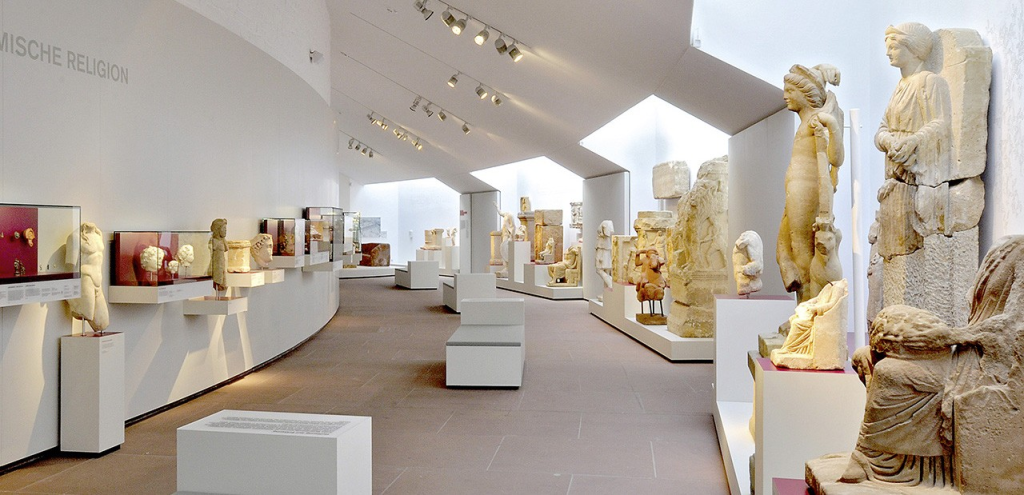
If you only have time for one museum in the Moselle Valley, make it this one. The Landesmuseum is one of Germany’s most important archaeological museums, with a route through more than 3,500 square metres of galleries running from the Stone Age to the last Prince-Elector. The highlights are the Roman mosaics – more than anywhere else north of the Alps – the funerary monuments carved with everyday scenes, such as the Neumagen wine ship, and the gold hoard: more than 18.5 kg of Roman gold coins, around 2,500 in all, found in 1993 during work on a multi-storey car park. It is the largest hoard of Roman gold coins ever discovered.
Open Tuesday–Sunday 10am–5pm, closed Mondays. Admission about €10 for adults, audio guide included. The museum is next to the Palace Garden, a few minutes from the Kaiserthermen.
Karl Marx House
Karl Marx was born in 1818 at Brückenstraße 10, a middle-class Baroque townhouse between the Hauptmarkt and the river. Today it’s a museum run by the Friedrich-Ebert-Stiftung, covering Marx’s life, his ideas and how they have been interpreted. Open daily 10am–6pm (no entry 1pm–1.30pm), admission about €7.
Antikencard – is the combined ticket worth it?
The Antikencard is the combined ticket for the Roman sites that charge admission – Porta Nigra, Kaiserthermen, the amphitheatre and the Viehmarkt Baths – plus the Rheinisches Landesmuseum. The basilica, the cathedral, the Liebfrauenkirche, the Roman Bridge and the Barbara Baths walkway are all free and need no ticket.
| Card | Price 2026 | What’s included |
|---|---|---|
| Antikencard Basic | €18 | Any two Roman sites + Landesmuseum |
| Antikencard Premium | €28 | All four Roman sites + Landesmuseum |
| Individual tickets | approx. €6 per site, €10 for the museum | – |
The maths is simple: two sites plus the museum cost €22 individually against €18 with Basic, and all four plus the museum €34 against €28 with Premium. The big bonus for families is that both cards cover one adult with up to four children under 18, and they’re valid for the rest of the calendar year – so there’s no need to cram everything into one day. The card is personal and is sold at the Roman sites, the museum and the tourist information centre by Porta Nigra.
Do the Landesmuseum first. Once you’ve seen the gold hoard and the model of the Roman city, it suddenly makes sense how the Kaiserthermen, the basilica and the palace quarter fitted together – and the ruins become far more rewarding to explore. Just avoid Mondays, when the museum is closed.
Wine in Trier – Moselle, Saar and Ruwer
Trier is the only large city on the German Moselle, and it sits where three wine valleys meet: the Moselle flows through the city, the Saar joins it just upstream and the Ruwer just downstream. That puts steep Riesling slopes within about ten kilometres in every direction – and there are vineyards inside the city itself, for example in the Olewig district below the amphitheatre. To understand how the wines of the three valleys differ, read our guide to Moselle Riesling.
Germany’s oldest wine cellar – Vereinigte Hospitien
On the Krahnenufer, close to the river, the Vereinigte Hospitien foundation runs a wine estate with vineyards on both the Moselle and the Saar. The wine helps fund the foundation’s care homes and social services. Its cellar, promoted as the oldest wine cellar in Germany, has Roman roots: the oldest parts go back to a Roman storehouse, and the building later became part of the St Irminen convent. On the guided “Kellerentdeckerführung” (cellar discovery tour) you walk through the vaults and taste wines from the estate’s top sites.
If you want the city and its wine in one go, the old town walk with wine tasting is the most booked experience in Trier. And if you’d like to get out on the water, there’s a boat trip from Trier up the Saar to Saarburg with a shore excursion – around six hours and a relaxed way to see the Saar vineyards. For more boat options along the valley, see our guide to Moselle river cruises.
Taking wine home to Great Britain? The duty-free allowance is 18 litres of still or sparkling wine per person aged 17 or over – that’s 24 standard bottles. Go over a category limit and you pay duty on the whole amount, not just the excess, so check the current rules on GOV.UK before you load the boot. Travellers heading to the US or elsewhere should check their own customs rules.
Trier Christmas market 2026
Trier’s Christmas market is one of the prettiest in western Germany, thanks largely to its setting: the stalls fill the Hauptmarkt and the Domfreihof in front of the cathedral’s west front. Around 90 wooden huts sell crafts, mulled wine (Glühwein) and Reibekuchen (potato fritters).
- Dates: 20 November–22 December 2026 (closed Sunday 22 November, Totensonntag – Germany’s Protestant day of remembrance for the dead)
- Opening hours: Mon–Thu 11am–8.30pm, Fri–Sat 11am–10pm, Sun 11am–8pm
- Admission: free
Weekend evenings get very crowded. Come on a weekday afternoon if you can, and book your hotel early – December is one of the city’s busiest months. To compare with the rest of the year, see our guide to the best time to visit the Moselle.
How to get to Trier
- By air via Luxembourg: the nearest major airport is Luxembourg (Findel), roughly 40–60 km away depending on the route. The easiest option is usually a bus to Luxembourg’s central station, then a regional train to Trier Hbf (just under an hour). There are also direct buses on weekdays – check current timetables before you travel.
- By air via Frankfurt: Frankfurt has far more international flights but is further away. Trains from Frankfurt to Trier involve at least one change, typically in Koblenz, where you pick up the Moselle line – check journey times on the Deutsche Bahn website.
- By train from Koblenz: the Regional-Express along the Moselle takes about 1 hr 20 mins to 1 hr 30 mins and runs regularly throughout the day. It stops in Cochem, among other places, so it’s easy to combine with Cochem and Koblenz.
- By river cruise: Trier features on many Moselle river cruise itineraries, either as a port of call or as an excursion – check your cruise programme for how much time you’ll have ashore.
- By car or motorhome: Trier has several multi-storey car parks in the centre; the Roman sites have no parking of their own. Our guide to motorhome travel on the Moselle covers motorhome stopovers (Stellplätze) and campsites.
From Trier Hauptbahnhof (main station) it’s about a ten-minute walk to Porta Nigra, and the whole old town is easy to explore on foot.
How many days in Trier?
One day is enough for Porta Nigra, the Hauptmarkt, the cathedral, the basilica, the Kaiserthermen and the amphitheatre at a relaxed pace – but you’ll barely have time for the Landesmuseum. Two days is better: day one for Roman Trier, day two for the museum, the wine cellar and an afternoon by the river or out in the wine valleys. With a car you can then carry on downstream to Bernkastel-Kues, about an hour away, or spend a day in Luxembourg.
If you’re travelling as a group and want a guide of your own who sets the pace for you, there’s a private guided walking tour for up to 15 people. For a day trip across the border, there’s a full-day Luxembourg tour taking in nature, history and castles (rated 4.5) – check the starting point when you book.
Where to stay in Trier
Stay in the old town or just outside it – you’ll be able to walk everywhere, including back to your hotel after dinner. Three well-located hotels:
Mercure Hotel Trier Porta Nigra
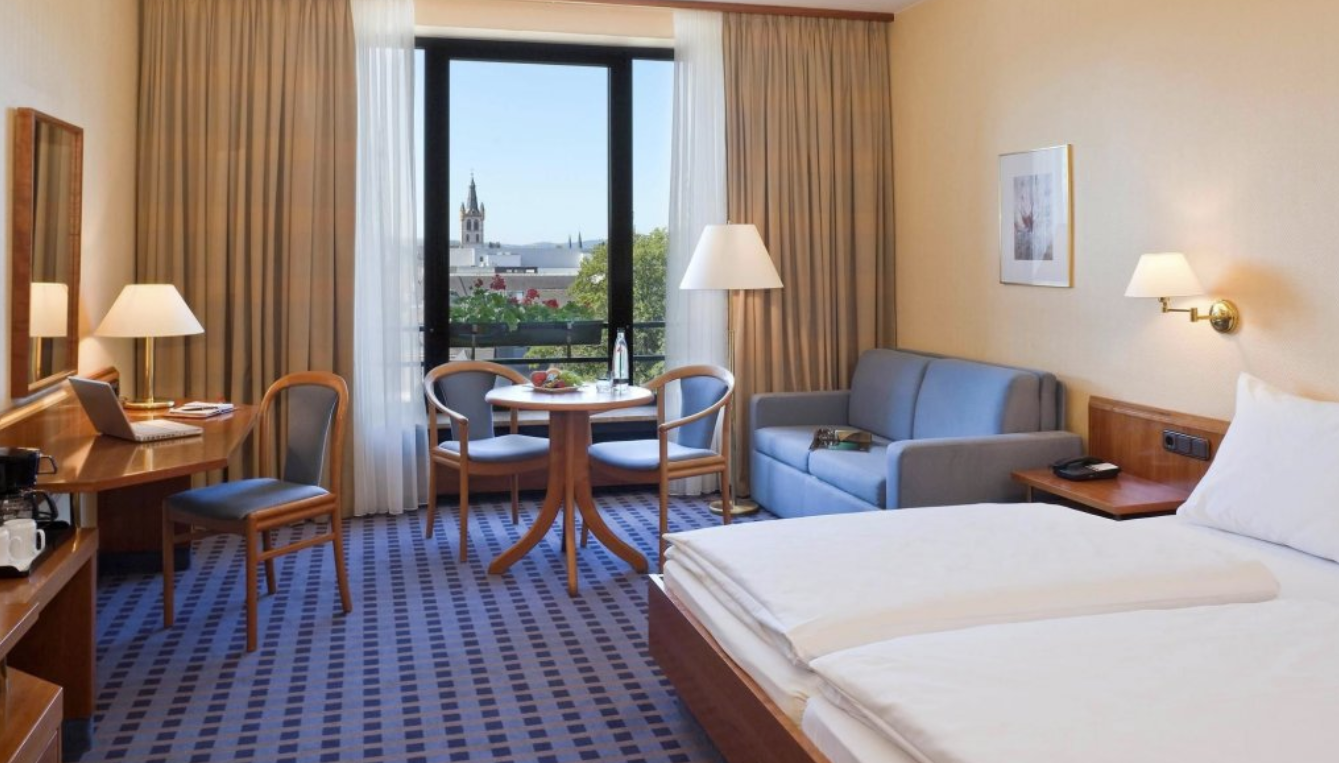
A four-star hotel with 106 rooms at Porta-Nigra-Platz 1, directly opposite the Roman gate and around 500 metres from the station. Book a Superior room if you want to wake up to a view of Porta Nigra. There’s a restaurant and bar, plus a paid garage on site – handy if you’re arriving by car.
ibis Styles Trier
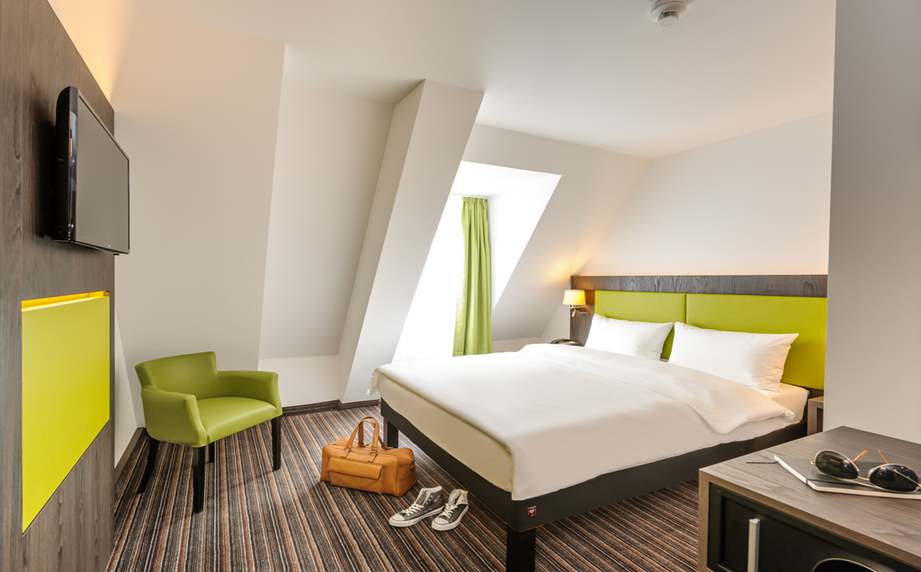
A good-value option in the former post office at Metzelstraße 12, in the old town and close to Porta Nigra. Some rooms have ceilings up to 4.5 metres high, and coffee, tea and water are free in the lobby until 10pm. Family rooms are available.
Romantik Hotel Zur Glocke
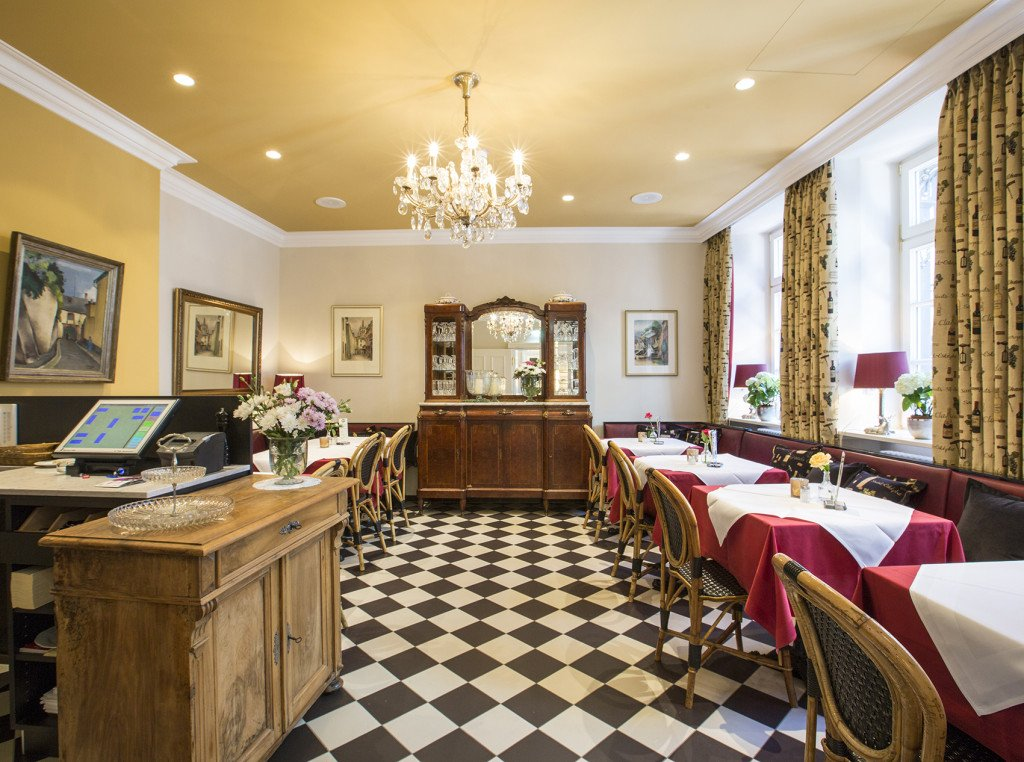
A small hotel with 16 rooms at Glockenstraße 12, in the pedestrian zone a stone’s throw from the cathedral. The inn on the ground floor has been serving food since 1803 – until 1906 under the name “Zur wilden Gans” (The Wild Goose) – and is a classic for regional dishes and Moselle wine. Its vaulted cellars rest on foundations from the cathedral’s 10th-century fortifications. Even if you’re staying elsewhere, it’s a good choice for dinner.
Prefer to sleep among the vines outside town? Read our guide to staying at a winery on the Moselle.
Trier FAQ
Is Trier really Germany’s oldest city?
Trier was founded by the Romans just over 2,000 years ago and is often called Germany’s oldest city. A few other cities, such as Worms and Cologne, make similar claims, but no German city has as many surviving Roman buildings – nine of its monuments have been UNESCO World Heritage since 1986.
How much is the Antikencard and is it worth it?
Basic costs €18 (two Roman sites + Landesmuseum) and Premium €28 (all four sites + the museum). If you plan to see the museum and at least two sites, you’ll save money, and both cards cover one adult with up to four children under 18 for the rest of the calendar year.
How many days do you need in Trier?
One day is enough for the main Roman sights. With two days you can also fit in the Rheinisches Landesmuseum, a wine tasting and a walk along the Moselle without rushing.
When is the Trier Christmas market in 2026?
From 20 November to 22 December 2026 on the Hauptmarkt and Domfreihof, closed on Sunday 22 November. It opens at 11am every day.
How do I get from Luxembourg Airport to Trier?
Take a bus to Luxembourg’s central station and then the regional train to Trier Hbf, just under an hour. There are also direct buses on weekdays – check the current timetables.
What is there to do in Trier with kids?
The amphitheatre cellars and the underground tunnels of the Kaiserthermen are usually a hit, as are the costumed guides on the gladiator tour and the Porta Nigra tour. Children under 6 get into the Roman sites free.
You’ll find more riverside towns in our overview of towns in the Moselle Valley, and our Moselle Valley map shows where Trier sits in relation to the rest of the valley.
- Zentrum der Antike (GDKE) – Porta Nigra – history, opening hours, prices, restoration
- Zentrum der Antike – Kaiserthermen – history, underground tunnels, prices
- Zentrum der Antike – Amphitheater – dating, capacity, arena cellar
- Zentrum der Antike – Barbarathermen – size, walkway, free access
- Zentrum der Antike – Antikencard – card types, prices, what’s included
- Rheinisches Landesmuseum Trier – 2026 programme – opening hours, admission, gold hoard, 40 years of World Heritage, the nine listed monuments
- Trier Tourismus – Basilica of Constantine – dating, use, opening hours
- Trier Tourismus – Cathedral and trierer-dom.de – Holy Robe, opening hours, oldest bishop’s church
- Trier Tourismus – Christmas market and trierer-weihnachtsmarkt.de – 2026 dates and opening hours
- Friedrich-Ebert-Stiftung – Karl Marx House Museum – opening hours and prices
- Weingut Vereinigte Hospitien – “oldest wine cellar”, cellar tours, Moselle and Saar
- Accor – Mercure Trier Porta Nigra, ibis Styles Trier and Romantik Hotel Zur Glocke – addresses and details
- Deutsche Bahn – Koblenz–Trier journey times
- GOV.UK – Bringing goods into Great Britain – duty-free alcohol allowances
- Wikipedia (supporting source) – Liebfrauenkirche, Roman Bridge, Basilica dimensions, gold hoard
Last updated: October 2026. Facts checked against the sources above; prices and opening hours may change.