
Beilstein: a guide to the Sleeping Beauty of the Moselle
This article contains affiliate links to GetYourGuide. If you book through them we may earn a small commission, at no extra cost to you.
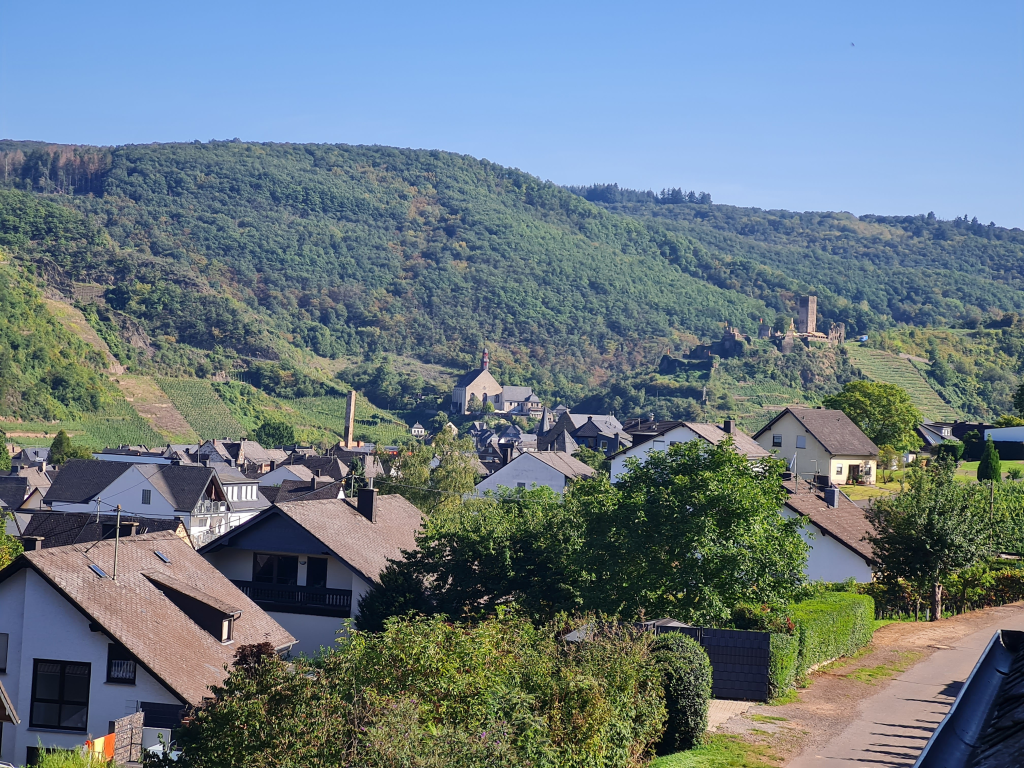
Beilstein is the village Germans call Dornröschen der Mosel – the Sleeping Beauty of the Moselle. Just over 130 residents, half-timbered houses packed tightly together, a stepped lane climbing to a baroque church and, right at the top, a ruined castle with a wine terrace. This guide covers all the things to do in Beilstein, the boat through the lock from Cochem, the bus, the little ferry, the village’s surprising BBC connection and how to dodge the crowds.
Three experiences we recommend
The river is the loveliest way to arrive in Beilstein – and the wine villages around the Moselle bend take care of the rest of the day.
River cruise with lock: Cochem–Beilstein return
The classic way to reach Beilstein: through the lock at Fankel, past the wine villages of Ernst and Bruttig and back to Cochem.
Check prices & dates →
Top rated
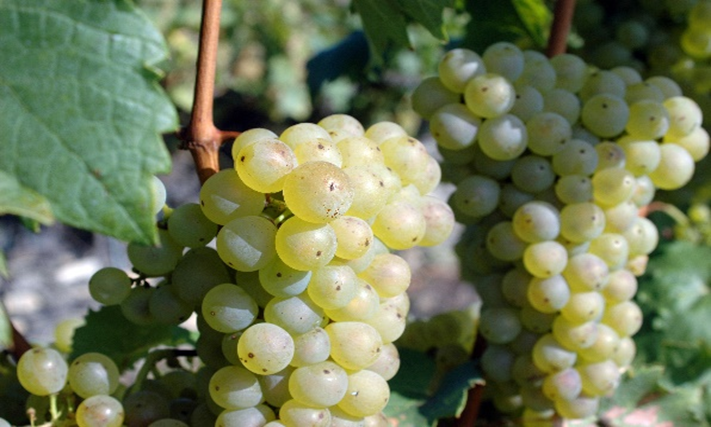 Pommern: vineyard walk with wine tasting
A walk through the vineyards above the Moselle with a tasting and sweeping views – one of the highest-rated wine experiences in the area.
Check prices & dates →
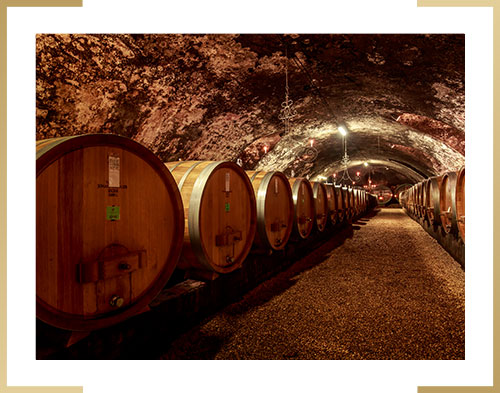 Ediger-Eller: wine tasting and vineyard tour
A guided walk through the steep slopes and a tasting with the winemaker, in the wine village a short way upstream of Beilstein.
Check prices & dates →
Beilstein: why it’s called the Sleeping Beauty of the Moselle
Beilstein sits on the right bank of the Moselle, in the great river loop known as the Moselkrampe, upstream of Cochem. It’s a tiny place – just over 130 residents and an old centre you can walk through in a quarter of an hour – but almost everything you see is original. The entire historic core is a protected heritage ensemble, and that is exactly what earned the village its nickname: Beilstein looks as if it nodded off some time in the 18th century and never quite woke up.
Its history is longer than the village is big. The castle is recorded as a fief of the lords of Braunshorn as early as 1268, and in 1309 King Henry VII granted the lord of the castle the right to found a fortified settlement at its foot – and to allow ten Jewish families to live there. From 1637 Beilstein belonged to the Metternich family, until the French abolished feudal rule in 1794. Its small scale is what saved it: no industry was ever built here, no wide streets and no big harbour.
Things to do in Beilstein
Burg Metternich – castle ruins with a terrace
High above the village stand the ruins of Burg Metternich. Its core is older than the first written records, and the five-sided keep, about 25 metres tall, is thought to date from the 12th century. For a long time the castle was shared by several branches of the Winneburg family – a so-called Ganerbenburg, or jointly owned castle – before it passed to the Metternichs. They did not enjoy it for long: on 2 February 1689, during the Nine Years’ War (the War of the Palatine Succession), French troops destroyed it. The Reichsburg in Cochem was burnt the same year.
Today the ruins belong to the Herzer family, who also run Hotel Burgfrieden below. You can wander around the ruins, climb the tower and settle on the partly covered panoramic terrace Fürst Metternich, which serves coffee, cake, ice cream, light meals and Moselle wine. The view over the river, Ellenz-Poltersdorf on the opposite bank and the vineyards is the reason to make the climb.
- 2026 season: 2 April–31 October, Tuesday–Sunday 10am–6pm (last entry 5.30pm). Closed on Mondays.
- Admission: adults approx. €3, seniors and students approx. €2.50, children aged 7–16 approx. €1.
- Terrace kitchen: open approx. 11.30am–5pm.
Monday is the closing day at Burg Metternich. If you’re planning a day trip to Beilstein and want to go up to the ruins and sit on the terrace, pick another day of the week. The path up is steep, with steps and cobbles – not suitable for pushchairs or wheelchairs.
Karmeliterkirche St. Josef and the monastery steps
The large baroque church on the hillside above the village – the one in the photo above – is the Karmeliterkirche St. Josef. The Discalced Carmelites settled in Beilstein in the 1630s, and work on the monastery church began in 1691. It is a pilgrimage church, known for its Schwarze Madonna, a Black Madonna statue that, according to tradition, is of Spanish origin and came to the village when Spanish troops took Beilstein in 1620.
The way up is the Klostertreppe, the steep stepped lane that is Beilstein’s most photographed spot. Wine taverns and little houses with window boxes line the steps, and from the church square there’s a lovely view down over the slate roofs to the river. The church also hosts concerts.
Marktplatz and the Zehnthaus
The Marktplatz, the little square in the middle of the village, is Beilstein’s living room. Here stands the old tithe house, the Zehnthaus, where farmers once handed over a tenth of their harvest to the lord. The building bears the date 1574 and today houses the Zehnthauskeller wine cellar, where you can taste wine under the vaulted ceiling. Hotels, wine taverns and cafés with outdoor seating ring the square.
The synagogue and the Jewish cemetery
For several centuries Beilstein had a Jewish community, and in the 19th century roughly one in four residents was Jewish. The old synagogue in Weingasse was sold in 1925 and long used as a barn; it has been restored since 1990 and now serves as a gallery and exhibition space. Look out for the stone imperial double-headed eagle with a Star of David above the entrance.
The Jewish cemetery lies high above the Moselle on the southern ridge of the castle hill, a little above Burg Metternich. It was laid out in the 17th century, and Jews from Bruttig, Ediger and other neighbouring villages were also buried here. Around 110 gravestones dating from about 1818 to 1938 survive; the cemetery was desecrated during the Nazi era and the stones were set up again after 1945, not always in their original places. It is a quiet spot and a protected monument – please behave accordingly.
Beilstein on screen – from Heinz Rühmann to the BBC’s Vanity Fair
With its untouched backdrop, Beilstein has been drawing film crews for almost a hundred years. The comedy Wenn wir alle Engel wären (1936), starring Heinz Rühmann, was largely shot here, and the village also appears in Das Verlegenheitskind (1938) and in Der Schinderhannes (1958), with Curd Jürgens as the notorious robber chief.
British viewers may have seen Beilstein without knowing it. In May 1998 the BBC filmed scenes here for its six-part adaptation of Thackeray’s Vanity Fair, with Natasha Little as Becky Sharp, which went out on BBC One that November and December. The village’s own history page describes it as the most recent drama to have been filmed in Beilstein.
Wine and wine taverns in Beilstein
Beilstein is a wine village, and you notice it. The slopes around it are planted with Riesling, and vineyard sites such as the Beilsteiner Silberberg appear on the wine lists in the village cellars. There’s a wine tavern in practically every lane: the Zehnthauskeller on the square, the Winzerschenke by the monastery steps and the terrace at Burg Metternich are three classics. To find out more about the grape that rules here, read our guide to Moselle Riesling.
If you’d like to go further than a glass at a pavement table, book a wine tasting with a winemaker in one of the neighbouring villages. In Ediger-Eller, a short way upstream, and in Pommern, downstream of Cochem, there are guided vineyard tours with tastings that earn very high ratings.
How to get to Beilstein
Beilstein has no railway station. The nearest hub is Cochem, served every hour by regional trains between Koblenz and Trier. If you’re flying in, Frankfurt and Luxembourg are the usual gateways, with onward train connections via Koblenz or Trier. From Cochem you have three good options: boat, bus or car.
By boat from Cochem through the lock at Fankel
The classic way to arrive in Beilstein is by boat. The operator Personenschifffahrt Kolb runs the Cochem–Beilstein route with stops at Ernst and Bruttig. On the way upstream the boat passes through the lock at Fankel, where it is lifted to the next level of the river – quite a spectacle for children and adults alike. The trip takes about an hour upstream and just under an hour back. Food and drinks are served on board.
- 2026 season: Saturdays and Sundays in April, daily over Easter (3–6 April) and daily from 1 May to 31 October.
- Departures from Cochem in 2026: 10.30am, 12 noon, 1.30pm, 3pm and 4.15pm, arriving in Beilstein about an hour later.
- Return from Beilstein in 2026: 12 noon, 1.30pm, 3pm and 5.30pm.
- Tickets: online or at the operator’s sales points on the Moselpromenade in Cochem. Dogs and bikes are allowed on board.
You can do the round trip in one go or get off in Beilstein and catch a later boat back. Timings can be affected by the weather and waiting times at the lock, so always check the current timetable before you set off. For longer trips on the water, see our guide to a Moselle river cruise.
Do what plenty of regulars do: take the boat there and the bus back (or the other way round). That way you get the lock and the river in one direction and don’t have to plan around the last boats of the afternoon.
Bus 712 from Cochem
Regional bus 712 (Cond–Cochem–Bruttig–Senheim) runs along the river and stops at Beilstein (Mosel) Fähre, down by the ferry landing. From Cochem railway station the journey takes about 20–25 minutes. In season (April to early November) the bus runs roughly every half hour during the day, less often the rest of the year – check the current timetable with the regional transport association VRM. The bus is also the easy way home once the last boat has left.
By car or motorhome
By car, follow the Moselle road along the right bank from Cochem. The old village is small and not built for cars, so expect to park on the outskirts or along the river and walk the last stretch. Parking spaces are few and fill up quickly around the middle of the day in high season and on wine festival weekends; come early or late. If you’re travelling by motorhome, there are aires in neighbouring villages, including Briedern, Bruttig-Fankel and Ediger-Eller – see our guide to the Moselle by motorhome.
The ferry to Ellenz-Poltersdorf
A small foot ferry, also run by Kolb, crosses the Moselle between Beilstein and Ellenz-Poltersdorf on the opposite bank. It usually runs daily from Easter to the end of October, during the day with a lunch break (roughly 9am–12 noon and 1pm–6pm). From the Ellenz side you get the best view of Beilstein, with the church and castle ruins above the village – the same view as in the photo at the top of this article.
Best time to visit Beilstein
Beilstein is a classic day-trip destination. The first boats from Cochem arrive before lunch and the buses run frequently – so between late morning and late afternoon the lanes and the monastery steps can feel crowded, especially at weekends between June and October. Before 10am and after 5pm it’s a completely different place.
- Spring (April–May): fewer visitors, greening vineyards and the boats are back in service.
- Summer: the longest opening hours and the most visitors. Come early or stay the night.
- Autumn (September–October): harvest time, golden vineyards and wine festivals in the area – the most beautiful season, but also the busiest.
- Winter: the castle ruins and the boats are closed and many wine taverns and hotels take a winter break. The village is pretty but very quiet.
For more on the seasons along the river, read our guide to the best time to visit the Moselle.
Where to stay in Beilstein
Staying the night is the best way to experience Beilstein – in the evening, once the day-trippers have gone home, the lanes fall quiet. There isn’t much choice, so book early for summer and harvest time. Three established options:
- Hotel Burgfrieden (Im Mühlental 17) – family-run hotel with a restaurant and free parking, right below Burg Metternich. Hotel guests get free entry to the castle ruins. Double rooms from approx. €130 a night according to the hotel’s own website.
- Hotel Lipmann (Am Klosterberg and Altes Zollhaus) – two buildings on Moselstraße with a roof terrace and a restaurant in the old customs house; offers packages with dinner and a wine tasting in the Zehnthauskeller.
- Hotel Gute Quelle (Marktplatz 34) – small hotel with a restaurant right on the square, plus the “Auf der Lay” guesthouse in a renovated winemaker’s house. Hotel guests receive a guest card for free bus and train travel in the region.
If you’d rather stay with a winemaker, there are plenty of wine-estate guesthouses in Ellenz-Poltersdorf and the neighbouring villages – find out more in our guide to staying at a winery on the Moselle. Cochem, with a wider choice of accommodation and a railway station, is only a short bus ride away.
Combining Beilstein with Cochem and Burg Eltz
Beilstein rarely fills a whole day, but it pairs perfectly with its neighbours. A popular plan is to spend the morning at the Reichsburg in Cochem, take the boat through the lock to Beilstein around lunchtime and catch the bus back in the afternoon. With an extra day you can fit in Burg Eltz, the fairy-tale castle in the forest above Moselkern, which you can reach from Cochem by train and bus or by car.
Keen on walking? The Moselsteig, the long-distance trail along the river, passes through Beilstein, and the stage from Ediger-Eller ends here – a lovely day’s walk through the vineyards. Upstream lies Zell, and our Moselle Valley map shows how the villages fit together.
Beilstein FAQ
How do you get from Cochem to Beilstein?
By boat (approx. 1 hour via the lock at Fankel, April–October), by bus 712 (approx. 20–25 minutes, all year round) or by car along the Moselle road. Many visitors go by boat one way and bus the other.
How much time do you need in Beilstein?
Two to four hours is enough for the monastery steps, the church, the square, Burg Metternich and a glass of wine. To experience the village without the day-trippers, stay overnight.
Do you have to pay to visit Burg Metternich?
Yes, but not much: approx. €3 for adults and approx. €1 for children aged 7–16 (2026). The ruins are open from 2 April to 31 October, Tuesday–Sunday 10am–6pm, and closed on Mondays.
Was Vanity Fair filmed in Beilstein?
Yes. The BBC filmed scenes for its 1998 six-part adaptation of Vanity Fair, starring Natasha Little as Becky Sharp, in Beilstein in May 1998. Earlier productions shot here include Wenn wir alle Engel wären (1936) with Heinz Rühmann, Das Verlegenheitskind (1938) and Der Schinderhannes (1958) with Curd Jürgens.
Is Beilstein worth visiting in winter?
The village is still pretty, but the castle ruins and the boats are closed and many wine taverns and hotels take a winter break. The bus from Cochem runs all year round. For the full Beilstein experience, go between April and October.
- Beilstein an der Mosel – “Dornröschen der Mosel”, Zehnthauskeller on the Marktplatz, Winzerschenke by the Klostertreppe, bus route and accommodation
- Beilstein – Geschichte – Braunshorn 1268, Metternich 1637–1794, the Carmelites, the Jewish community, the 1936 film and the BBC filming in May 1998
- Beilstein – Informationen von A bis Z – Beilstein–Ellenz-Poltersdorf ferry (Kolb), motorhome aires
- Burg Metternich / Hotel Burgfrieden – 2026 opening hours and admission, history, 25 m keep, destruction on 2 February 1689
- Personenschifffahrt Kolb – Cochem–Beilstein–Cochem – season, 2026 departures, Fankel lock, ticket sales
- VRM – bus 712 timetable (2026) – journey time and frequency Cochem–Beilstein
- KuLaDig (LVR) – Jüdischer Friedhof Beilstein – location, age, number of gravestones
- KuLaDig (LVR) – Synagoge Beilstein – 1309 rights, the synagogue in Weingasse, restoration
- Ferienland Cochem – Beilstein – historic centre protected as a whole
- Zehnthauskeller Beilstein – the Metternich tithe house (1574), wine tastings, Beilsteiner Silberberg vineyard
- Hotel Lipmann, Hotel Gute Quelle – accommodation open for the 2026 season
- Wikipedia: Beilstein (Mosel) – population (132, 2025), Black Madonna, 1938 and 1958 films (supporting source)
- Wikipedia: Vanity Fair (1998 TV serial) – six episodes, BBC One, Natasha Little as Becky Sharp, broadcast November–December 1998 (supporting source)
Last updated: October 2026. Facts checked against the sources above; prices and opening hours may change.