
The Most Beautiful Towns and Villages in the Moselle Valley
This article contains affiliate links to GetYourGuide. If you book through them we may earn a small commission, at no extra cost to you.
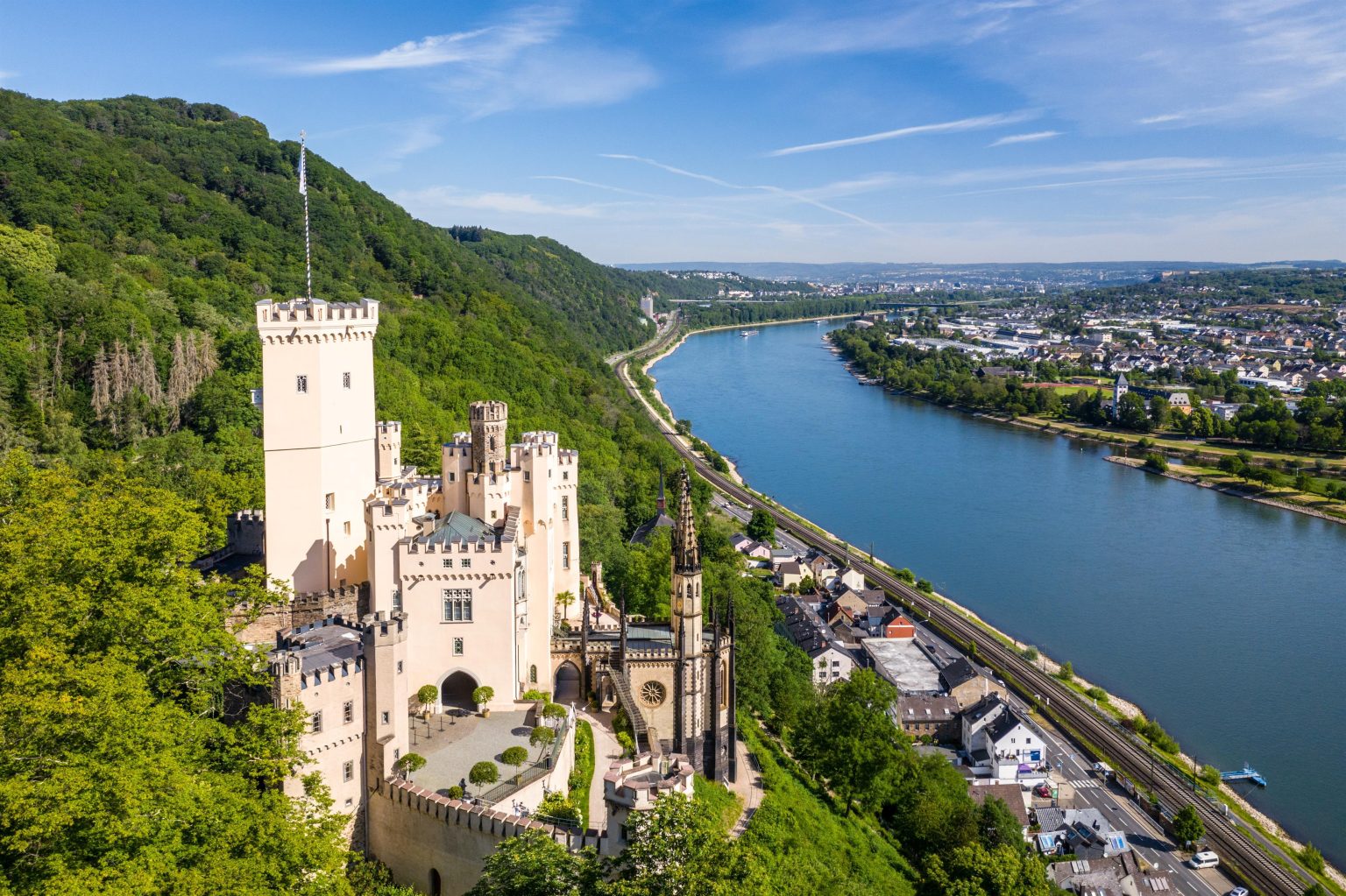
The towns of the Moselle Valley are strung along the river like beads on a necklace – from Koblenz, where the Moselle flows into the Rhine, past the wine villages around Cochem and Bernkastel-Kues, to Roman Trier and on to Metz in France. Here are the prettiest towns and villages, region by region, with what to see, who each one suits and which you can reach by train.
Three experiences we recommend
Three ways to see several of the valley’s best towns – from the water, on foot and among the vines.
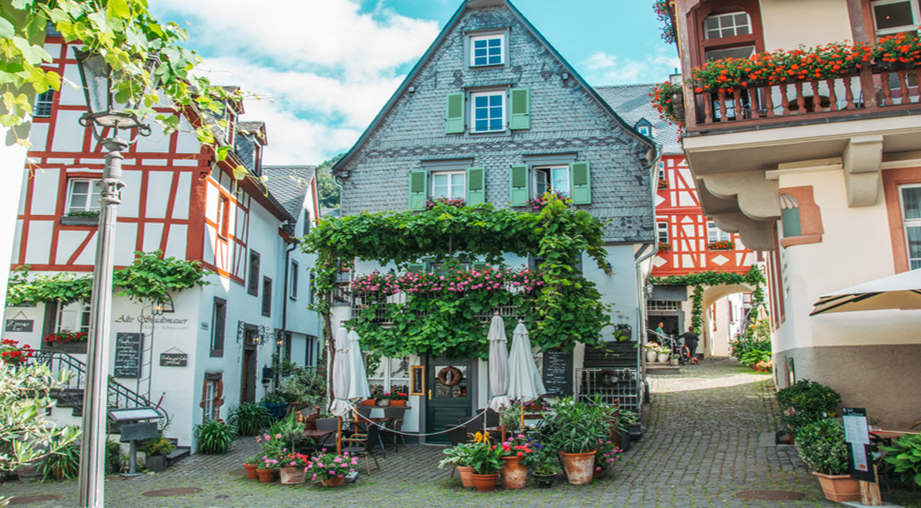 Cruise with lock: Cochem–Beilstein return
Two of the valley’s prettiest villages in one trip – passing through a lock on the way, with time to walk up to the castle ruin in Beilstein.
Check prices & dates →
Most booked
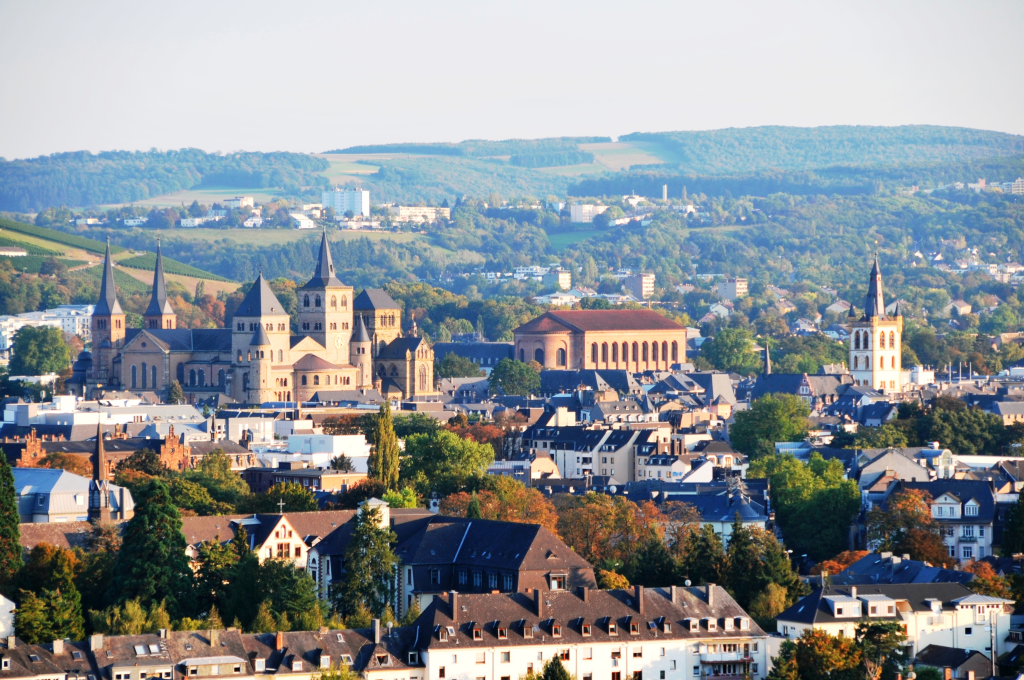 Trier: guided walk with wine tasting
The Roman city with a guide – and a glass in hand. An easy way to get both the history and the wine in two hours.
Check prices & dates →
Often sells out
 Bernkastel-Kues: covered-wagon wine tasting
A rolling wine tasting with a picnic basket through the vineyards of Lieser, Bernkastel-Kues’s next-door neighbour.
Check prices & dates →
Six Moselle Valley towns with their own guides
We’ve written in-depth guides to these six towns – sights, where to stay and practical tips. Click through, or start with the overview below of every town and village along the river.
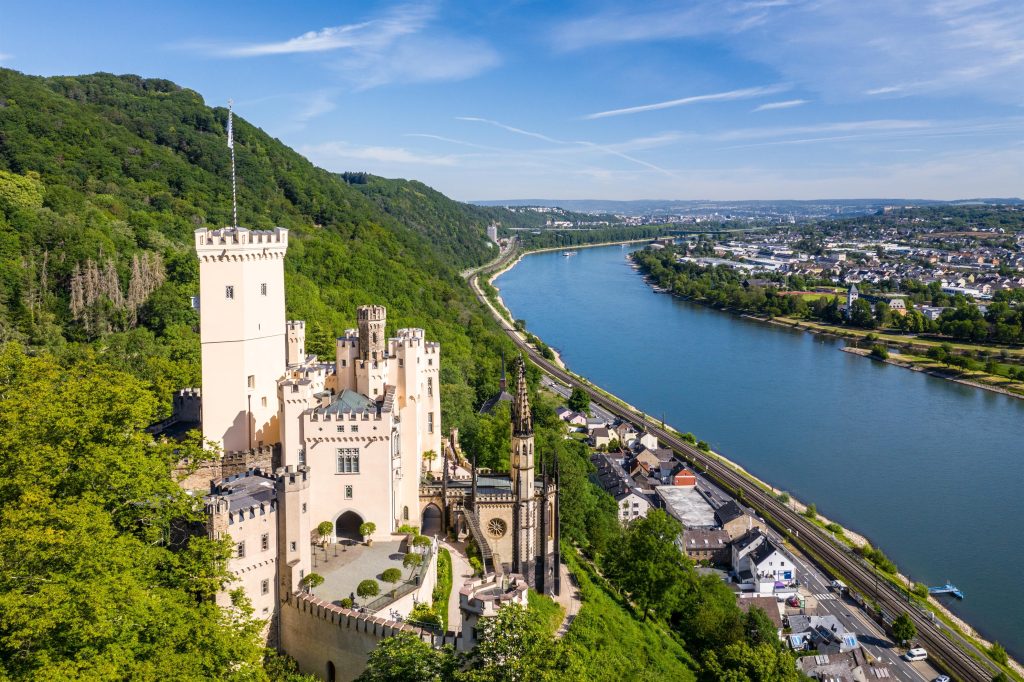 KoblenzDeutsches Eck, the cable car and Ehrenbreitstein Fortress.
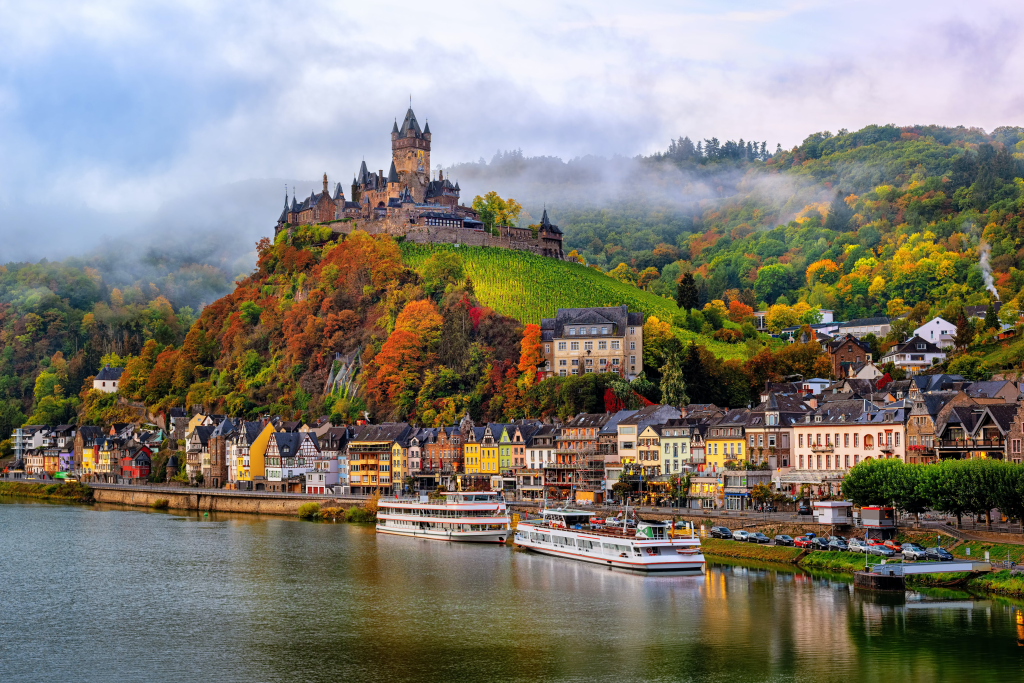 CochemThe Reichsburg, boat trips and the wine villages around it.
 ZellThe Black Cat, the Runder Turm and quiet river bends.Bernkastel-KuesThe Middle Moselle’s prettiest square and classic vineyards.TrierPorta Nigra and Roman World Heritage.
 MetzCathedral light and modern art on the French side.
The Moselle loops so dramatically that the distance along the water is far greater than as the crow flies, so it pays to think in regions rather than in a straight line. To see how the towns relate to one another, open our Moselle Valley map alongside this page. Below, we travel upstream, from Koblenz in the north to Metz in the south.
Terrace Moselle: Koblenz to Treis-Karden
Between Koblenz and Cochem the valley narrows and the vineyards climb in steep terraces held up by dry-stone walls – hence the German name, Terrassenmosel. The railway follows the river along this stretch, which makes it easy to explore without a car.
Koblenz – where the Moselle meets the Rhine
At Deutsches Eck, with its 37-metre monument and equestrian statue of Emperor Wilhelm I, the Moselle flows into the Rhine. The headland is part of the Upper Middle Rhine Valley World Heritage Site. From here a cable car crosses the Rhine up to Ehrenbreitstein Fortress, while the old town offers squares, churches and wine taverns. Koblenz suits you if you want a proper city, culture and excellent rail links – and if you’d like to combine the Moselle with the Rhine. Read our guide to Koblenz.
Winningen – terraces and Germany’s oldest wine festival
A short train ride from Koblenz, Winningen is surrounded by steep vineyard sites such as Uhlen and Röttgen, with kilometres of protected dry-stone walls. Its Moselfest, which the village bills as Germany’s oldest winegrowers’ festival, runs for ten days around the turn of August and September (2027: 27 August–5 September). A good pick for wine lovers who want to stay close to the city but in the countryside.
Kobern-Gondorf – two castles and a moated castle
Above Kobern stand two 12th-century castles and the Matthiaskapelle, regarded as the most important late-Romanesque chapel in Rhineland-Palatinate. In Gondorf, Schloss von der Leyen is the Moselle’s only moated castle – the B 416 road literally runs through the grounds. A small village on the railway for anyone who likes history and short walks.
Alken and Burg Thurant
Burg Thurant towers over the little wine village of Alken. It’s a double castle, divided between the Archbishops of Trier and Cologne in the 13th century – which is why it has two keeps. The castle is open to visitors from March to mid-November, and you can climb the Kölner Turm. Bring cash; cards aren’t accepted. A perfect half-day for families with castle-mad children.
Moselkern – gateway to Burg Eltz
Moselkern is a quiet wine village, but most people come here to walk to Burg Eltz, one of Germany’s most photographed castles. From the Ringelsteiner Mühle in Moselkern it’s 2.5 km through the wooded Elzbach valley, roughly 35–45 minutes. The castle can only be seen on a guided tour and is open from late March to early November (2026: 29 March–1 November).
Moselkern has a stop on the Koblenz–Trier line. Take the train, walk to Burg Eltz and back, and you’ll avoid the castle car park, which is often full.
Treis-Karden – the “Moselle Cathedral”
Karden is dominated by the collegiate church of St Castor, often called the Moselle Cathedral (Moseldom), with a Romanesque choir begun in the 12th century. It’s a small, workaday place, but a good, cheaper alternative to Cochem, with trains that stop here and a short walk out into the vineyards.
Around Cochem: the prettiest villages on the Moselle bends
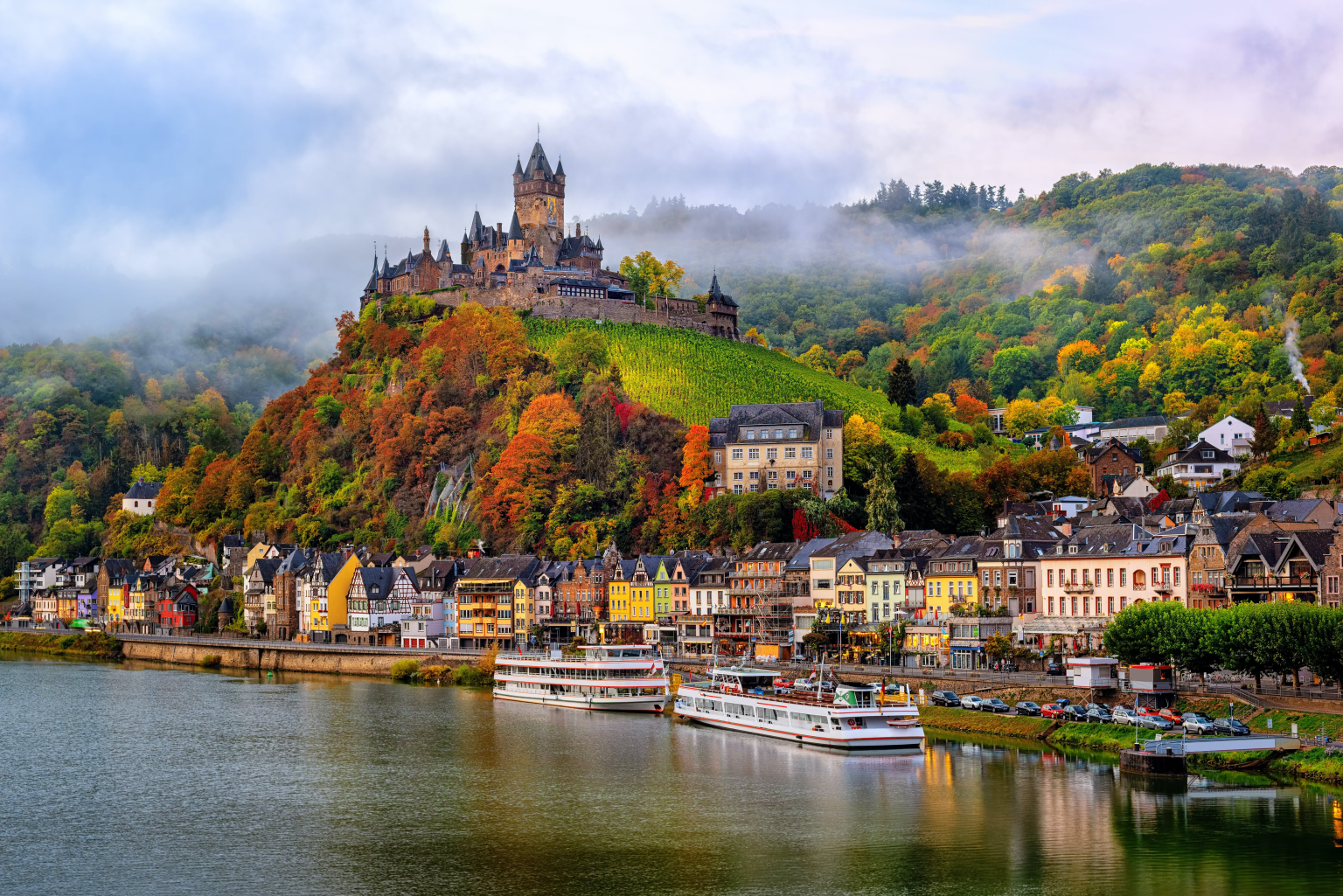
Cochem – the Reichsburg and the river boats
Cochem is the best-known town in the Moselle Valley, and it shows. The Reichsburg on the hill, rebuilt in neo-Gothic style in the 19th century, can only be visited on a guided tour but is open almost all year round. The chairlift (Sesselbahn) takes you up to the Pinnerkreuz viewpoint and runs in season until mid-November. With good rail connections and plenty of boat trips, Cochem is the obvious base on the lower Moselle. Read our guide to Cochem.
Beilstein – the Moselle’s “Sleeping Beauty”
Beilstein is known as Dornröschen der Mosel – the Sleeping Beauty of the Moselle – and has only around 130 residents. Its lanes, the Carmelite church of St Joseph and the ruin of Burg Metternich, destroyed by French troops in 1689, have served as a film set several times. It’s at its loveliest early in the morning or in the evening, once the day-trippers have left. Romantic, but expect crowds in the middle of the day in high season.
Ediger-Eller – half-timbering and a via ferrata
The twin village of Ediger-Eller has some of the finest half-timbered streets on the lower Moselle, plus its own railway station. At Eller the Kaiser-Wilhelm-Tunnel emerges – 4,205 metres long and once Germany’s longest railway tunnel. This is also the start of the Calmont Klettersteig, a protected path with steel cables and ladders 200–300 metres above the river towards Bremm. You’ll need to be sure-footed and have a head for heights.
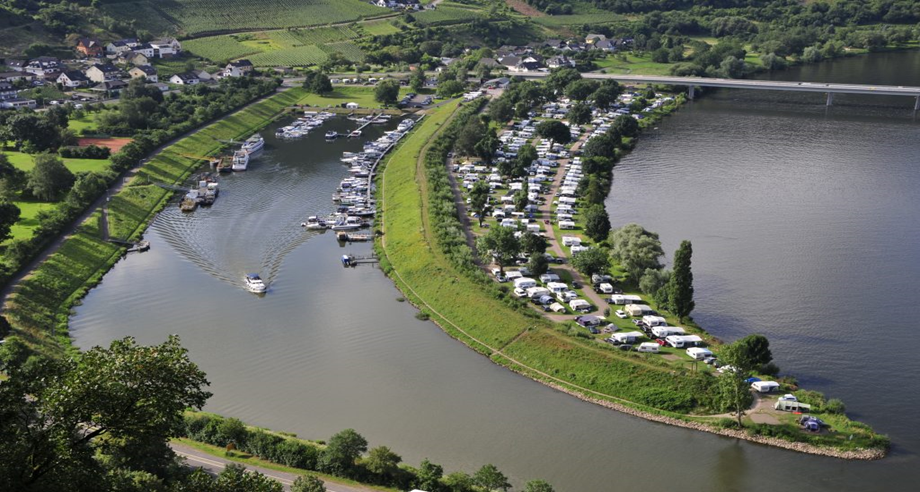
Bremm – Europe’s steepest vineyard
Bremm sits on one of the Moselle’s most photographed bends, beneath the Calmont – according to the village, the steepest vineyard site in Europe. Down by the river lies the ruined Stuben convent, which occasionally hosts concerts. There’s no station, but it’s a dream for walkers and photographers: tackle the via ferrata from Ediger-Eller and reward yourself with a glass in the village.
Middle Moselle: the wine villages from Zell to Trittenheim
South of Bullay the valley widens and the loops grow longer. This is home to the classic Riesling sites whose names appear on wine lists all over the world. The railway leaves the river at Bullay and cuts overland towards Wittlich, so in most villages here you’ll be relying on the bus, boat, bike or car. Find out more about the grape in our guide to Moselle Riesling.
Zell – the Black Cat
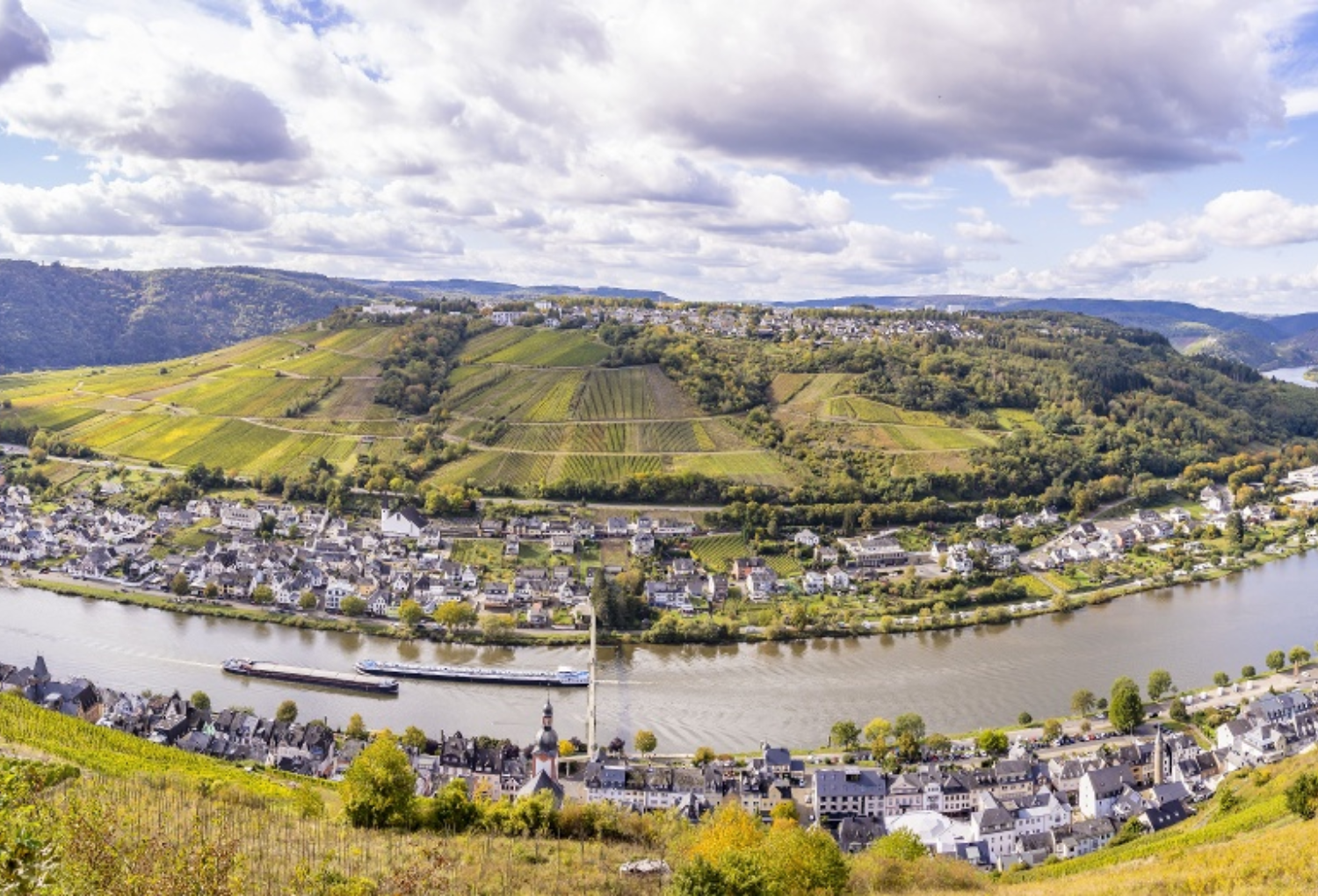
Zell is the wine town behind Zeller Schwarze Katz: legend has it that in 1863 a black cat jumped onto one of three casks and hissed at anyone who came near – so of course the buyers chose that wine. The Runder Turm, the 14-metre tower of the old town wall, and the Electors’ Schloss Zell define the townscape. Quieter and cheaper than Cochem; the nearest station is Bullay, with buses onwards. Read our guide to Zell.
Traben-Trarbach – Art Nouveau and wine cellars
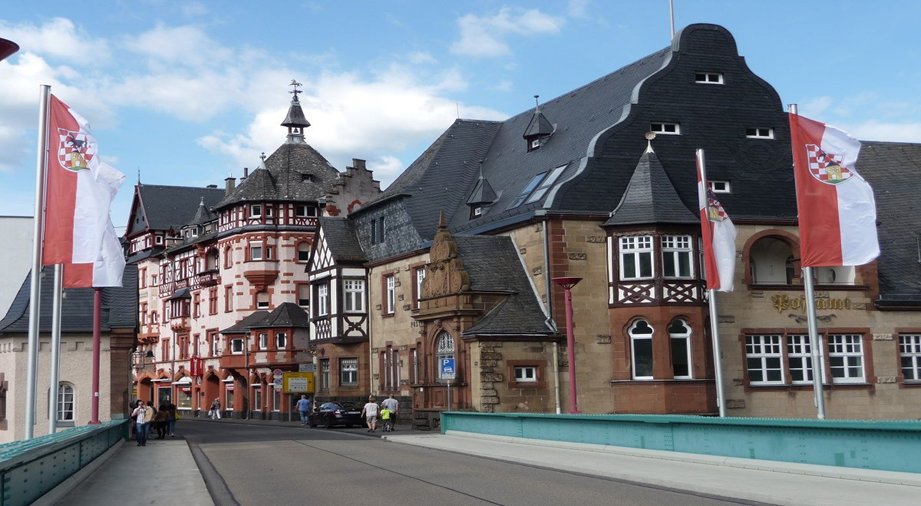
Around 1900 Traben-Trarbach was one of Europe’s biggest wine-trading towns, and the wealth still shows in its Art Nouveau (Jugendstil) architecture. The Brückentor of 1898–99 was designed by the Berlin architect Bruno Möhring, who was also behind the Hotel Bellevue. The Buddha-Museum occupies a former Art Nouveau wine cellar, and above the town are the remains of the Grevenburg and the Mont Royal fortress. At Christmas the Mosel-Wein-Nachts-Markt is held in old underground wine cellars (2026: 20 November–2 January, mainly at weekends). The town has its own station on the Moselweinbahn branch line from Bullay.
Kröv – the Nacktarsch and covered wagons
Kröv is famous for the vineyard name Kröver Nacktarsch – “bare bottom” – whose cheeky label has raised many a smile. The village has a three-gabled house from 1658, the Dreigiebelhaus, and around 150 wine producers. Its big summer party, Heimatfieber, with a floating stage on the Moselle, is usually held in early July. Good for families and for anyone who wants a simple stay right among the vineyards.
Ürzig – red soil and a sundial
Ürzig’s Würzgarten is a steep, amphitheatre-shaped vineyard with unusual reddish-brown soil, quite unlike the Moselle’s typical grey slate. Up among the vines a sundial stands on the remains of an old watchtower. The village is small, with fewer than 900 residents, and suits anyone keen to taste wines that differ from their neighbours’. Ürzig station is a few kilometres outside the village.
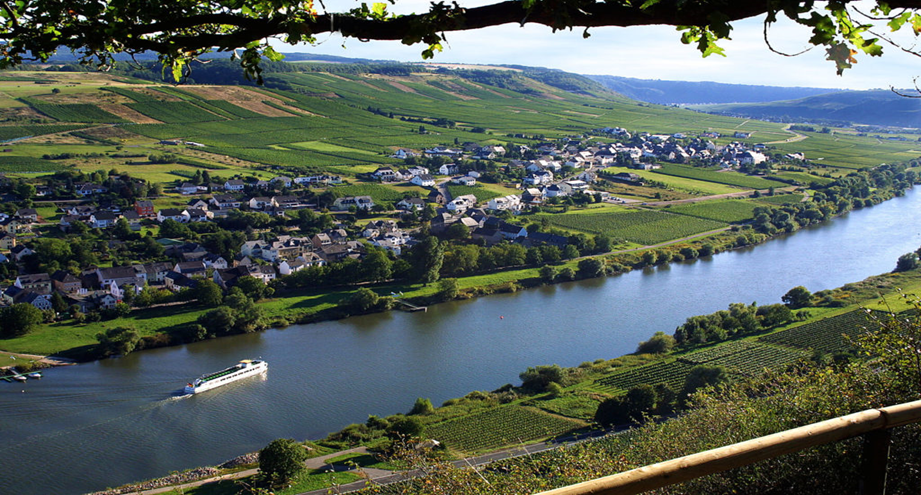
Bernkastel-Kues – the Middle Moselle’s prettiest square
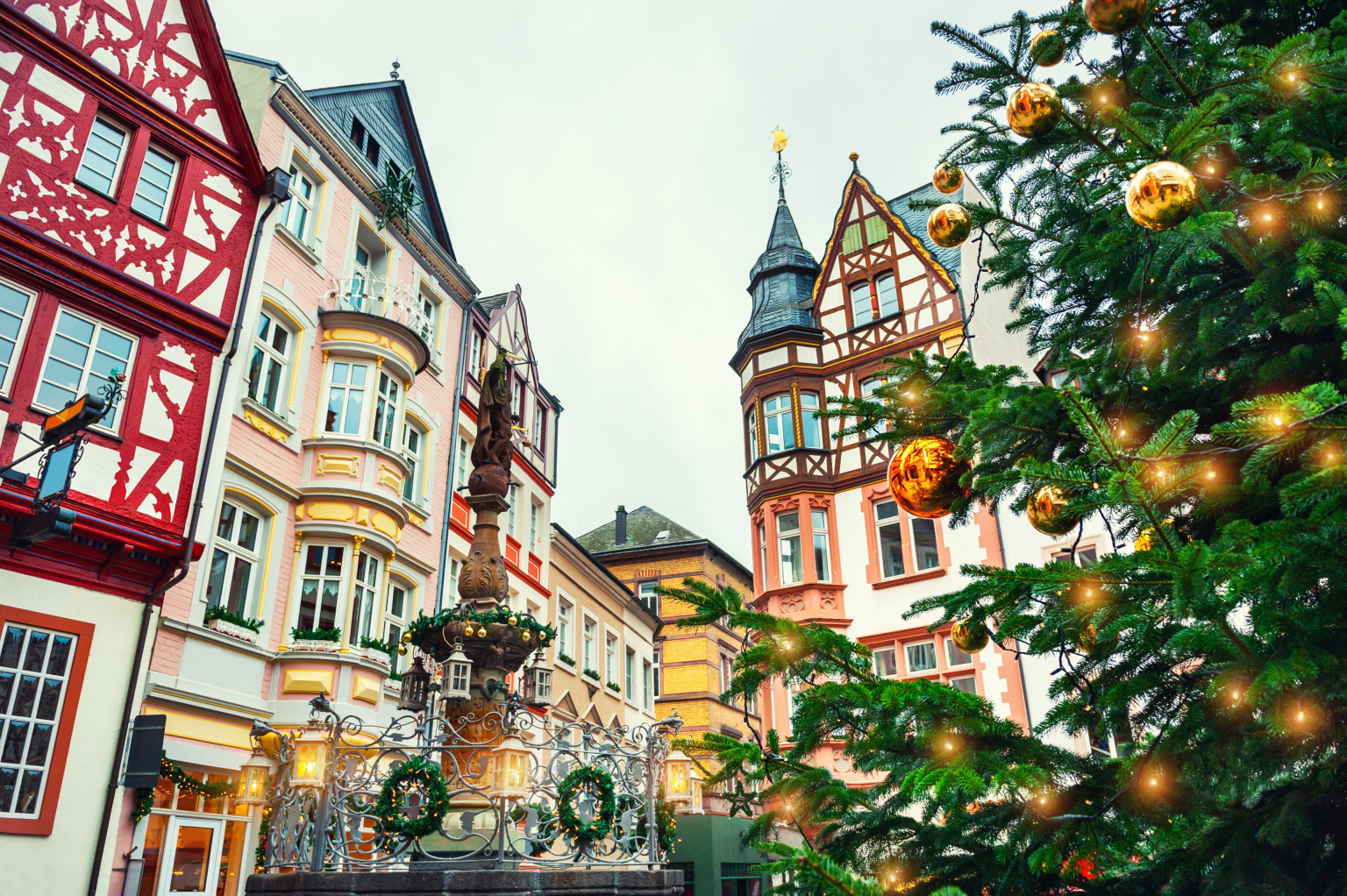
The market square in Bernkastel, with half-timbered houses from the 15th to 17th centuries and the narrow Spitzhäuschen of 1416, is one of the most photographed spots in the valley. Above it stands the ruin of Burg Landshut, and across the bridge in Kues the philosopher Nicholas of Cusa (Cusanus) was born in 1401. The Middle Moselle Wine Festival (Weinfest der Mittelmosel) takes place around the first weekend in September, and the Christmas market runs from 20 November to 20 December 2026. Buses run from Wittlich Hbf, 14 km away. Read our guide to Bernkastel-Kues.
Piesport – Goldtröpfchen and a Roman wine press
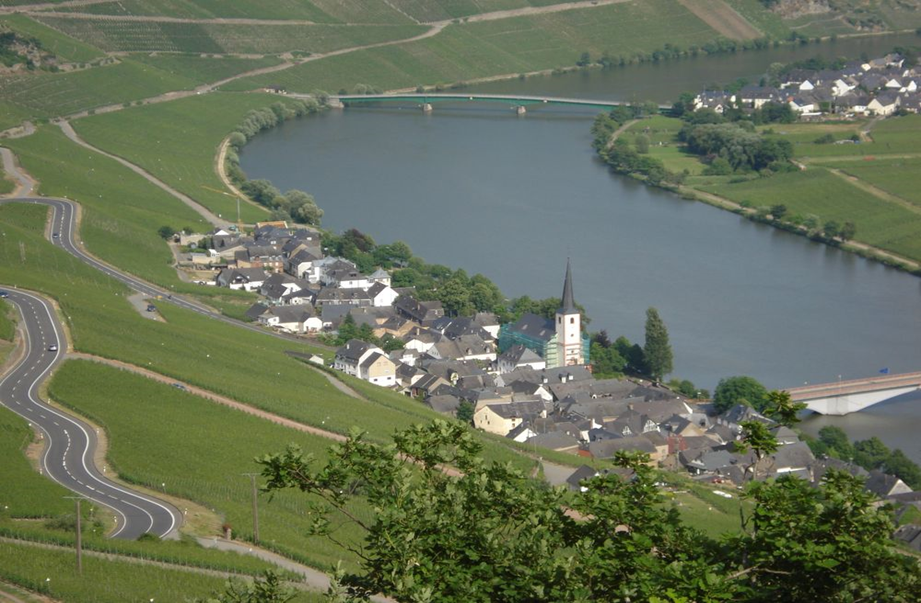
Piesport lies at the foot of the Goldtröpfchen, a 66-hectare, amphitheatre-shaped slate slope that is one of the Moselle’s most famous wine names. On the riverside promenade there’s a partly reconstructed Roman wine press, and the Moselloreley rock rises almost vertically from the river. A true wine village – best for tastings and quiet evenings by the water.
Trittenheim and Neumagen-Dhron

Trittenheim sits on one of the most symmetrical loops on the entire Moselle, with vineyard sites such as Trittenheimer Apotheke and the Laurentius chapel out among the vines. The humanist Johannes Trithemius was born here in 1462. Its neighbour Neumagen-Dhron calls itself Germany’s oldest wine village; this is where the Roman relief of the wine ship was found, and a replica Roman wine ship, the Stella Noviomagi, sails on the river in season. Both suit travellers who want wine and peace rather than shops.
Trier, the Saar and the Upper Moselle
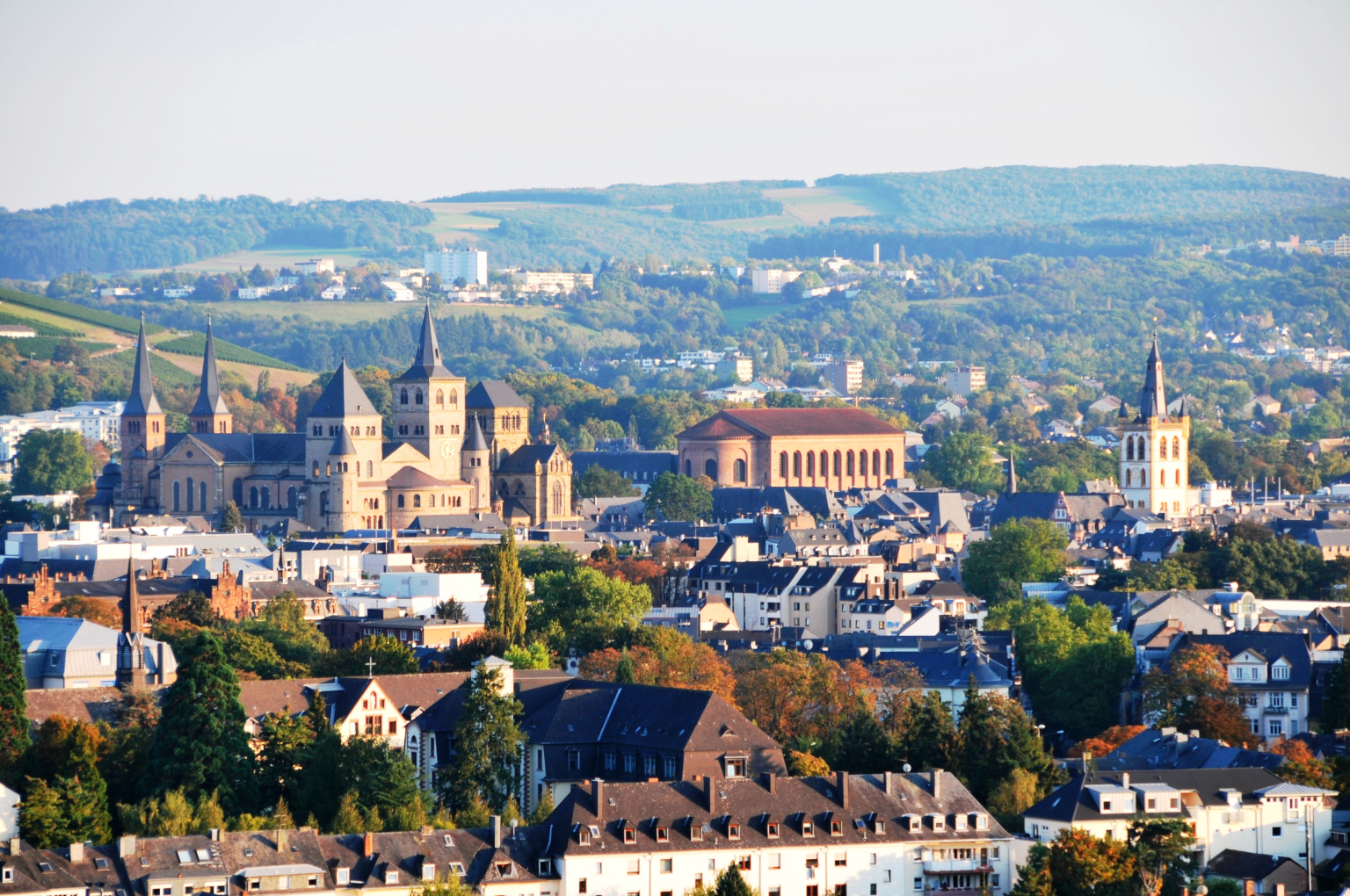
Trier – the Roman city
Founded by the Romans as Augusta Treverorum, Trier is often described as Germany’s oldest city. The Porta Nigra, the Imperial Baths, the Basilica of Constantine, the amphitheatre, the cathedral and the Liebfrauenkirche are all part of the World Heritage Site that UNESCO designated in 1986 – in 2026 the city is celebrating 40 years of World Heritage status. Trier is the valley’s largest city, with a university, shopping and direct trains to both Koblenz and Luxembourg. It’s the natural base for the upper Moselle, the Saar and the Ruwer. Read our guide to Trier.
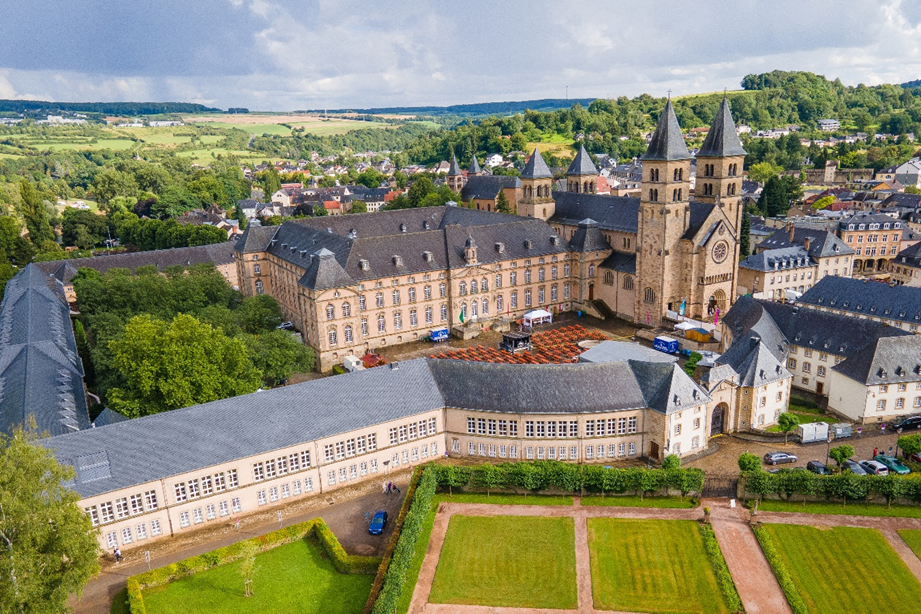
Just across the border in Luxembourg, on the River Sauer (Sûre), lies Echternach, with the abbey founded by St Willibrord around the year 700. On the Tuesday after Whitsun the hopping procession winds through the town – inscribed on UNESCO’s list of Intangible Cultural Heritage in 2010.
Saarburg – a waterfall in the town centre
Saarburg lies on the Saar, about 20 km south-west of Trier, just before the river joins the Moselle at Konz. In the middle of the old town the Leuk stream plunges almost 20 metres in a waterfall between old mill houses, and above it rises one of the oldest castles in western Germany. The former Mabilon bell foundry is now a museum. Saarburg has its own station on the Trier–Saarbrücken line and makes a perfect day trip.
Schengen – Europe in a wine village
The small Luxembourg wine village of Schengen sits where Luxembourg, Germany and France meet. It was here, on 14 June 1985, that five countries signed the Schengen Agreement aboard the ship Princesse Marie-Astrid. Since 2025 the ship has been back in Schengen as part of the European Museum, and you can visit the saloon where the agreement was signed. There’s no railway in the village; the nearest station is Perl on the opposite bank, the terminus of the regional train from Trier.
Metz – the Moselle city in France
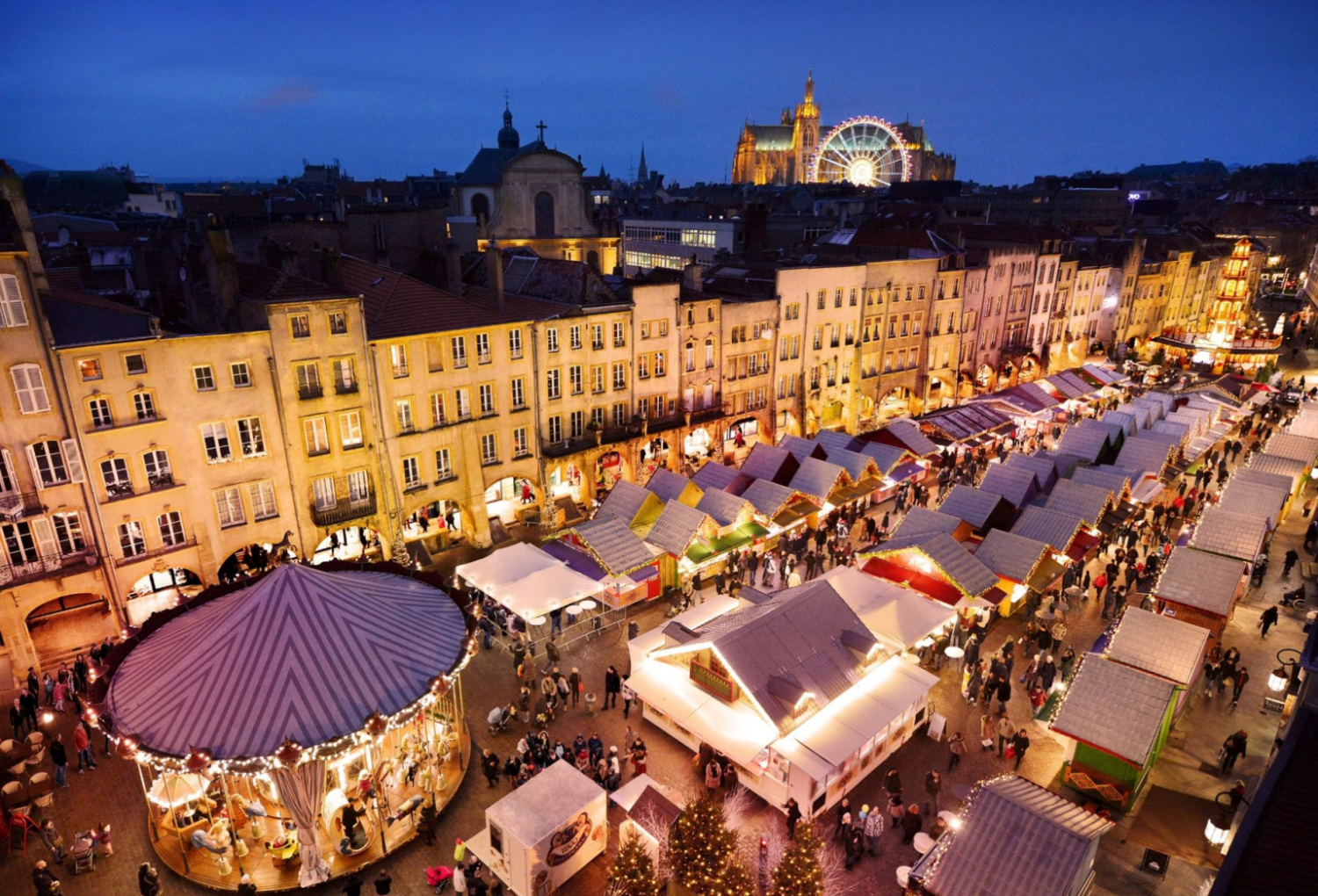
Metz stands where the Moselle and the Seille meet, in Lorraine. Saint-Étienne Cathedral has around 6,500 square metres of stained glass, including windows by Marc Chagall, and is nicknamed “la Lanterne du Bon Dieu” – God’s lantern. The Centre Pompidou-Metz opened in 2010 beneath its undulating timber roof. Metz is ideal for a weekend of French food and culture, and you can reach it by train from Trier via Luxembourg. Read our guide to Metz.
Which Moselle Valley town suits you? A comparison
The table shows where each place is strongest. The station column refers to regional trains on the Koblenz–Trier line or a branch line; “no” means you’ll need a bus, boat, bike or car.
| Town | Wine | Castles | Romance | Families | Station |
|---|---|---|---|---|---|
| Koblenz | – | ✓ | – | ✓ | Yes |
| Winningen | ✓ | – | – | – | Yes |
| Kobern-Gondorf | – | ✓ | – | ✓ | Yes |
| Alken | – | ✓ | – | ✓ | No |
| Moselkern | – | ✓ (Eltz) | – | ✓ | Yes |
| Treis-Karden | – | – | – | – | Yes |
| Cochem | ✓ | ✓ | ✓ | ✓ | Yes |
| Beilstein | ✓ | – | ✓ | – | No |
| Ediger-Eller | ✓ | – | ✓ | – | Yes |
| Bremm | ✓ | – | ✓ | – | No |
| Zell | ✓ | – | – | ✓ | No (Bullay + bus) |
| Traben-Trarbach | ✓ | – | ✓ | ✓ | Yes (branch line) |
| Kröv | ✓ | – | – | ✓ | No |
| Ürzig | ✓ | – | – | – | Yes (outside the village) |
| Bernkastel-Kues | ✓ | ✓ | ✓ | ✓ | No (bus from Wittlich) |
| Piesport | ✓ | – | ✓ | – | No |
| Trittenheim | ✓ | – | ✓ | – | No |
| Trier | ✓ | – | – | ✓ | Yes |
| Saarburg | ✓ | ✓ | ✓ | ✓ | Yes |
| Schengen | ✓ | – | – | – | No (Perl) |
| Metz | – | – | ✓ | ✓ | Yes |
Where to stay in the Moselle Valley: choosing your base
The most common mistake is changing hotels every night. The Moselle is best taken slowly: pick one or two bases and make day trips by train, boat or bike.
- No car, first visit: Cochem. Trains in both directions, boats to Beilstein and most things within walking distance.
- City and culture: Trier. Roman monuments, restaurants and trains to Saarburg, Luxembourg and Koblenz.
- Wine trip by car or motorhome: Bernkastel-Kues or a wine village such as Piesport, Ürzig or Trittenheim. See also our guides to staying at a winery and touring the Moselle by motorhome.
- Romance and peace: Beilstein, Ediger-Eller or Traben-Trarbach – stay the night so you have the lanes to yourself in the evening.
- Families on a budget: Zell, Kröv or one of the valley’s riverside campsites.
Ask about a guest ticket when you check in. Participating hosts in the Trier and Koblenz areas issue the ÖPNV-Gästeticket or the Molli Card, giving free travel on buses and second-class regional trains during your stay. During wine festivals and in September–October rooms book up fast, so reserve early. See also the best time to visit the Moselle Valley.
Getting between the Moselle Valley towns
Train: the RE 1 and RB 81 regional trains run Koblenz–Cochem–Bullay–Wittlich–Trier, usually once an hour each. The RB 81 also stops at smaller places such as Winningen, Kobern-Gondorf and Ediger-Eller. From Bullay, the Moselweinbahn branch line (RB 85) runs to Traben-Trarbach. Boat: in season, excursion boats link many of the towns, and a Moselle river cruise is a comfortable way to see several of them. Bike: the Mosel-Radweg cycle path follows the river the whole way – see our guide to the Moselle cycle route.
Flying in from abroad? Luxembourg is the most convenient airport for Trier and the upper Moselle, while from Frankfurt you can continue by train to Koblenz, where the Moselle line begins.
Moselle Valley towns: frequently asked questions
What is the prettiest town in the Moselle Valley?
Cochem and Bernkastel-Kues usually top the lists – Cochem for its castle above the river, Bernkastel-Kues for its half-timbered square. If you’d prefer somewhere smaller and quieter, Beilstein is hard to beat.
Which Moselle towns can you reach by train?
Koblenz, Winningen, Kobern-Gondorf, Moselkern, Treis-Karden, Cochem, Ediger-Eller, Bullay and Trier, among others, are on the Koblenz–Trier line. Traben-Trarbach is reached on the branch line from Bullay and Saarburg by train from Trier. Bernkastel-Kues is served by bus from Wittlich.
How many days do you need in the Moselle Valley?
Three to four days is enough for a base on the lower Moselle (Cochem, Beilstein, Burg Eltz) plus a day in Trier. With a week you can also take in the Middle Moselle wine villages and a trip to Saarburg or Luxembourg.
Where should I stay in the Moselle Valley without a car?
Cochem or Trier. Both have a railway station, plenty of hotels and boats or trains on to other towns. Ask your accommodation about a guest ticket for free buses and regional trains.
Can you see Cochem and Beilstein in one day?
Yes. The boat is the easiest way between the two – the Cochem–Beilstein cruise with a lock takes around two and a half hours there and back.
- visitmosel.de – Städte & Orte – regional divisions, Terrassenmosel, town profiles
- visitmosel.de – Gästekarten – ÖPNV-Gästeticket and Molli Card
- visit-koblenz.de – Deutsches Eck – height of the monument, World Heritage
- Seilbahn Koblenz – cable car to Ehrenbreitstein
- winningen.de – vineyard sites, terraces and Moselfest
- Sonnige Untermosel – Matthiaskapelle, Schloss von der Leyen
- Burg Thurant – 2026 opening times, payment
- Burg Eltz – 2026 season, footpath from Moselkern
- Reichsburg Cochem and Cochemer Sesselbahn – guided tours and season
- beilstein-mosel.de – history, filming
- Calmont-Region and bremm-mosel.de – via ferrata, Calmont, Stuben convent
- Zeller Land – Zeller Schwarze Katz, Runder Turm
- traben-trarbach.de – Art Nouveau, Möhring, Christmas market
- kroev.de – Dreigiebelhaus, Heimatfieber
- bernkastel.de – getting there, Burg Landshut, wine festival, Christmas market
- piesport.de – Roman wine press, Moselloreley
- trittenheim.de and neumagen-dhron.de – vineyard sites, Trithemius, Roman wine ship
- trier-info.de – 40 Jahre Welterbe – World Heritage listing in 1986
- luxembourg.public.lu – Schengen Agreement, the ship and the museum
- visitluxembourg.com – Echternach hopping procession
- Wikipedia – Moselstrecke (supporting) – stations and lines Koblenz–Trier
Last updated: October 2026. Facts checked against the sources above; prices and opening hours may change.