
Things to do in Cochem – castle, boat trips and wine villages
This article contains affiliate links to GetYourGuide. If you book through them we may earn a small commission, at no extra cost to you.
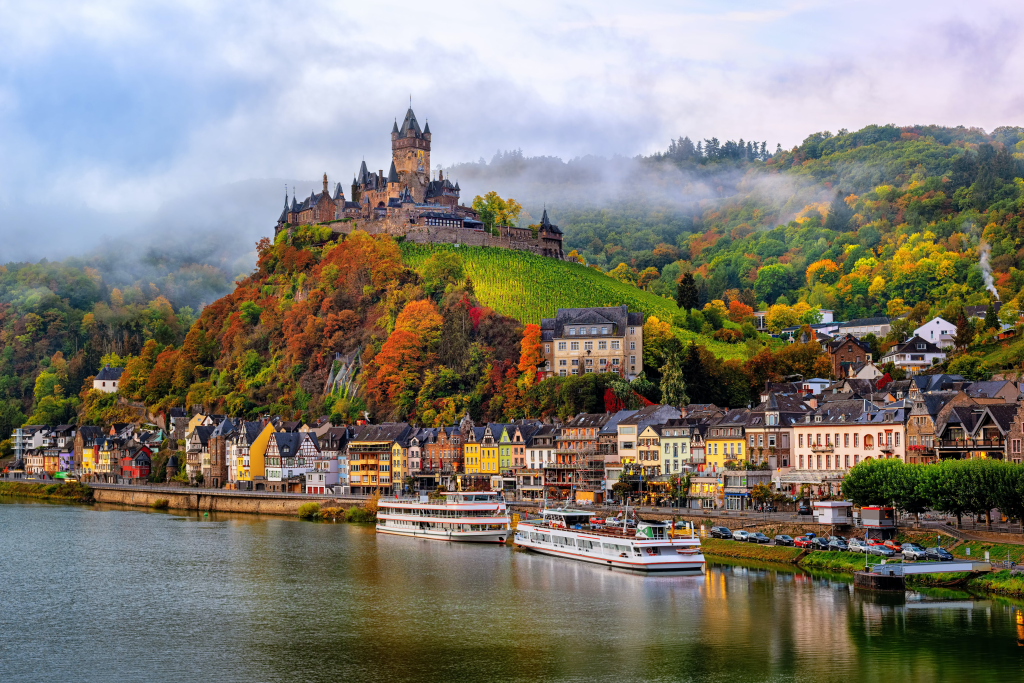
Cochem is the small town that ends up on almost every postcard of the Moselle Valley: half-timbered houses along the river, steep vineyards on every side and Reichsburg castle high on its hill. This guide covers the best things to do in Cochem and everything you need to plan your visit – the castle, the boat trip to Beilstein, the Cold War money bunker, the chairlift up to Pinnerkreuz and how to reach Burg Eltz.
Three experiences we recommend
The river is Cochem’s best viewpoint – and the wine from the slopes all around is the reason many people come here in the first place.
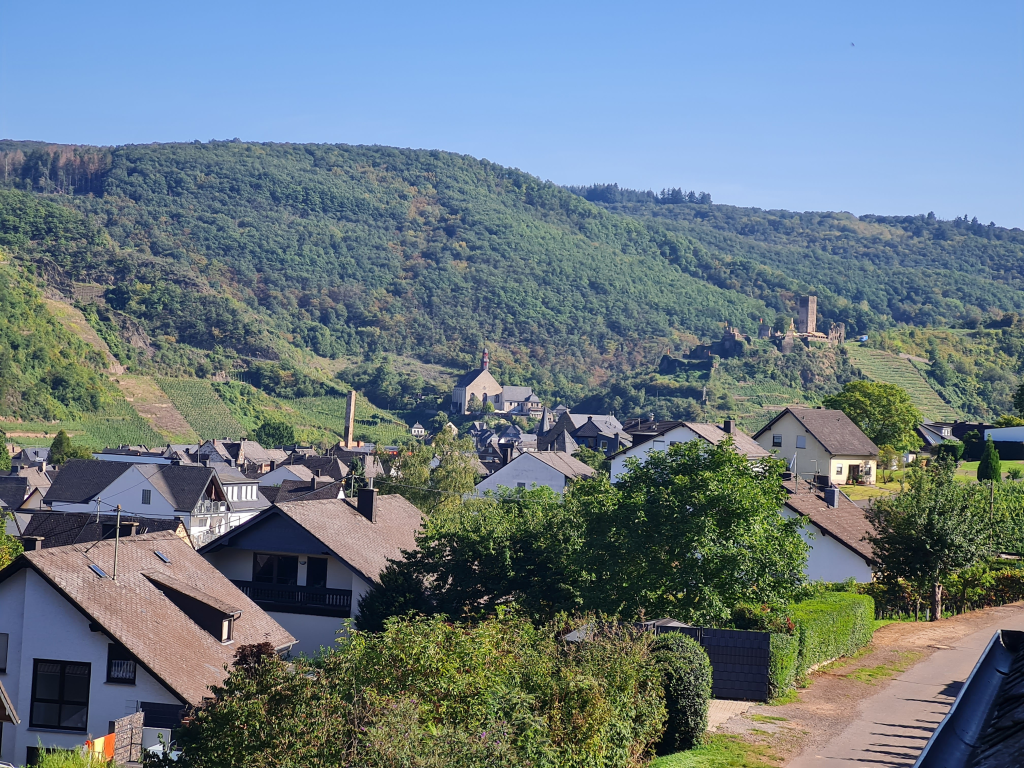 River cruise with lock: Cochem–Beilstein return
The classic Moselle boat trip: through the lock at Fankel to picture-perfect Beilstein and back, with vineyards all the way.
Check prices & dates →
Most booked
Panoramic Moselle cruise from Cochem
An hour on the river with the castle and old town seen from the water – easy to fit in between the castle tour and lunch.
Check prices & dates →
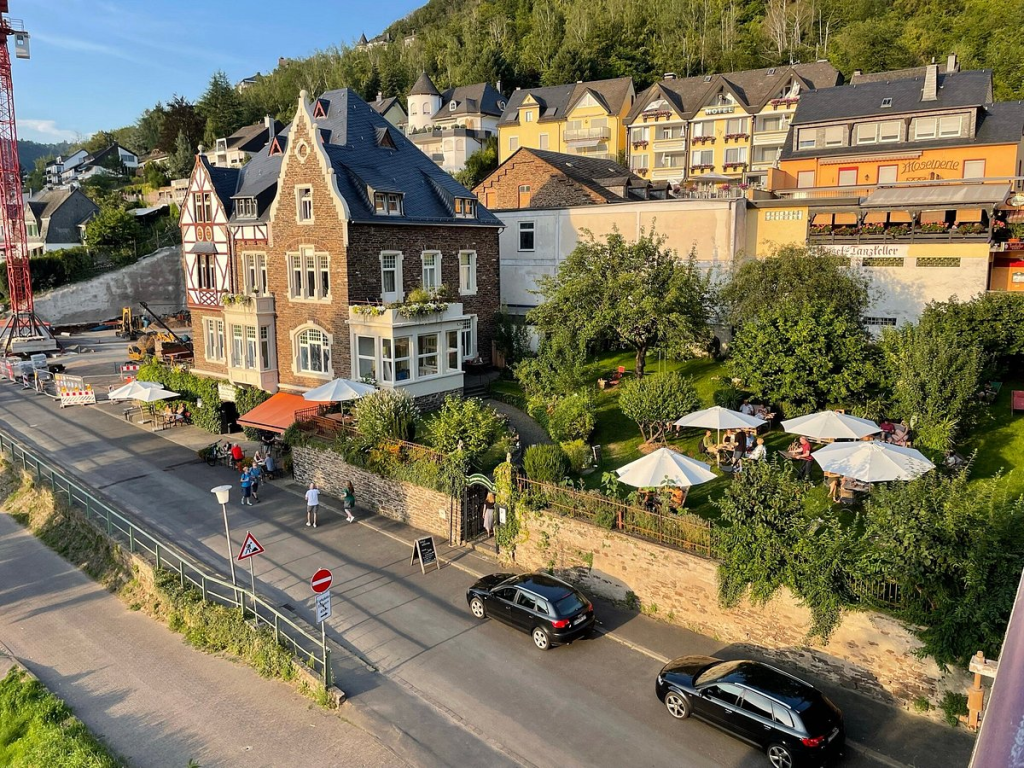 Ediger-Eller: vineyard walk and wine tasting
A guided walk through the steep vineyards followed by a tasting at the winemaker’s, in one of the prettiest wine villages upstream of Cochem.
Check prices & dates →
Cochem at a glance – why the town is so popular
Cochem is the main town of the Cochem-Zell district and sits on a long bend of the Moselle between Koblenz and Trier. The town itself is small – just under 5,000 people – but almost everything is within walking distance: the castle, the old town, the boat landing stages, the chairlift and the railway station. That makes Cochem an excellent base for the lower Moselle, even without a car.
The downside is the crowds. Around midday in summer and during the grape harvest, the riverside fills up with day-trippers and river cruise passengers. Stay overnight and you’ll have the town far more to yourself in the morning and evening.
Reichsburg Cochem – the castle above the town
A short history
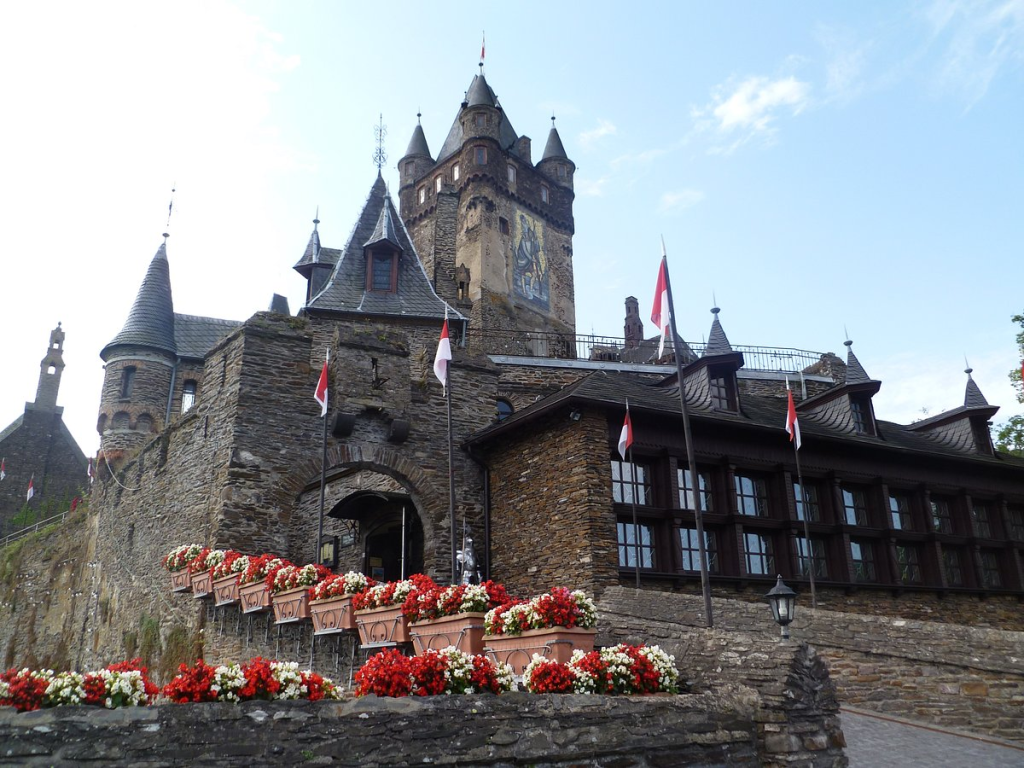
The castle is thought to have been built around the year 1000 under Count Palatine Ezzo and is first mentioned in writing in 1051. In 1151 King Conrad III seized it and it became an imperial castle – hence the name Reichsburg. It later served as an administrative seat for the Prince-Electors of Trier. During the Nine Years’ War, French troops set fire to the castle and blew it up on 19 May 1689, and for almost 200 years it stood as a ruin.
What you see today is largely a 19th-century dream of a medieval castle. Berlin businessman Louis Ravené bought the ruin in 1868 and had it rebuilt in Gothic Revival style; it was inaugurated with a banquet in 1877. The town of Cochem has owned the castle since 1978. It stands just over 100 metres above the Moselle, and the view from the courtyard across the river to Cond on the opposite bank is every bit as good as the interiors.
Guided tours, opening times and tickets
The castle and its courtyards can only be visited on a guided tour. The standard tour lasts about 40 minutes and doesn’t need to be booked – you buy your ticket on the spot. Adults pay approx. €10, children aged 6–17 approx. €5, and there’s a family ticket (2025–2026 prices according to the castle). Tours are in German, but English-language tours usually run roughly once an hour depending on demand – ask at the souvenir shop when you arrive, as availability can change at short notice.
- Peak season (2026: 14 March–1 November): daily 9.30am–5pm, last tour starts at 5pm.
- Winter season: shorter days, generally 10am–3pm. For part of January–February the castle opens only on certain weekdays, and it’s closed on Christmas Day.
- Castle tavern (Burgschänke): open daily in peak season, closed for part of the winter.
On Fridays and Saturdays the castle hosts a medieval feast, the Ritter-Gasterey: around four hours with a castle tour, a meal in the vaulted cellar, live music and knightly games. It must be booked directly with the castle and costs approx. €64 per adult.
How do you get up to the castle?
There’s no parking at the castle. Most people walk up from the old town along the signposted lanes – a short but steep climb of about a quarter of an hour. If you’d rather save your legs, a shuttle bus (line 701, Reichsburg-Shuttle) runs up towards the castle; the timetable is on the castle’s website.
Turn up for the first tour at 9.30am or late in the afternoon. Around midday the coach groups and cruise passengers all arrive at once, and you may have to wait for a place on the next tour.
Things to see in Cochem: the old town and riverside promenade
Cochem’s old town is compact: a handful of lanes lined with half-timbered houses, the Marktplatz with its town hall, and old town gates that recall the days when Cochem was fortified. Above the square stands the Kapuzinerkloster, a Capuchin monastery founded in 1623 that is now a cultural centre with exhibitions and concerts. For the stories behind the façades, the tourist office offers a free audio guide, LAUSCHTOUR, which you download to your phone.
The Moselpromenade runs along the left bank from Endertplatz – home to the tourist office – past the boat landing stages. This is where you get the classic views up to the castle, and where several of the town’s hotels and wine taverns are found. Do walk across the Moselbrücke to the Cond district on the other side: from there you’ll get the whole townscape and the castle in a single frame, best of all in the evening light.
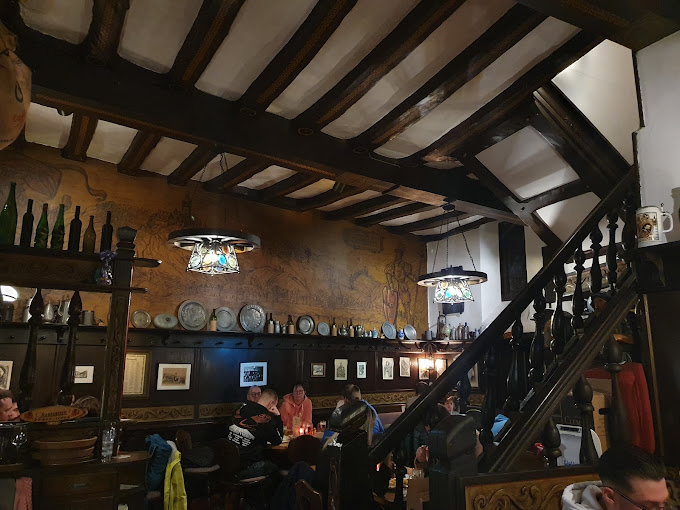
Food and wine go hand in hand in Cochem. Many of the taverns in the old town serve regional dishes alongside local Riesling, and in the evening the dark, wood-panelled cellars are where the atmosphere is. Find out more about the grape that defines the whole valley in our guide to Moselle Riesling.
The chairlift to Pinnerkreuz – Cochem’s best view
The Cochemer Sesselbahn is a chairlift that runs from its valley station on Endertstraße, a few minutes’ walk from the centre, up to the Pinnerkreuz viewpoint. From the top you look down on the town, the Moselle and the castle – the view you’ll recognise from countless postcards. As well as open two-seater chairs, there are gondolas that can be closed when the weather turns.
The lift runs from spring until mid-November. In 2026 it operated roughly 10am–6pm for most of the season (9.30am–6.30pm in July and August), with shorter hours in autumn; the season ends on 15 November. A return ticket costs approx. €8 for adults and approx. €4 for children aged 4–14. In the rain it may close early.
Ride up and walk down. From Pinnerkreuz, paths lead through the woods and vineyards back into town, past viewpoints that chairlift riders miss. Buy a single ticket – and wear decent shoes, as it’s steep.
The Bundesbank Bunker – a secret Cold War money vault
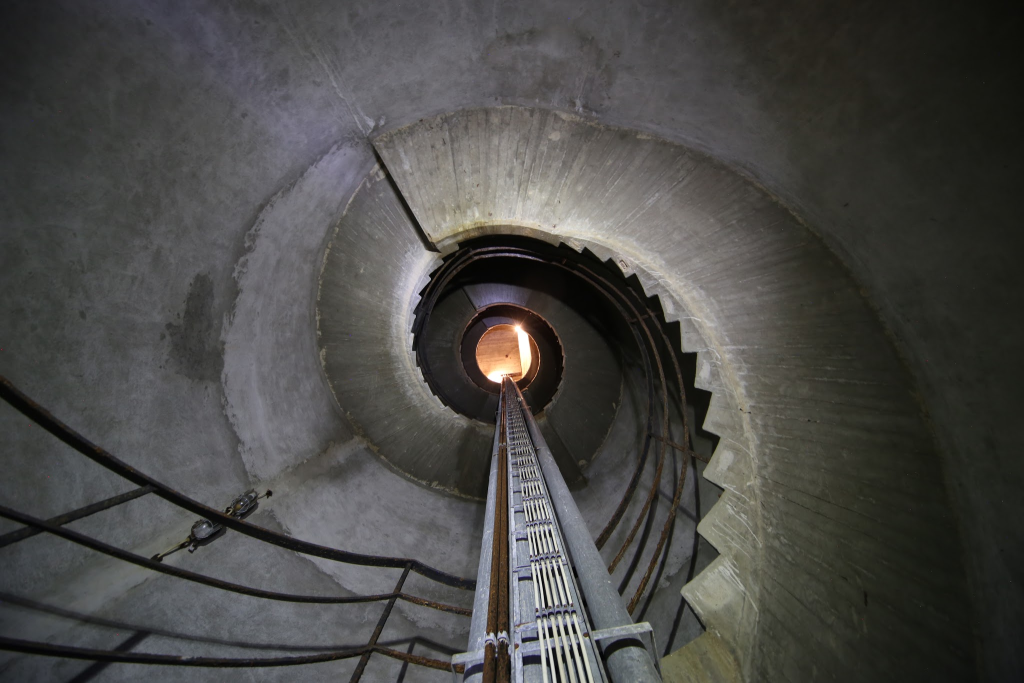
In a residential street in Cochem-Cond, behind two entirely ordinary-looking houses, lies one of Germany’s strangest Cold War relics. From 1962 the Deutsche Bundesbank built an underground facility here, officially a shelter for a training centre. In reality, from 1965 it stored a secret emergency currency – eventually 15 billion Deutschmarks – intended to replace the banknotes in circulation if an enemy flooded the country with counterfeit money. The bunker remained secret until 1988. One of the houses on top of it is now the Hotel Vintage.
The bunker is a privately run museum and can only be visited on a guided tour. Regular tours last about 45 minutes and are in German; in peak season (2026: 1 July–1 November) they run several times a day, and far less often in winter. Adults pay approx. €14, children aged 7–17 approx. €7. Open tours can’t be reserved – buy your ticket at the desk or in the online shop and be there at least ten minutes before the start.
It’s 12 °C inside the bunker all year round, so bring a jumper even on a hot summer’s day. There’s no parking at the bunker; in season a bunker bus runs from Endertplatz, and in winter it’s line 703. Always check current times at bundesbank-bunker.de.
Historische Senfmühle – mustard made the old way
At Endertstraße 18, close to the chairlift’s valley station, the Historische Senfmühle is a mustard mill more than 200 years old. During a demonstration of about half an hour you’ll see mustard seeds ground between millstones, and afterwards you can taste the different varieties for free. The shop is open daily 10am–6pm and demonstrations take place at 11am, 2pm, 3pm and 4pm (approx. €2.50, free for children up to 11). A good rainy-day option – and a souvenir you’ll actually use.
Boat trips from Cochem – through the lock to Beilstein
No visit to Cochem is complete without time on the river. Boats leave from the landing stages along the Moselpromenade, and there are two main options:
- Panoramic cruise (approx. 1 hour): the boat heads a little way downstream towards Treis-Karden, turns and glides back past the castle, with commentary on board. Perfect if you’re short of time.
- The lock cruise to Beilstein: the boat passes through the lock at Fankel and reaches Beilstein after about an hour. You can go straight there and back or spend a few hours in Beilstein and catch a later boat home.
There are also evening cruises with music and day trips to Traben-Trarbach. If you’re thinking about a longer journey on the river, read our guide to a Moselle river cruise.
Beilstein – the Sleeping Beauty of the Moselle
Beilstein is known as Dornröschen der Mosel – the Sleeping Beauty of the Moselle – and has only just over a hundred residents. It’s one of the best-preserved villages anywhere on the Moselle: narrow lanes, a stepped street up to the baroque Karmeliterkirche St. Josef with its Black Madonna, and at the very top the ruins of Burg Metternich, destroyed by French troops in 1689 – the same year as Reichsburg in Cochem. Several German films have been shot here, among them Der Schinderhannes with Curd Jürgens from 1958.
The best way to arrive is by boat from Cochem: take an early sailing, climb up to the church and the ruin before the day-trippers arrive, have lunch in the village and head back in the afternoon.
Wine tasting in Ediger-Eller and Pommern
Cochem has no shortage of wine taverns, but for a proper tasting at the winemaker’s it pays to travel a few kilometres along the river. Upstream lies Ediger-Eller, a twin village of half-timbered houses at the foot of the Calmont – one of the steepest vineyards in Europe, where the grapes are still picked by hand.
Downstream, towards Koblenz, is the wine village of Pommern. Both villages have a station on the Moselle railway and are just a few minutes from Cochem on the RB 81 regional train – so you can enjoy a tasting without anyone having to drive.
If you’d prefer a straightforward cellar tasting, there’s a popular wine tasting at a winery in Pommern lasting about 1.5 hours. And if you’d like to sleep among the vines, see our tips on how to stay at a winery in the Moselle Valley.
Day trip to Burg Eltz from Cochem
Burg Eltz lies hidden in a wooded side valley above the Moselle, downstream of Cochem, and is one of Germany’s most famous castles. It has never been destroyed in war and has belonged to the same family since it was built, for close to 900 years. Germans know the view of it from the old 500-mark banknote. Its treasury holds one of the country’s finest private collections of gold and silverwork.
- Season: in 2026 open daily 29 March–1 November, 9.30am–5pm (last admission 5pm). Closed in winter.
- Admission: approx. €14 for adults, family tickets available. Guided tour approx. 35–40 minutes, in German and in English on request; a free leaflet with the tour text is available in English, and the treasury has a free English leaflet too.
- By car: set your satnav to “Burg Eltz, Wierschem” (Parkplatz 1, parking approx. €4, cash only). From there a shuttle bus runs roughly every ten minutes, or you can walk down to the castle via the viewing platform.
- By train and bus: take the RB 81 regional train towards Koblenz to Hatzenport, then bus 365 (1 April–1 November, twice an hour) to Burg Eltz.
- On foot: from Moselkern (a stop on the RB 81) a lovely trail follows the Elzbach stream past the Ringelsteiner Mühle mill; the final stretch from the mill is about 2.5 km.
A classic day out: train from Cochem to Moselkern in the morning, walk up through the Elz valley to the castle and take the bus back via Hatzenport. Get there early – by lunchtime the queue for tours can be long.
How to get to Cochem
Flying in
- Frankfurt (FRA): Germany’s main international hub and the obvious choice for long-haul arrivals. Continue by train, changing in Koblenz, or drive it in around two hours.
- Luxembourg (LUX): a handy alternative – the RE 11 runs direct from Luxembourg City via Trier to Cochem.
- Frankfurt-Hahn (HHN): the closest airport, in the Hunsrück hills south of the Moselle, served mainly by low-cost airlines such as Ryanair and Wizz Air. Despite the name, it’s nowhere near Frankfurt. Carry on by hire car, taxi or bus to Bullay, then train to Cochem.
By train
Cochem is on the Moselle railway between Koblenz and Trier, with a station in the town itself. The RE 1 regional express (Koblenz–Trier–Saarbrücken–Mannheim) and the RE 11 (Koblenz–Trier–Luxembourg) each run once an hour, as does the slower RB 81, which stops at every village. From both Koblenz and Trier the RE takes just under an hour. The station is about 700 metres from the tourist office on Endertplatz. The InterCity service that used to call at Cochem ended in December 2025, so coming from Cologne or Düsseldorf you now change in Koblenz.
By car or motorhome
By car, take the A 48 motorway to the Kaisersesch exit, or follow the B 49 along the Moselle from Trier or Koblenz – slower, but far more scenic. Parking is available under the Moselbrücke, on Bockbrunnenplatz and in a multi-storey car park on Endertstraße. Travelling by motorhome? See our guide to motorhome travel on the Moselle and our list of campsites along the Moselle.
On a river cruise
Cochem is a popular stop on Moselle river cruises, which is one reason the riverside gets so busy around midday. If your ship only stops for a few hours, prioritise the castle tour (head up straight away) and a stroll along the promenade, and save the chairlift for a clear-weather bonus.
How many days do you need in Cochem?
One day is enough for the castle, the old town, a panoramic cruise and the chairlift to Pinnerkreuz – if you start early. Two days give you time for the bunker, the mustard mill and the lock cruise to Beilstein at an easy pace. With three days you can add Burg Eltz and a wine tasting in Ediger-Eller or Pommern. Cochem works well as a base for the whole lower Moselle; Koblenz, Zell and Trier are all easy to reach by train. See also our Moselle Valley map.
Where to stay in Cochem
Stay on the Moselpromenade if you want the river outside your window and everything within walking distance. Two established hotels right on the promenade:
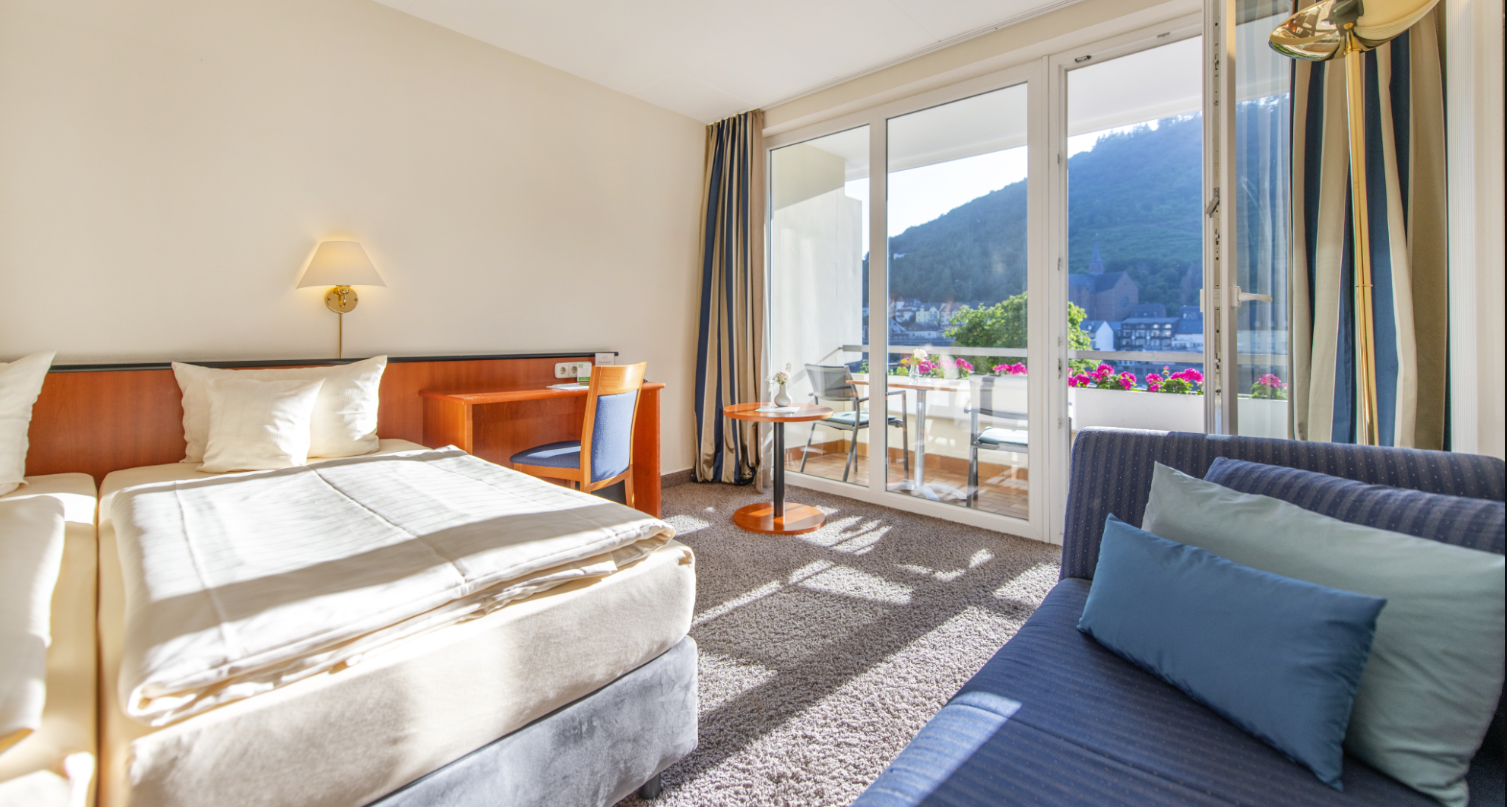
- Hotel Karl Müller (Moselpromenade 9) – in the heart of the old town with the Moselle right outside. Several rooms face the river, some with a balcony, and the hotel has its own restaurant, the Balduinstuben. hotel-karl-mueller.de
- Hotel Karl Noss (Moselpromenade 17) – central on the riverside promenade, with a free garage for guests’ bikes and e-bike hire. A good choice if you plan to cycle along the Moselle. hotel-noss-cochem.de
For something more unusual, there’s Hotel Vintage in Cond, one of the houses that once camouflaged the Bundesbank Bunker. During the wine festival at the end of August and at harvest time in September and October, Cochem is often fully booked – book early.
When is the best time to visit Cochem?
April to June is quieter, green and pleasant for walking. July and August are peak season, with warm weather, the most boat trips and the biggest crowds. September and October are many visitors’ favourite: the harvest is under way, the vineyards turn gold and the villages hold their festivals – though it’s busy too. From November the chairlift and most boat trips stop, but the castle and the bunker stay open with shorter hours, and in December the castle puts on Advent and Christmas events. Read more in our guide to the best time to visit the Moselle and about the Moselle Valley weather.
The biggest event of the year is the Heimat-Weinfest, Cochem’s wine festival, which usually takes place over the last weekend in August (2026: 27–31 August). There’s a firework display over the Moselle, and several boat operators run evening cruises so you can watch it from the water. In spring Cochem also hosts the Mosel-Wein-Woche. You’ll find more festivals in our guide to Moselle wine festivals.
Cochem FAQs
Can you visit Reichsburg Cochem without a guide?
No, the castle interior and courtyards can only be seen on a guided tour. The standard tour lasts about 40 minutes, doesn’t need booking and runs daily in peak season. English tours usually run roughly once an hour.
How long is the boat trip from Cochem to Beilstein?
About an hour each way, including the lock at Fankel. A return trip without stopping takes around 2.5 hours. To see Beilstein properly, allow a couple of hours in the village and catch a later boat back.
Is the Bundesbank Bunker open to visitors?
Yes, the bunker is run as a museum and can be visited all year on a guided tour – most frequently in summer and autumn, less often in winter. Tours are in German and it’s 12 °C inside. Check current times on the bunker’s website before you go.
How do you get from Cochem to Burg Eltz without a car?
Take the RB 81 regional train towards Koblenz to Hatzenport, then bus 365 to the castle (1 April–1 November). Alternatively, get off at Moselkern and hike up through the Elz valley to the castle.
Can you visit Cochem without a car?
Absolutely. Trains from Koblenz and Trier run several times an hour, almost all the sights are within walking distance, and boats, trains and buses will take you to Beilstein, the wine villages and Burg Eltz.
Keep planning with our overview of towns in the Moselle Valley and our ideas for things to do in the Moselle Valley.
- Reichsburg Cochem – Öffnungszeiten – opening times and seasons 2026, English-language tours
- Reichsburg Cochem – Preise – 2025–2026 prices, tour length, Ritter-Gasterey
- Reichsburg Cochem – Die Burg – castle history and dates
- Reichsburg Cochem – Reichsburg-Shuttle – shuttle bus line 701, no parking at the castle
- Cochemer Sesselbahn – Preise und Fahrzeiten – 2026 season, times and prices
- Bundesbank-Bunker Cochem – 2026 tours, temperature, bus, history and prices
- Historische Senfmühle Cochem – demonstrations, opening times, address
- Ferienland Cochem – Anreise – train, car, parking, airports, tourist office
- Ferienland Cochem – Schifffahrten – panoramic cruise and lock cruise to Beilstein
- Ferienland Cochem – Heimat-Weinfest 2026, Mosel-Wein-Woche, LAUSCHTOUR
- Burg Eltz – 2026 season, parking, bus 365, walking trails
- Burg Eltz – Öffnungszeiten und Tickets – prices, tour languages, free English leaflets
- Wikipedia – Bahnhof Cochem (Mosel) – train lines and frequency (supporting)
- Wikipedia – Cochem – population, Kapuzinerkloster, wine festival dates (supporting)
- Wikipedia – Beilstein (Mosel) – village history and film locations (supporting)
- KD – Köln-Düsseldorfer – panoramic cruise and wine festival fireworks cruise
- Hotel Karl Müller and Hotel Karl Noss – addresses and facilities
Last updated: October 2026. Facts checked against the sources above; prices and opening hours may change.