
Moselle Valley Weather: Month-by-Month Climate and What to Pack
This article contains affiliate links to GetYourGuide. If you book through them we may earn a small commission, at no extra cost to you.
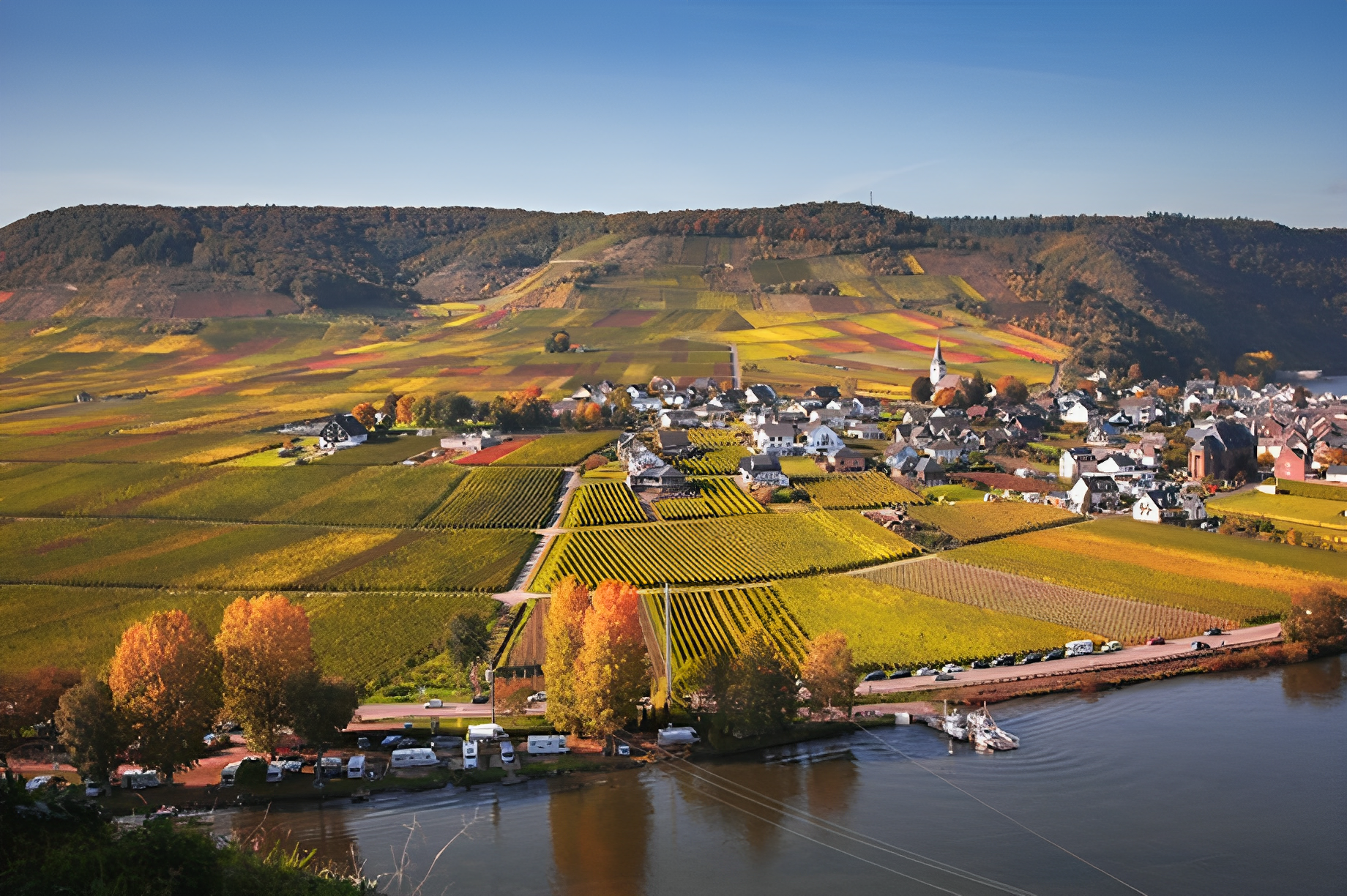
The Moselle Valley has a mild, fairly even climate: warm but rarely scorching summers, long mellow autumns and grey, damp winters. Here is the Moselle Valley weather month by month, based on figures from Germany’s national weather service (DWD) and compared with London, plus what to pack and what to do when it rains.
Three experiences we recommend
Two wine experiences in Trier that can shrug off a shower, and a river trip for the sunny days.
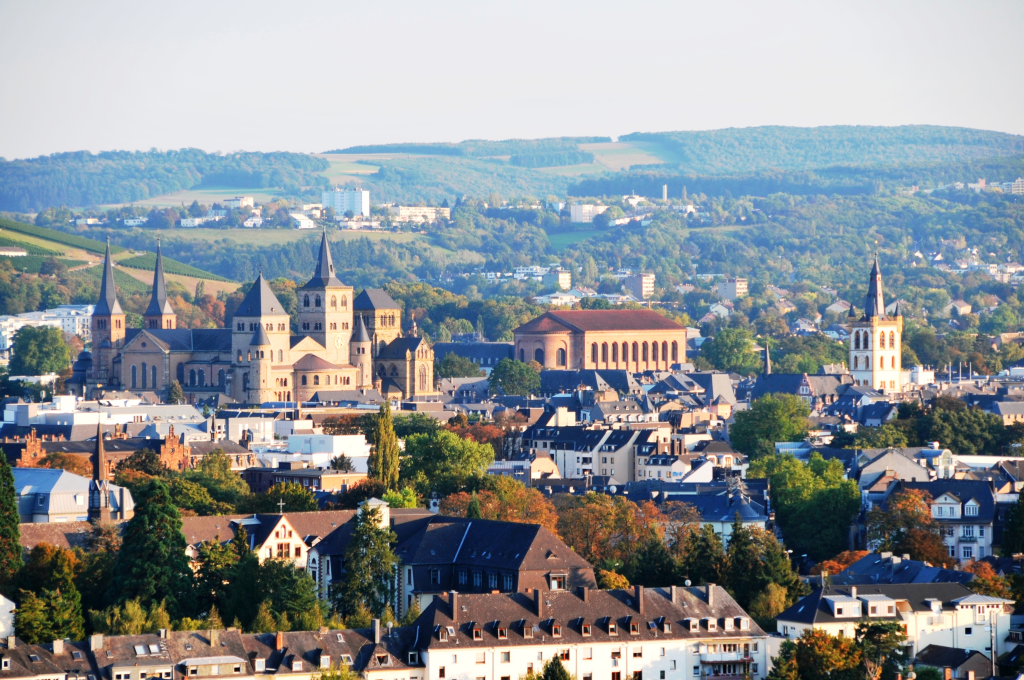 Trier: guided walk with wine tasting
The Roman city’s highlights with wine stops along the way – easy to adapt to the weather, and the tasting happens under cover.
Check prices & dates →
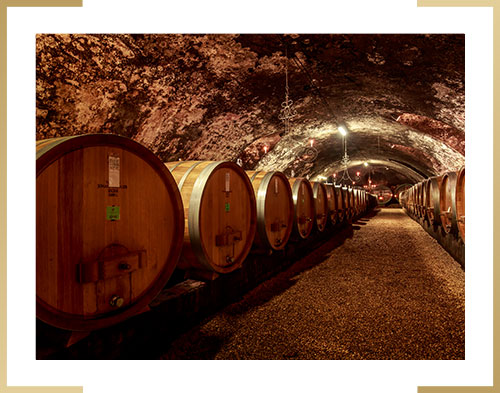 Trier: Germany’s oldest wine cellar
An hour underground in Trier – the perfect rainy-day plan, at the same cool cellar temperature all year round.
Check prices & dates →
Top pick
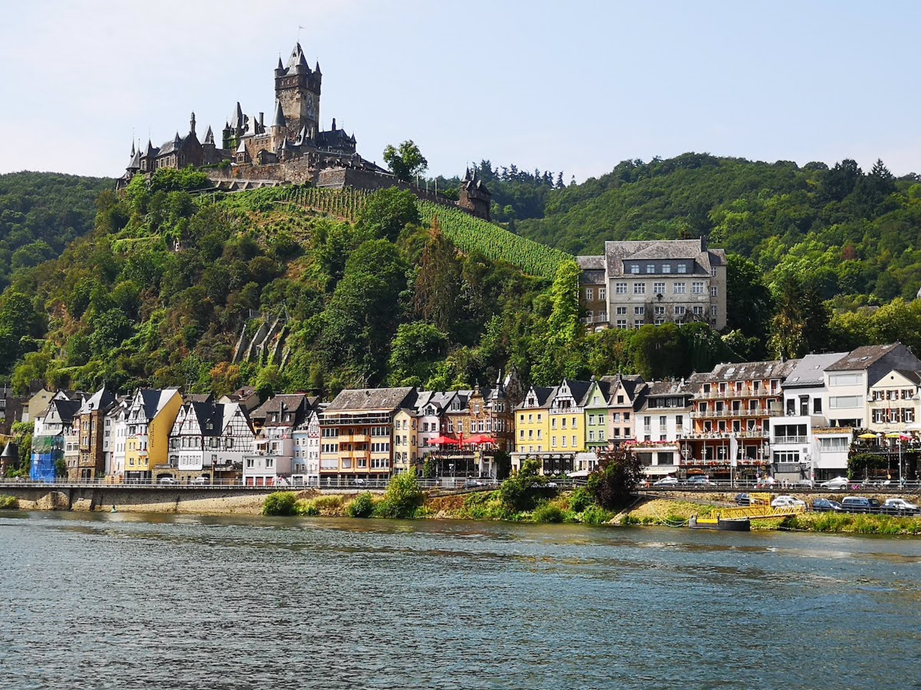 River cruise through the lock: Cochem–Beilstein return
The classic outing for a sunny day – through the lock and past the steep vineyards to little Beilstein.
Check prices & dates →
Moselle Valley weather: month-by-month climate table
The figures below come from the DWD (Deutscher Wetterdienst) weather station at Trier-Petrisberg and cover the 1991–2020 reference period. The station stands 261 metres above sea level on a hill above Trier and has records going back to 1937. Rainfall and sunshine are the DWD’s official long-term averages. The average daytime highs and night-time lows are our own calculation from the station’s daily readings in the DWD’s open database, and they match the DWD’s official monthly mean temperatures. Down by the river, the DWD also publishes averages for Bernkastel-Kues, shown in the second table – but without daily highs and lows, because the station closed in 2012 and the DWD has filled the series with modelled values.
| Month | High °C | Low °C | Rainfall (mm) | Sunshine (hrs) | Rain days (≥ 1 mm) |
|---|---|---|---|---|---|
| January | 4.5 | −0.4 | 64 | 48 | 12 |
| February | 6.1 | −0.2 | 53 | 70 | 10 |
| March | 10.8 | 2.2 | 51 | 131 | 10 |
| April | 15.7 | 4.9 | 44 | 187 | 9 |
| May | 19.7 | 8.6 | 67 | 214 | 10 |
| June | 23.0 | 11.8 | 66 | 225 | 10 |
| July | 25.2 | 13.8 | 72 | 235 | 10 |
| August | 24.9 | 13.3 | 62 | 215 | 9 |
| September | 20.4 | 10.0 | 60 | 160 | 8 |
| October | 14.6 | 6.8 | 65 | 96 | 10 |
| November | 8.6 | 3.3 | 62 | 45 | 11 |
| December | 5.1 | 0.6 | 78 | 39 | 13 |
| Year | 14.9 | 6.2 | 747 | 1,664 | 122 |
Down in the valley: Bernkastel-Kues (120 m above sea level)
| Month | Daily mean °C | Rainfall (mm) | Sunshine (hrs) |
|---|---|---|---|
| January | 2.8 | 56 | 38 |
| February | 3.4 | 47 | 67 |
| March | 6.8 | 47 | 120 |
| April | 10.7 | 41 | 180 |
| May | 14.7 | 62 | 202 |
| June | 17.9 | 66 | 212 |
| July | 19.8 | 70 | 225 |
| August | 19.3 | 64 | 209 |
| September | 15.1 | 58 | 150 |
| October | 10.9 | 58 | 95 |
| November | 6.6 | 54 | 44 |
| December | 3.6 | 68 | 28 |
| Year | 11.0 | 690 | 1,570 |
A few things stand out. Rainfall is surprisingly evenly spread – no month is really dry and none is really wet. April is the driest, December the wettest. Summer rain tends to arrive as short, heavy showers and thunderstorms rather than all-day downpours. And sunshine varies enormously through the year: July gets roughly six times as many sunny hours as December.
Older climate tables online sometimes credit the Moselle with 900–950 mm of rain a year and more than 2,500 hours of sunshine. DWD measurements show considerably less of both: about 750 mm and 1,660 hours in Trier, and about 690 mm and 1,570 hours down in the valley at Bernkastel-Kues.
The microclimate: why the valley is warmer than the hills around it
The Moselle winds through a deep valley between the Hunsrück and Eifel uplands, and you can feel it on the thermometer. DWD averages for 1991–2020 give a mean annual temperature of 11.0 °C at Bernkastel-Kues (120 m, right by the river) against 9.0 °C at Deuselbach up in the Hunsrück (480 m), just over 15 kilometres to the south. Trier-Petrisberg sits in between at 10.2 °C. So the valley floor is usually almost a degree warmer than the first table suggests, and the plateaus are noticeably cooler.
The hills around the valley take the edge off cold winds, and the steep south-facing slopes catch the sun at an almost perfect angle. The soil plays its part too: according to the regional wine body Moselwein, the slate stores heat, which is a real advantage on chilly autumn nights. That is why Riesling can ripen this far north. It is a late-ripening grape, and the final weeks before the harvest in September and October are decisive. Roughly a third of the vineyards along the Moselle, Saar and Ruwer are on steep slopes, such as the Calmont between Bremm and Ediger-Eller.

The climate is getting warmer, too. For 1961–1990 the DWD’s mean annual temperature at Trier-Petrisberg was 9.2 °C. For 1991–2020 it is 10.2 °C – a full degree more in 30 years.
Moselle Valley weather compared with London
To put the numbers in perspective, here is Trier-Petrisberg alongside the Met Office’s Heathrow station in west London, using the same 1991–2020 averaging period for both.
| Month | High, Moselle (Trier) | High, London (Heathrow) | Difference |
|---|---|---|---|
| January | 4.5 | 8.4 | −3.9 |
| February | 6.1 | 9.0 | −2.9 |
| March | 10.8 | 11.7 | −0.9 |
| April | 15.7 | 15.0 | +0.7 |
| May | 19.7 | 18.4 | +1.3 |
| June | 23.0 | 21.6 | +1.4 |
| July | 25.2 | 23.9 | +1.3 |
| August | 24.9 | 23.4 | +1.5 |
| September | 20.4 | 20.2 | +0.2 |
| October | 14.6 | 15.8 | −1.2 |
| November | 8.6 | 11.5 | −2.9 |
| December | 5.1 | 8.8 | −3.7 |
- Summer is a notch warmer. From May to August, afternoons in Trier are about 1.5 °C warmer than at Heathrow, and down by the river it is usually warmer still. Summer nights are much the same: the July low averages 13.8 °C at Petrisberg and 14.2 °C at Heathrow.
- Spring and early autumn feel familiar. April and September highs are within a degree of London’s, so a visit in the shoulder seasons won’t feel very different from south-east England.
- Winter is distinctly colder. From November to February, days are 3–4 °C cooler than in London, and frost is far more common: around 62 frost nights a year at Petrisberg against 27 days of air frost at Heathrow.
- Sunshine and rain are roughly on a par. The Met Office average for Heathrow is 1,675 hours of sunshine and 615 mm of rain a year, against about 1,570 hours and 690 mm in the valley at Bernkastel-Kues (about 1,660 hours and 750 mm in Trier). Rain falls on 122 days a year at Petrisberg and 112 at Heathrow, so pack a brolly either way.
Seasons in the Moselle Valley – and what to pack
Spring (March–May): green slopes, chilly nights
Daytime temperatures climb from about 11 °C in March to almost 20 °C in May, but the nights stay cool. In April the average overnight low is still below 5 °C, and frost can occur as late as April. April is also the driest month of the year and a good time to walk the Moselsteig before the heat arrives. Pack: layers, a light down jacket or fleece for the evenings, a waterproof and sturdy shoes for the steep paths.
Summer (June–August): heat, thunderstorms and long days
July and August afternoons hover around 25 °C, and on the valley floor it often feels hotter. Trier-Petrisberg averages 52 summer days (25 °C or more) and 14 hot days (30 °C or more) a year, most of them in July and August. During heatwaves the vineyard slopes offer next to no shade, so walk early in the morning and save the boat trip or wine cellar for the afternoon. Summer rain often comes as heavy thundery showers. Pack: a sun hat, sun cream, a water bottle, light clothes and a thin rain jacket.
Autumn (September–November): harvest, colour and morning mist
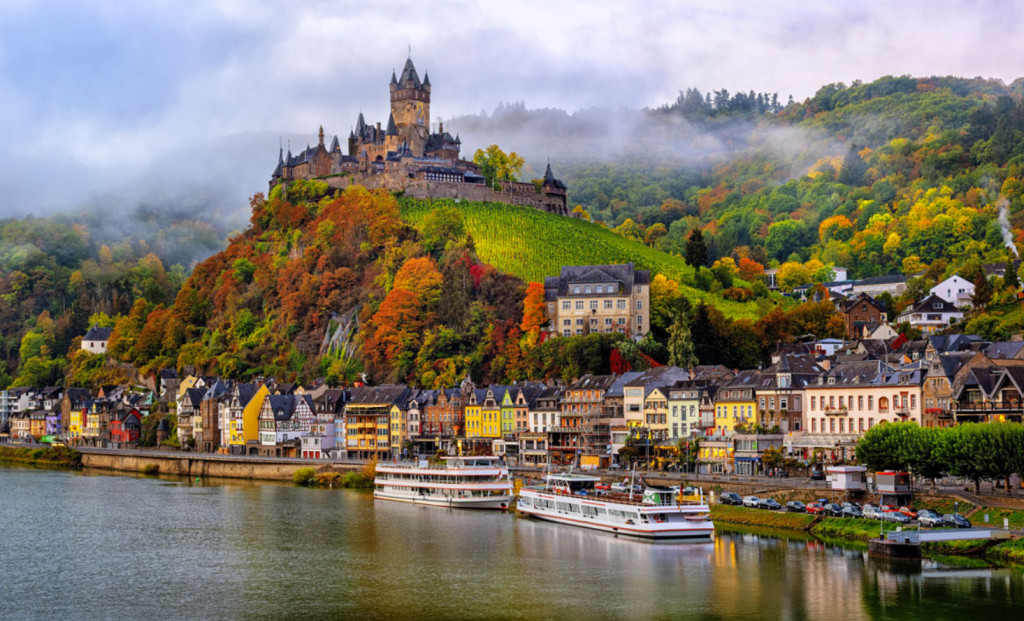
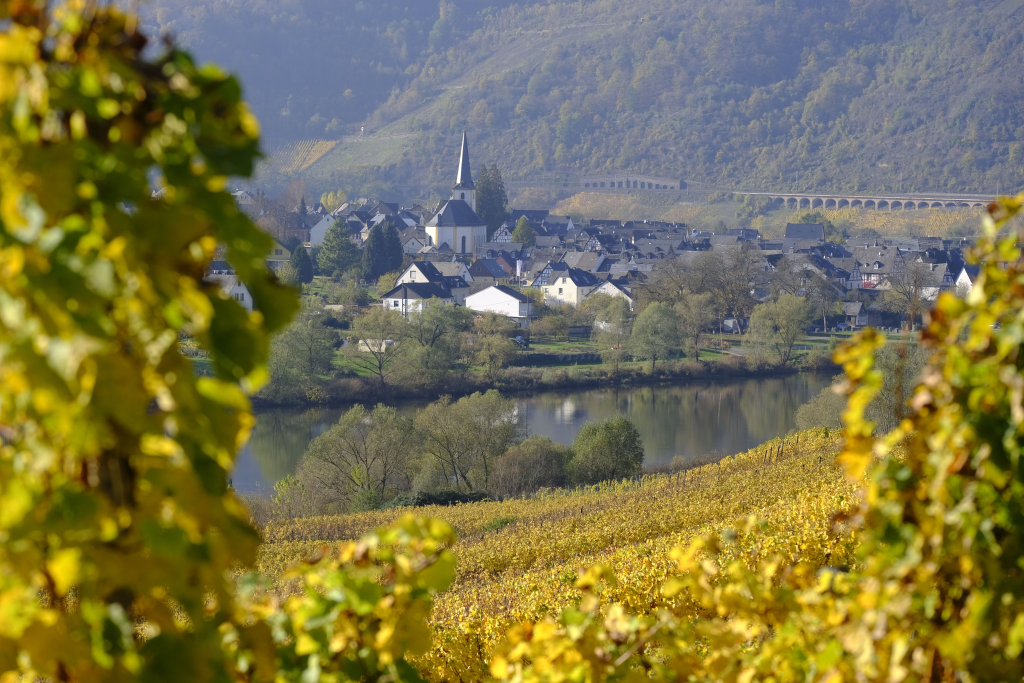
For many visitors September is the best month of all: around 20 °C by day, relatively little rain (8 rain days on average) and the grape harvest in full swing. October is cooler but often beautiful as the vine leaves turn gold. This is also the season of the Moselle wine festivals.
Morning mist is part of autumn in the valley. On clear, still nights, cold air drains down from the hills and pools over the river, so the day often starts under a grey blanket that lifts by late morning. It is a lovely sight from above, and photographers like to climb to a viewpoint at dawn to see the valley filled with mist while the hilltops sit in sunshine. If you are driving or cycling along the river early in the morning, expect poor visibility. Viewpoints and boat trips are better saved for after lunch.
By November it turns dark, wet and grey. The whole month brings only about 45 hours of sunshine, and many wine taverns and boat services have switched to winter hours or closed for the season. Pack: a warm jumper, a waterproof jacket and shoes that can cope with muddy paths.
Winter (December–February): grey, chilly – and sometimes floods
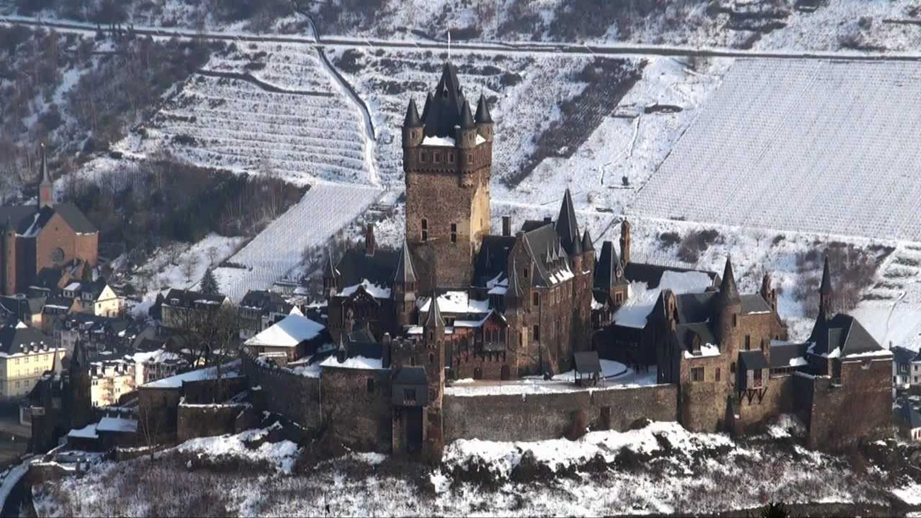
Winter on the Moselle is colder than in London. Days hover around 4–6 °C and nights around freezing. Trier-Petrisberg averages 62 frost nights a year, but only 11 days when the temperature stays below zero all day. Snow does fall, more often on the hills than down in the valley. What you can count on is grey skies: December has only about 39 hours of sunshine. During Advent, the Christmas markets in places such as Trier and Bernkastel-Kues brighten up the gloom.
Moselle floods: when the river bursts its banks
The Moselle can rise quickly after prolonged rain or snowmelt in France, Luxembourg and Saarland. The highest levels ever recorded in Trier and Cochem date from the Christmas flood of December 1993. Several winter floods have followed since, but one of the most recent major floods came in spring. During the Whitsun flood of May 2024, the river reached 9.60 metres in Trier on 18 May and 8.17 metres in Cochem the following day, according to the Rhineland-Palatinate state environment agency (LfU). In Trier, the river rose more than four metres in twelve hours.
When the river floods, riverside promenades, car parks and the motorhome stopovers closest to the water go under. Quays and boat services may close, and some riverside roads are shut. The authorities’ flood warning service kicks in when the gauge in Trier passes 5–6 metres and is still rising.
Many campsites and motorhome stopovers sit right by the water. After heavy rain, follow the forecast on hochwasser.rlp.de (the state flood portal) or the river levels on PEGELONLINE, and move in good time when the staff ask you to.
The best weather for walking, cycling and river trips
- Walking (for example the Moselsteig): late April to June and September to mid-October. The steep slopes are hard going at 30 °C, and muddy paths get slippery in winter.
- Cycling (the Mosel-Radweg): May to September. The route follows the river and is almost flat, so the heat matters less – but bear in mind that floods can close sections of it. See our guide to the Moselle cycle route.
- Boat trips: the season follows the weather. The Kolb shipping company, for example, runs its trips around Cochem from March to October and the lock cruise into November. For longer journeys on the river, see our guide to Moselle river cruises.
- Viewpoints and the Koblenz cable car: pick a clear day. Autumn morning mist usually clears by the afternoon.
For a look at the whole year from a travel point of view – events, school holidays and crowds – see our guide to the best time to visit the Moselle Valley.
Rainy day in the Moselle Valley? Things to do indoors
With around ten rain days a month all year round, it is wise to have a plan B. The good news is that much of the best of the Moselle Valley happens under a roof anyway.
- Wine cellars and tastings. A vaulted cellar keeps the same cool temperature whatever the weather, and a tasting at a winery takes one to two hours. Easy to book at short notice on a wet afternoon.
- Roman Trier. Trier is the best rainy-day town in the valley, with the Porta Nigra, the Imperial Baths, the Barbara Baths and the amphitheatre, plus museums such as the Rheinisches Landesmuseum. The Porta Nigra is open daily with seasonal hours: 9am–4pm in winter and 9am–6pm from April to September. The Roman monuments may close temporarily in bad weather, though.
- The Reichsburg in Cochem. The castle can only be visited on a guided tour. The tour takes in the furnished rooms but also crosses the courtyards, so bring a jacket.
- Thermal baths. The Moseltherme in Traben-Trarbach has thermal water at 32 °C and a sauna. It closes every year in calendar weeks 3–5 and on some public holidays, so check the opening hours before you go.
- Local museums and churches in Bernkastel-Kues and Koblenz, and wine shops (Vinotheken) where you can taste several producers under one roof.
Check a local forecast for the Moselle itself, not just for “Trier”. Cloud and rain often hang over the Eifel and Hunsrück hills while it stays drier down in the valley – and on autumn mornings it is the other way round, with mist lingering in the valley while the plateaus are in sunshine.
Moselle Valley weather: frequently asked questions
What is the warmest month in the Moselle Valley?
July, closely followed by August. In Trier the average daytime high is about 25 °C (DWD 1991–2020), and down by the river it is often almost a degree warmer. On average there are about 14 days a year reaching 30 °C or more.
Does it rain a lot in the Moselle Valley?
Not especially – about 690 mm a year in the valley at Bernkastel-Kues and about 750 mm in Trier (DWD 1991–2020), spread evenly through the year with 8–13 rain days a month. That is a little more than London Heathrow’s 615 mm. Summer brings the most rain in millimetres, but mostly as short showers.
Is the Moselle Valley warmer than London?
In summer, yes: from May to August afternoons are about 1.5 °C warmer than at Heathrow, and warmer still by the river. In winter, no: days are 3–4 °C colder and frost is much more common. Spring, early autumn and annual sunshine are much the same (Met Office, Heathrow 1991–2020).
When is the flood risk highest?
Usually in the winter half of the year after prolonged rain or snowmelt, but floods can happen at other times too – in May 2024 the Moselle reached 9.60 metres in Trier. Keep an eye on hochwasser.rlp.de if you are staying near the river.
Is the Moselle Valley worth visiting in winter?
Yes, if you are after Christmas markets, wine cellars, Trier’s Roman buildings and quiet villages. Expect grey weather around 5 °C and shorter opening hours. For walking and boat trips, May to October is much better.
What can you do in the Moselle Valley when it rains?
Wine tastings and cellar tours, Trier’s Roman monuments and museums, a guided tour of the Reichsburg in Cochem or a session at the Moseltherme in Traben-Trarbach.
- DWD Climate Data Center – 1991–2020 averages – mean temperature, rainfall, sunshine, summer, hot, frost and ice days for Trier-Petrisberg, Bernkastel-Kues and Deuselbach
- DWD Climate Data Center – daily climate data (station 05100 Trier-Petrisberg) – average highs/lows and rain days 1991–2020 (our own calculation)
- DWD – 1961–1990 averages – Trier-Petrisberg mean annual temperature for comparison
- Met Office – Heathrow climate averages 1991–2020 – average maximum and minimum temperature, days of air frost, sunshine, rainfall and rain days
- LfU Rheinland-Pfalz – Hochwasser im Mai 2024 (Whitsun flood) – river levels in Trier and Cochem
- Hochschule Trier (J. Sartor) – Moselpegel – December 1993 as the highest recorded level in Trier and Cochem; warning thresholds
- Weinland Mosel – Wurzeln & Geologie and Daten & Fakten – slate storing heat, steep-slope vineyards, Calmont
- Zentrum der Antike Trier – Porta Nigra – seasonal opening hours
- Reichsburg Cochem – guided tours only
- Moseltherme Traben-Trarbach – thermal water, opening hours and closure weeks
- Personenschifffahrt Kolb – boat season around Cochem
- Hochwasser Rheinland-Pfalz and PEGELONLINE – current river levels
Last updated: October 2026. Facts checked against the sources above; prices and opening hours may change.