
The Moselle Valley – vineyards, castles and the river

The Moselle Valley – vineyards, castles and the river
The towns worth stopping in, the experiences that pay off and practical tips for getting there from the UK and beyond – all in one place.
This page contains affiliate links to GetYourGuide. If you book through them we may earn a small commission, at no extra cost to you.
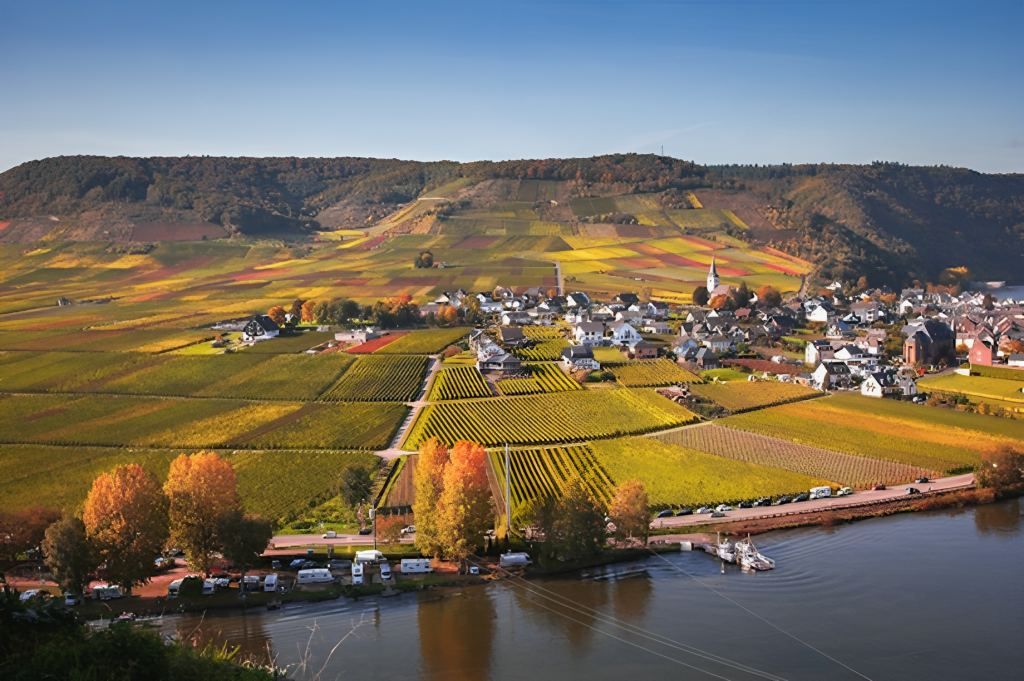
The Moselle Valley is the winding river valley in western Germany where the Moselle flows from the borders with Luxembourg and France down to the Rhine at Koblenz. It is home to some of the steepest Riesling vineyards in the world, medieval castles and small half-timbered wine villages – and all of it is reachable by car, boat, train or bike.
It is easy to see the appeal: Frankfurt and Luxembourg are short flights from the UK, the distances between towns are small, and wine is at the heart of almost everything. Many international visitors first see the valley from the deck of a Rhine–Moselle river cruise, but it rewards a slower trip on your own. This guide helps you decide where to stay, what to see and how long you need.
Three experiences we recommend
A boat trip, a wine walk and a wagon ride through the vineyards – three highly rated ways to see the valley from different angles.
 Cruise with lock: Cochem–Beilstein return
The Moselle classic: through one of the river’s locks to the little wine village of Beilstein and back, with Cochem’s castle as a backdrop.
Check prices & dates →
Most booked
 Trier: guided city walk with wine tasting
Roman history and local wines on the same stroll – an easy way to get your bearings in Germany’s oldest town.
Check prices & dates →
Often sells out
 Kröv: covered wagon ride with wine tasting
A covered wagon climbs through the vineyards above Kröv, with tastings of the estate’s own wines along the way.
Check prices & dates →
Explore the towns of the Moselle Valley
Most visitors build their trip around one or two bases. Cochem and Bernkastel-Kues are the classic wine towns, Trier and Koblenz bring city life and history, and Metz shows what the Moselle looks like on the French side. You will find more places in our guide to the towns of the Moselle Valley.
 CochemThe Reichsburg above the river, boat trips to Beilstein and the wine villages around it.
 Bernkastel-KuesA half-timbered market square, steep vineyards and the liveliest wine town on the Middle Moselle.
 TrierPorta Nigra and Roman monuments on the UNESCO World Heritage List.
 KoblenzThe Deutsches Eck, where the Moselle meets the Rhine, and the cable car up to Ehrenbreitstein.
 ZellThe wine town in the river’s loop, known for its Zeller Schwarze Katz wine.
 MetzThe French Moselle: a Gothic cathedral and the Centre Pompidou-Metz.
Plan your trip
 Best time to visitSpring, summer, harvest or Christmas markets – how to pick your season.
 Moselle river cruiseFrom a one-hour boat trip to a cruise lasting several days.
 Wine festivalsThe festivals that fill the villages from summer into autumn.
 Stay at a winerySleep among the vines – how to find the right place.
 Motorhome on the MoselleMotorhome stopovers, routes and what to bear in mind along the river.
 RieslingThe grape that made the Moselle famous – styles, sweetness and labels.
- Moselle Valley weather – temperatures and rainfall month by month.
- Moselle Valley map – the towns along the river and the distances between them.
- Campsites – riverside camping from Trier to Koblenz.
- Moselle Cycle Route – the Mosel-Radweg and its best stages.
- Things to do in the Moselle Valley – castles, boats, wine tasting and walking.
How to get to the Moselle Valley
By air. Frankfurt am Main is the main gateway, with direct flights from London and many other UK and international airports, including long-haul routes from North America. From there it is a couple of hours by car to Cochem or Bernkastel-Kues, or you can take the train via Koblenz. Luxembourg is the better choice for the upper valley and Trier. Frankfurt-Hahn is closest to the river itself, but it is served mainly by Ryanair, so check whether there is a route from your airport. Schedules change from season to season – always check the current timetable with the airlines.
By train. From London, take the Eurostar to Brussels. Trains leave Luxembourg every hour for both Brussels and Trier, so going via Luxembourg brings you straight into the upper valley; for Koblenz and the lower Moselle, the high-speed line via Cologne is usually the better bet. It makes for a long day, but it is relaxed and needs no car at the other end.
By car. From the UK, cross the Channel by ferry or Eurotunnel and drive through Belgium and Luxembourg – a long day at the wheel, which many people split with an overnight stop. A car, or a motorhome, is still the easiest way to reach the smaller wine villages. Remember that you drive on the right.
Without a car, the regional trains between Koblenz and Trier work well – they stop at Cochem and at Bullay (for Zell), among other places. For Bernkastel-Kues and the smaller wine villages, take a bus or a boat. Public transport within Luxembourg is free (except first class), which is handy if you fly into Luxembourg.
How many days do you need?
Two to three days are enough for one part of the valley, such as Cochem and its surroundings. If you want to see Koblenz, the Middle Moselle and Trier, four to five days is about right. By bike, allow a week: the Moselle Cycle Route (Mosel-Radweg) between Perl and Koblenz is 248 km long and mostly flat, following the water.
Sample itinerary: four days in the Moselle Valley
Flying into Frankfurt and out of Luxembourg? This route follows the river upstream from Koblenz to Trier:
- Day 1 – Koblenz: the Deutsches Eck, the old town and the cable car across the Rhine to Ehrenbreitstein Fortress. Drive to Cochem in the evening.
- Day 2 – Cochem: the Reichsburg in the morning, a boat to Beilstein in the afternoon and wine tasting in one of the villages.
- Day 3 – Zell, Traben-Trarbach and Kröv: follow the river south through its loops and spend the night in Bernkastel-Kues.
- Day 4 – Bernkastel-Kues and Trier: morning on the market square, afternoon at Porta Nigra and the cathedral. From Trier it is a short hop to Luxembourg Airport.
Moselle Valley FAQs
Where is the Moselle Valley?
In western Germany, mainly in the state of Rhineland-Palatinate. The river rises in the Vosges in France, forms the border between Luxembourg and Germany and flows into the Rhine at the Deutsches Eck in Koblenz.
When is the best time to visit the Moselle Valley?
May to October brings the best weather and the most boat trips. Late summer and autumn are the season of harvests and wine festivals, while December draws visitors to the Christmas markets in places such as Trier and Bernkastel-Kues. More in our guide to the best time to visit.
Do you need a car in the Moselle Valley?
No, but it makes the small wine villages easier to reach. Trains run between Koblenz and Trier via Cochem, and boats and buses link the towns along the river. Cycling is a popular alternative thanks to the Moselle Cycle Route.
What wine is the Moselle Valley known for?
Riesling, which covers just over 60 per cent of the vineyard area – often on very steep slate slopes. Find out more in our guide to Riesling.
Is Trier really Germany’s oldest town?
The town itself says so: Trier was founded by the Romans in 17 BC. Its Roman monuments, cathedral and Church of Our Lady have been a joint UNESCO World Heritage Site since 1986.
- Mosellandtouristik (visitmosel.de) – Factsheet Mosel – length and course of the river, Mosel-Radweg 248 km
- DLR Rheinland-Pfalz – Zahlen und Fakten, Anbaugebiet Mosel – vineyard area and share of Riesling
- Weinbau in Deutschland (Wikipedia) – area by wine region and ranking (supporting)
- UNESCO World Heritage Centre – Trier World Heritage Site, inscribed 1986
- City of Trier – history of the city – founded 17 BC, Germany’s oldest town
- Luxembourg.public.lu – public transport – free public transport (except first class), hourly trains to Trier and Brussels
- Frankfurt-Hahn Airport and Luxembourg Airport (Wikipedia) – airlines and distances (supporting)
Last updated: October 2026. Facts checked against the sources above; prices and opening hours may change.