
Moselle river cruise: boat trips, locks and cruise ships
This article contains affiliate links to GetYourGuide. If you book through them we may earn a small commission, at no extra cost to you.
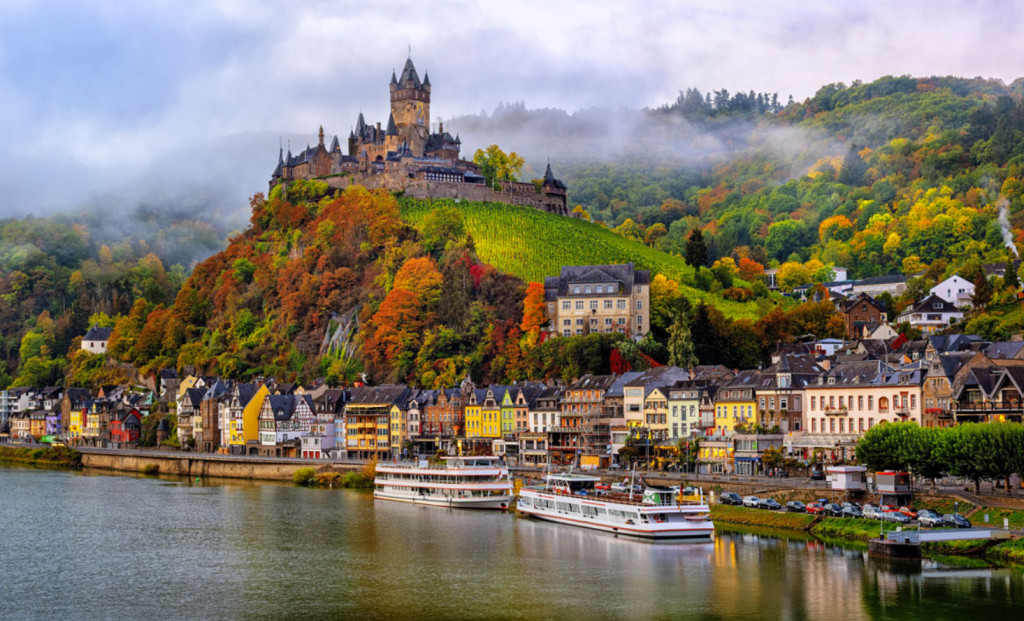
A Moselle river cruise can mean a one-hour sightseeing trip from the quay in Cochem or a week on a river cruise ship between Koblenz, Bernkastel-Kues and Trier. This guide explains which boats run where, which stretches are the most scenic, how the locks work and when it pays to book ahead.
Three boat trips we recommend
Highly rated, with a fixed time on board, on the most photogenic stretches of the lower Moselle.
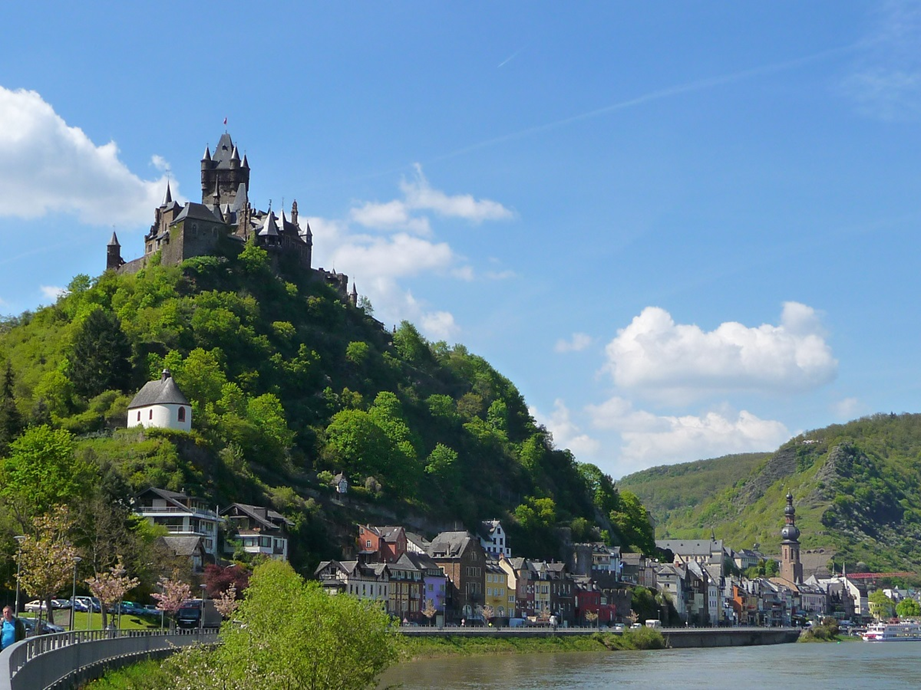 Cochem–Beilstein return cruise through the lock
The classic route through the Moselle’s tight bends, with a lock passage at Fankel and the half-timbered village of Beilstein as your destination. The best choice if you only have time for one boat trip.
Check prices & dates →
Most booked
Cochem: 1-hour sightseeing cruise on the Moselle
A short, easy trip past the Reichsburg and the wine villages of Valwig and Ernst – it fits neatly between the castle visit and lunch.
Check prices & dates →
Full day
 From Alken: full-day boat trip to Cochem
A long, unhurried day on the lower Moselle with time ashore in Cochem – for those who want more river than town.
Check prices & dates →
Two ways to cruise the Moselle: day boat or river cruise ship
“Moselle river cruise” covers two very different things. One is the day trip: you buy a ticket at the landing stage, spend an hour or a few on the sun deck and step off in the next wine village. The other is a multi-day river cruise, where you sleep on board for several nights and the ship moves you between towns while you eat dinner or sleep.
Day boats suit you if you are travelling by car, motorhome or train and already have a base in the valley – in Cochem, Zell, Bernkastel-Kues or Trier. Cruise ships suit you if you want to unpack once and have travel, meals and often excursions in one package. Plenty of people combine the two: a week driving along the river and a couple of boat trips on the finest stretches.
- want to set your own pace and stop wherever you like
- have a car, motorhome or bike with you
- want to try the Moselle from the water without booking a whole holiday
- you want to decide for yourself how long to stay in each place
- you want to see Trier properly (many ships moor outside the city)
- you are travelling on a tight budget
Moselle boat trips by the day – routes and operators
The largest operator of scheduled services and round trips on the German Moselle is Personenschifffahrt Gebr. Kolb from Briedern, which runs its boats under the name Moselrundfahrten. It has departures from Cochem, Treis, Zell, Traben-Trarbach, Bernkastel-Kues, Leiwen and Trier, and its boats have a restaurant on board. In Cochem, tickets are also sold at the “Rundfahrten Undine” agency by the old Moselle bridge. The table below is based on the operator’s 2026 timetables.
| Route | Duration | Lock | 2026 season | Adult fare |
|---|---|---|---|---|
| Cochem, sightseeing cruise | 1 hr | – | Easter, weekends in April, daily 27 Apr–31 Oct | see operator |
| Cochem–Beilstein–Cochem | approx. 1 hr out, 50 min back | Fankel | Weekends in April, daily 1 May–31 Oct | approx. €20 return |
| Bernkastel–Lieser–Mülheim (round trip) | 1 hr | – | Daily, Easter–1 Nov | approx. €14 |
| Bernkastel–Traben-Trarbach | 1 hr 45 min–2 hrs one way | Zeltingen | May–early November | see operator |
| Cochem–Traben-Trarbach (full day) | approx. 4 hrs 45 min one way | Fankel, St. Aldegund, Enkirch | 20 Jun–26 Sep, Tue and Sat | see operator |
| Trier, sightseeing cruise | 1 hr | – | Daily 1 May–31 Oct | approx. €14 |
| Trier–Saarburg–Trier | approx. 2 hrs one way | Trier + locks on the Saar | Wed and Sat 2 May–mid-Oct, also Sun Jul–Sep | approx. €28 return |
Children aged 6–14 pay half price on most trips (4–14 in Trier), and dogs on a lead travel free. Fares and times change between seasons, so always check the current timetable at moselrundfahrten.de before you go.
Cochem to Beilstein: the most beautiful boat trip on the Moselle
If you only take one boat trip, make it this one. The boat leaves Cochem, passes Ernst and Bruttig and is lifted upstream at Fankel lock before mooring at Beilstein, the tiny half-timbered village known as the “Sleeping Beauty of the Moselle”. Ashore you’ll find narrow lanes, the ruins of Metternich castle and the pilgrimage church at the top of the village. Departures from Cochem in 2026: 10:30, 12:00, 13:30, 15:00 and 16:15. You don’t have to take the same boat back – you can stay in Beilstein and catch a later sailing.
If you want more than a short loop, the operator’s Große Rundfahrt heads downstream towards the Treis bend (Treiser Moselbogen), a 1.5-hour trip from Cochem that runs a few days a week from May to October. The one-hour sightseeing cruise passes the Reichsburg, the Brauselay cliff, Ebernach monastery and the wine villages of Valwig and Ernst – a good option with children or if you are short of time.
Bernkastel-Kues and Traben-Trarbach
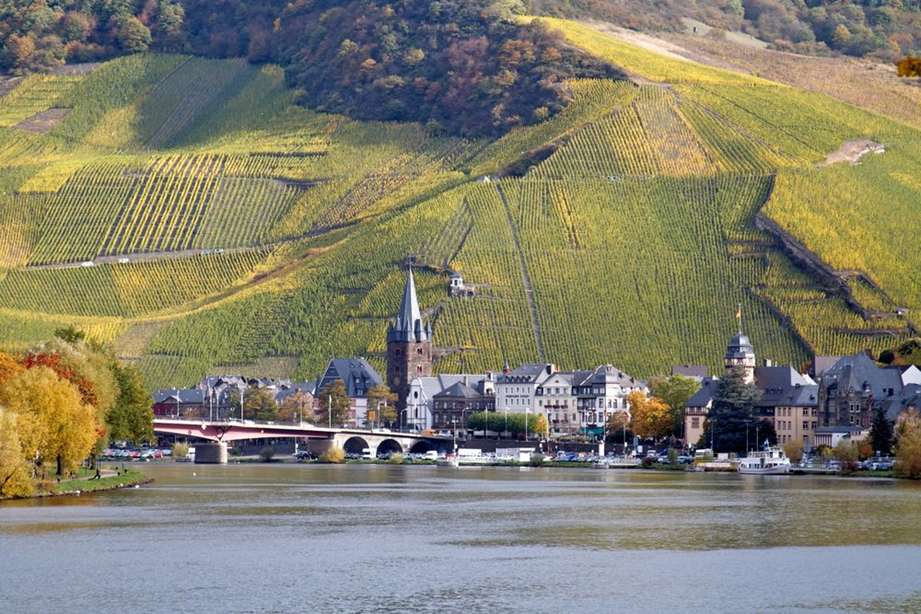
On the Middle Moselle, two trips stand out. The short round trip from Bernkastel runs upstream to Lieser and Mülheim and back in an hour – you can get off at Lieser or Mülheim if you fancy walking back. The longer service between Bernkastel-Kues and Traben-Trarbach takes just under two hours and passes through the lock at Zeltingen, stopping at places such as Graach, Wehlen, Kloster Machern, Ürzig and Kröv. This is the stretch where the famous steep Riesling vineyards glide past at close quarters – find out more in our guide to Moselle Riesling.
A smart plan is to take the morning boat from Bernkastel to Traben-Trarbach, have lunch among the Art Nouveau villas and return on an afternoon boat. In Bernkastel the round trips and the scheduled boats leave from different landing stages (the operator distinguishes between the red and the yellow one), so check which applies when you buy your ticket.
Trier and the side trip to Saarburg
From the landing stage at Trier-Zurlauben, about a ten-minute walk from the Porta Nigra, sightseeing cruises of one or two hours depart. The most interesting trip, though, leaves the Moselle altogether: the boat passes through the lock in Trier, turns onto the Saar at Konz and follows the river and the Saar canal to the small town of Saarburg. It runs on Wednesdays and Saturdays from May to mid-October, plus Sundays in high summer, leaving at 12:00 and arriving back in Trier at around 18:00. Read more about the city in our guide to Trier.
Lower Moselle: Zell, Alken and Koblenz
Further downstream there is less on offer. From Zell, a full-day trip runs via Bullay, St. Aldegund, Ediger and Beilstein to Cochem, through two locks (St. Aldegund and Fankel) and with a few hours ashore. Between Cochem and Traben-Trarbach there is a full-day trip on Tuesdays and Saturdays in summer – just over four and a half hours each way through three locks. Around Alken, below Thurant castle, full-day trips run both upstream to Cochem and downstream to Koblenz and the Deutsches Eck, where the Moselle meets the Rhine. The long services towards Koblenz only run on certain days and have changed from year to year, so always check the current season.
The Moselle locks – how they work
The Moselle is canalised all the way from France to the Rhine. On the German stretch between Trier and Koblenz there are ten locks: Trier, Detzem, Wintrich, Zeltingen, Enkirch, St. Aldegund, Fankel, Müden, Lehmen and Koblenz. Further upstream, on the stretch shared with Luxembourg, there are more. The German locks are run by the federal waterways authority, WSA Mosel-Saar-Lahn, based in Koblenz.
For passengers, going through a lock is a small attraction in itself. The boat glides into the long concrete chamber, the gates close behind you and the water rises or falls several metres while you stand at the rail watching the walls grow or shrink. On the Cochem–Beilstein route the boat is lifted at Fankel on the way out and lowered on the way back. Only Trier, Zeltingen and Fankel have two chambers for commercial traffic, so at the other locks pleasure boats may have to wait for barges – expect the timetable to slip a little.
Every year the locks on the Moselle and the Saar close for maintenance for around ten days in June (in 2026: 8–17 June). During that time no boats pass through the locks, and trips such as Trier–Saarburg are cancelled or altered. Low or very high water can also affect services. Current closures are published on ELWIS and by WSA Mosel-Saar-Lahn.
Moselle river cruises on a cruise ship
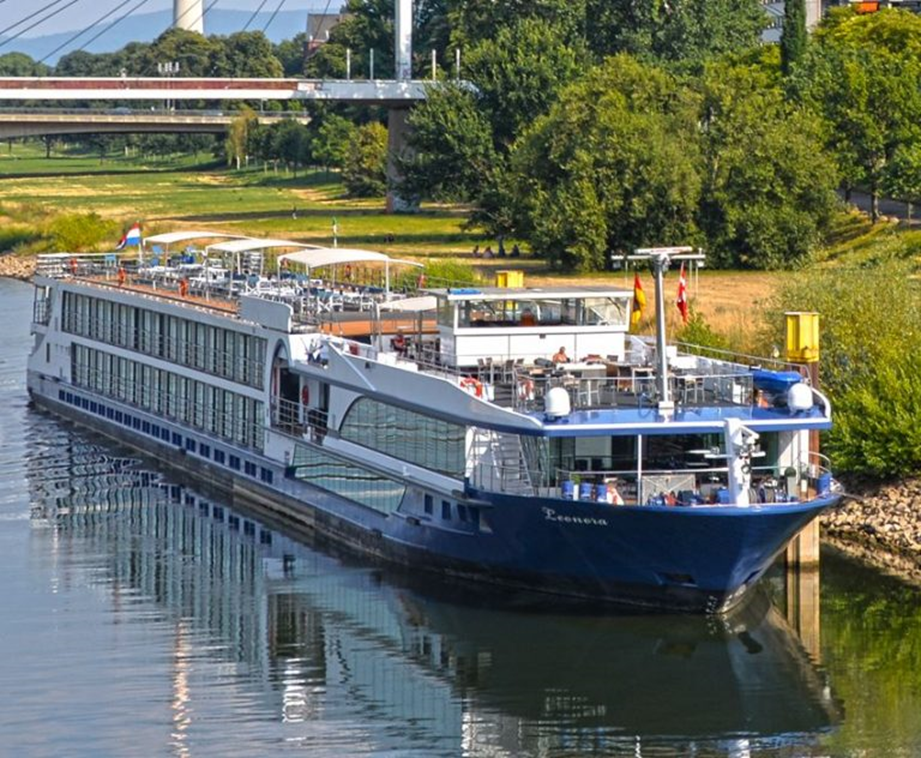
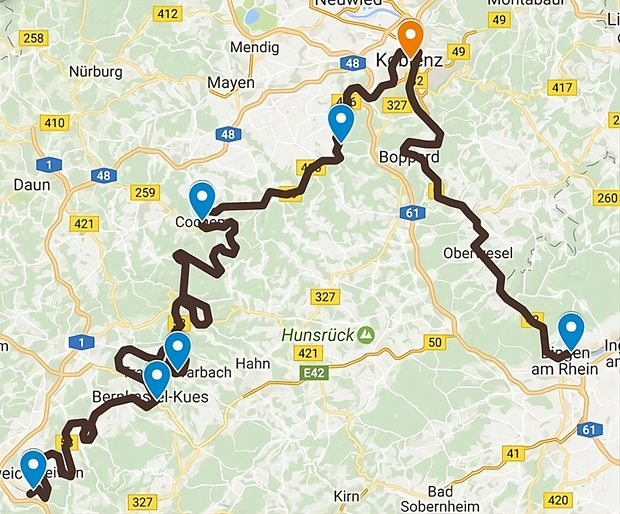
Multi-day cruises on the Moselle are almost always a combination of the Rhine and the Moselle. Ships set off from Cologne, Düsseldorf, Koblenz, Frankfurt or occasionally Strasbourg and Basel, turn onto the Moselle at the Deutsches Eck and turn round somewhere between Bernkastel-Kues and Trier – some continue up the Saar towards Saarburg and Mettlach or on to Luxembourg (Remich, Grevenmacher). A typical route looks like this:
- Day 1: embark in Cologne or Koblenz in the afternoon.
- Day 2: Cochem – the Reichsburg and the old town.
- Day 3: Trier (the ship often moors at Mehring or Schweich, with a coach into the city).
- Day 4: Bernkastel-Kues, sometimes with the evening ashore.
- Day 5: Koblenz or Alken/Winningen on the way back out to the Rhine.
- Day 6: disembark in Cologne. Longer itineraries add Traben-Trarbach, Zell, Beilstein, Treis-Karden or Rhine towns such as Rüdesheim.
Cruise lines with Moselle itineraries in their 2026–2027 programmes include A-ROSA, nicko cruises, VIVA Cruises, Phoenix Reisen, Plantours, 1AVista, Lüftner (Amadeus) and CroisiEurope – mostly German-language operators. A-ROSA, for example, runs a five-night cruise Cologne–Cochem–Trier/Mehring–Bernkastel-Kues–Koblenz–Cologne; it can be booked on its English-language website (prices in euros) and lists English-speaking hotel staff and guides. From the UK, Riviera Travel sells an eight-day Rhine and Moselle cruise with flights or rail included. Not every Rhine cruise includes the Moselle, so check that it really appears on the route – and where the ship moors – before you book.
How much does a Moselle river cruise cost?
In autumn 2026, German operators’ lead-in prices were roughly €680–950 per person for 5–6 days and €1,150–1,900 for 7–8 days, in the cheapest cabin category (the odd special offer comes in lower). A cabin with a French balcony, single supplements, drinks packages, excursions (a guided bike ride ashore often costs €30–60) and travel to and from the ship all cost extra. Packages sold in the UK with flights or rail included are priced differently, so always compare what is included, not just the headline price.
Look at where the ship actually moors, and for how long. A cruise that stays in Bernkastel-Kues until late evening gives you the wine taverns on the market square after the day-trippers have gone home, whereas a stop of a few hours in the middle of the day is barely enough for a stroll. And “Trier” on the itinerary often means a mooring some distance outside the city.
River cruise season on the Moselle
The main season runs from spring to October, with most departures from summer into October – the time of the grape harvest and the wine festivals. In November and December there are also shorter Christmas market cruises to Cochem, Bernkastel-Kues and Trier. In rare cases low or high water forces the operators to change the route.
Combine the boat with cycling or hiking
The scheduled boats are perfect for one-way journeys. Cycle the Moselle cycle path in one direction and take the boat back – or the other way round, if you’d like the wind behind you in the afternoon. Bikes are carried when there is space, for a fee of around €2–4 depending on the distance. Good stages are Bernkastel-Kues–Traben-Trarbach and Cochem–Beilstein. Our guide to the Moselle cycle route shows the stretches.
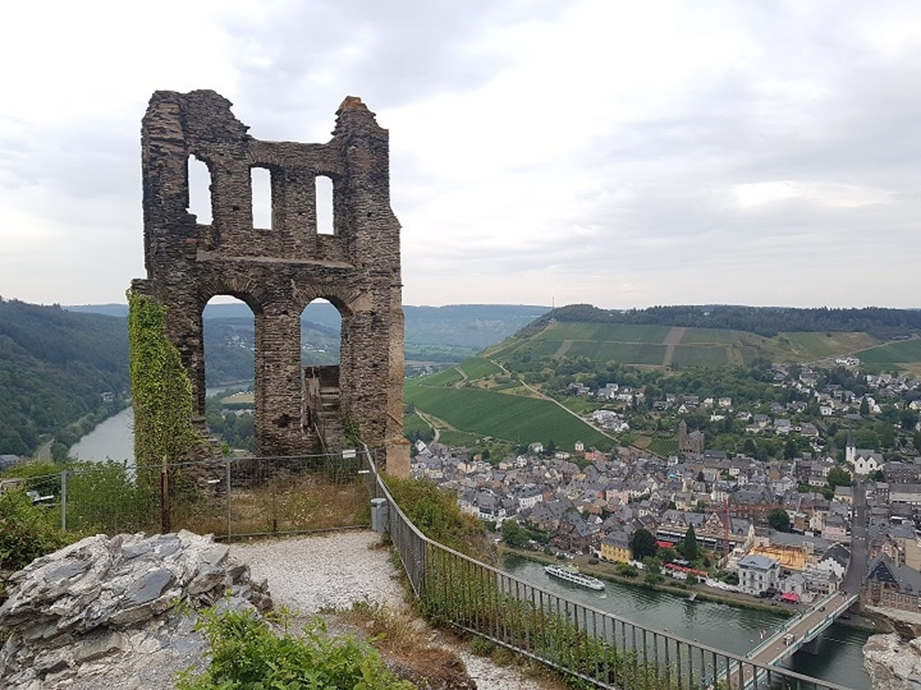
For walkers, the operator offers its own packages: from Bullay to Beilstein (15–20 km, 4–6 hours on foot) with the boat back, or along the Moselsteig trail from Bernkastel-Kues to Kloster Machern (about 12 km) and the boat home. The Grevenburg ruins above Traben-Trarbach give you one of the finest views over the river – a good goal if you arrive by boat.
Best time for a boat trip on the Moselle
May, June and September are the best months: every service is running, the slopes are green or golden, and there are fewer coach parties than in July and August. October is the most beautiful, with autumn colours and the new vintage, but sailings thin out towards the end of the month and the boats in Cochem stop running daily after 31 October. During the wine festivals – such as the one in Bernkastel-Kues with its fireworks in early September – boats fill up quickly; see our guide to Moselle wine festivals. For more on the seasons, read the best time to visit the Moselle Valley.
In winter a small number of Advent trips run, including from Cochem at weekends in November and December, and between Traben-Trarbach and the Christmas market in Bernkastel on Saturdays in late November and December. The boats are heated and sail in all weathers.
Practical tips for your boat trip
- Tickets: sold at the landing stage, on board, or in advance from the operator’s agencies and online. Be at the landing stage about ten minutes before departure.
- Book ahead on summer Saturdays, during wine festivals and if you are a larger group – and always if you want a package with food or a tasting.
- Food on board: all Kolb boats serve simple dishes and drinks, including local wine.
- Accessibility: not all boats are wheelchair accessible – ring the operator before you travel.
- By motorhome: pick an aire (Stellplatz) near the landing stage and let the boat take you onwards – tips in our guide to the Moselle by motorhome.
How long does the boat trip between Cochem and Beilstein take?
About an hour upstream, including Fankel lock, and around 50 minutes back to Cochem. With some time ashore in Beilstein, the whole outing usually takes 2.5–3 hours.
Do I need to book a Moselle boat trip in advance?
For ordinary scheduled boats and round trips, buying a ticket at the landing stage is usually fine. At weekends in high summer, during wine festivals and for packages with food and tastings, it is wise to book ahead, for example via GetYourGuide or with the operator.
Can I take my bike on the boat?
Yes, on the scheduled boats, space permitting. The fee is around €2–4 depending on how far you travel.
When do the boats run on the Moselle?
The main season runs from Easter to the end of October, with daily departures from early May. In April many trips only run at weekends, and in November and December there are a few winter and Advent sailings.
How many locks are there on the Moselle?
There are ten on the German stretch between Trier and Koblenz, plus further locks on the border stretch with Luxembourg and higher up in France.
Do river cruise ships moor in Trier itself?
Not always. Many river cruise ships moor some way outside the city, for example at Mehring or Schweich, and passengers take a coach into the centre. Check the cruise line’s itinerary before booking if Trier matters to you.
More boat trips on the Moselle and the Rhine
Short trips in Bernkastel and day trips where the Moselle meets the Rhine.
Bernkastel: sightseeing cruise to Lieser and Mülheim
An hour on the water past the vineyards upstream of Bernkastel – easy to fit in between the market square and a wine tasting.
Check prices & dates →
Full day
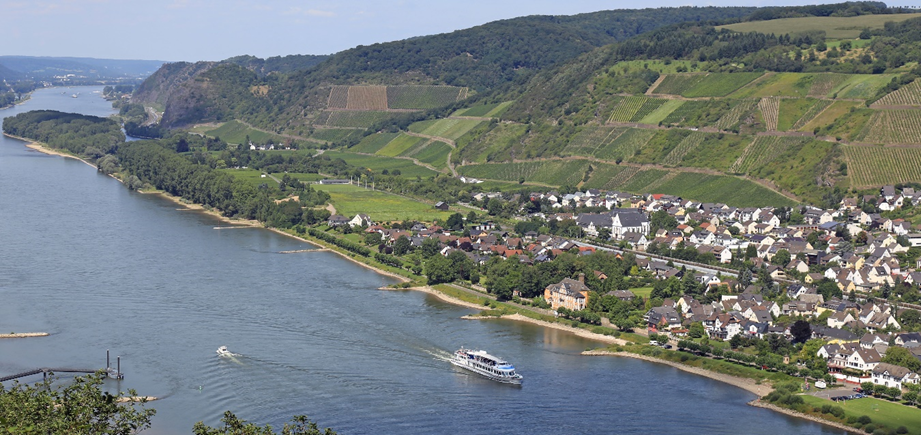 Alken: two rivers by boat to Koblenz
The wine villages and locks of the lower Moselle, the Deutsches Eck and a stretch of the Rhine in a single day.
Check prices & dates →
Most booked
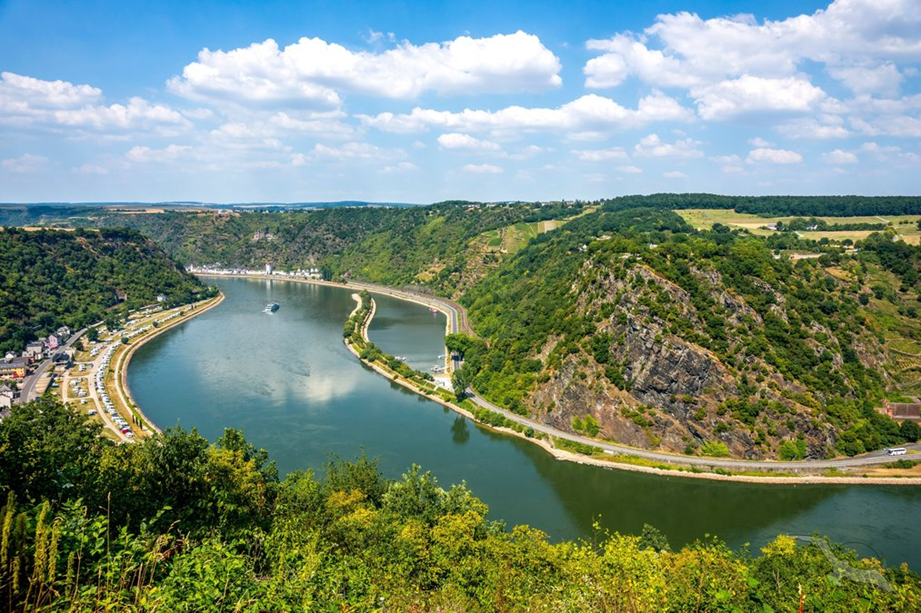 Koblenz: boat trip past the Rhine’s castles and palaces
A good extra if you are staying in Koblenz and want to see the Rhine Valley’s castles from the water.
Check prices & dates →
- Personenschifffahrt Gebr. Kolb – Moselrundfahrten – routes, departure points and 2026 seasons
- Moselrundfahrten – 2026 timetables and fares (Cochem, Bernkastel, Trier) – departure times, durations, locks, fares, bike fee, child discounts
- Moselrundfahrten – Q&A – bikes, dogs, accessibility, weather
- WSA Mosel-Saar-Lahn – Schleusensperre 2026 – annual lock closure 8–17 June 2026, lock management
- VerkehrsRundschau – the ten German Moselle locks and which have two chambers
- A-ROSA – Moselle Discovery 2026 – sample itinerary, mooring times, excursion prices, English-speaking staff and guides
- Kreuzfahrten und Weltreisen – Moselle cruises – cruise lines, routes and lead-in prices 2026–2027
- CroisiEurope – Strasbourg–Koblenz–Alken–Cochem route
- Riviera Travel – Moselle river cruises – eight-day Rhine and Moselle cruise from the UK with flights or rail included
Last updated: October 2026. Facts checked against the sources above; prices and opening hours may change.