
Best Time to Visit the Moselle Valley: Season by Season
This article contains affiliate links to GetYourGuide. If you book through them we may earn a small commission, at no extra cost to you.
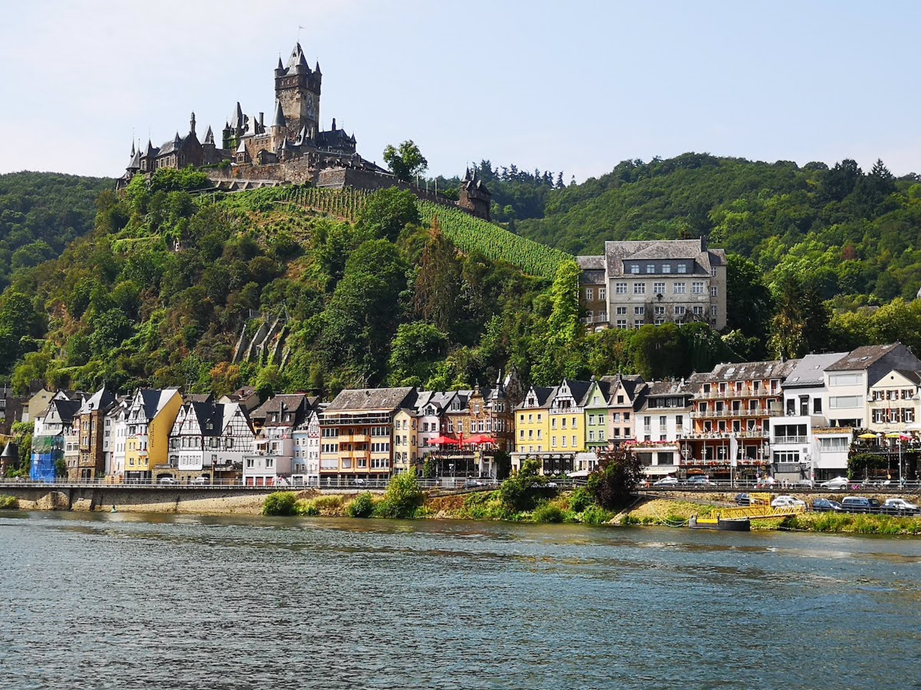
For most travellers, the best time to visit the Moselle Valley is mid-September to mid-October: the grape harvest is in full swing, one wine festival follows another, the boats are still running and the vineyard terraces are starting to turn gold. If you’d rather hike or cycle at a gentler pace, May and June are better, and from late November the Christmas markets take over. Here’s the year season by season and month by month – with official German Weather Service (DWD) climate data, school holidays and what closes when.
Three experiences we recommend
A wine walk that runs all year, a wagon ride through the vineyards and the classic boat trip during the sailing season.
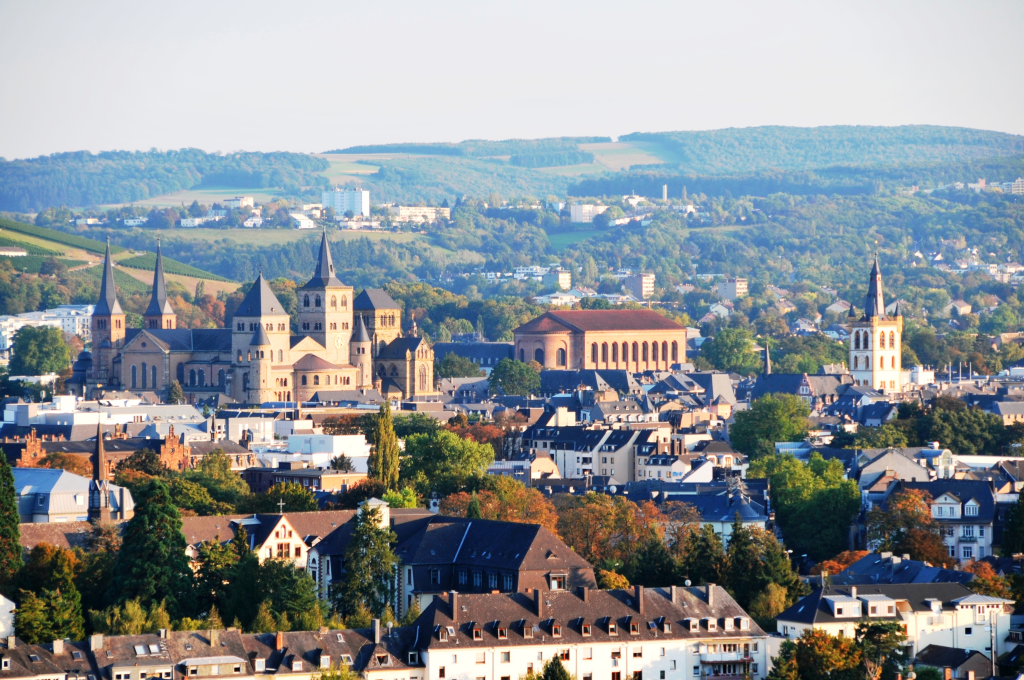 Trier: walking tour with wine tasting
Roman Trier and Moselle wine on the same stroll – one of the few options that works just as well in November or February.
Check prices & dates →
Often sells out
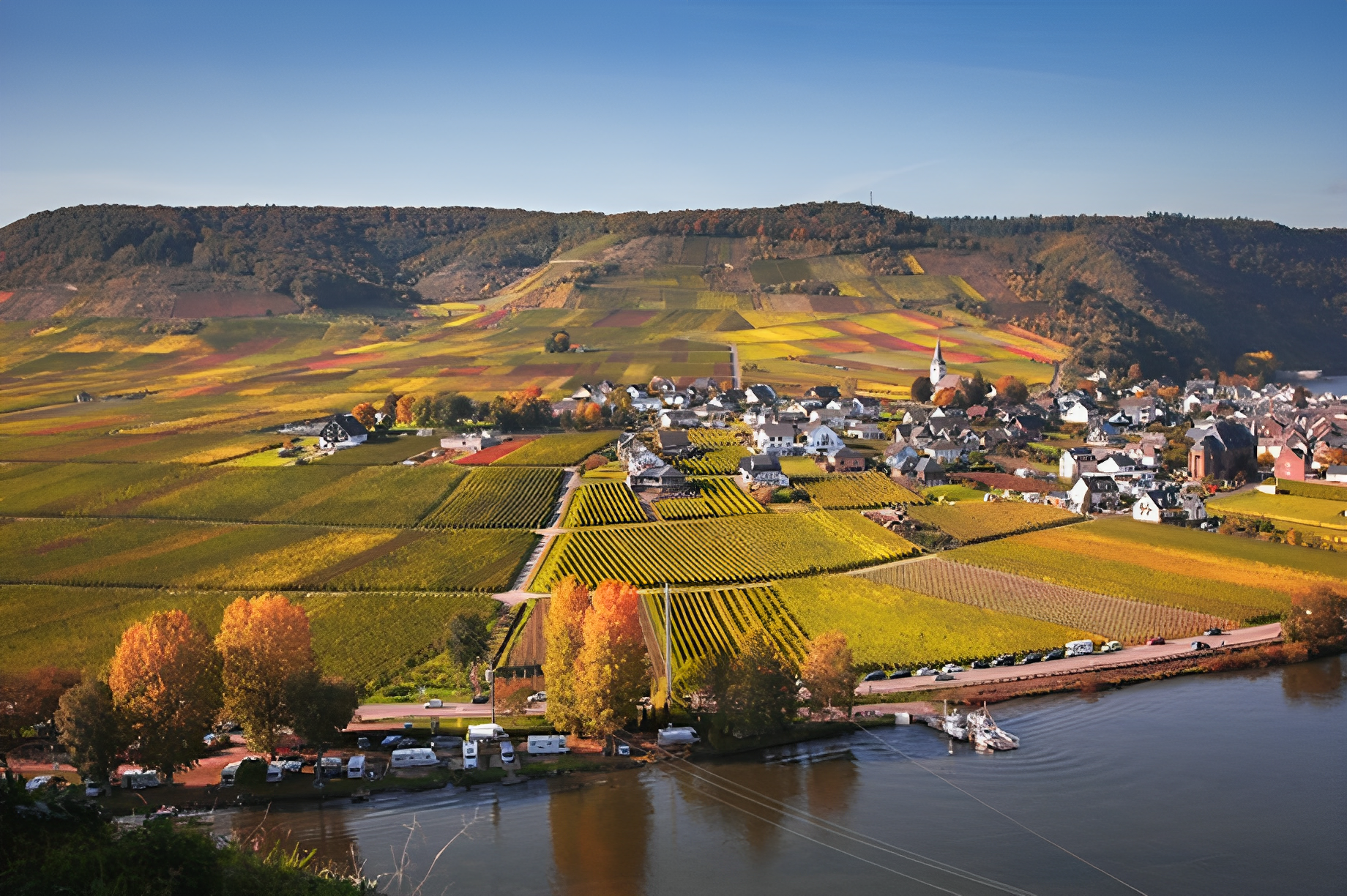 Kröv: covered-wagon ride through the vineyards with tasting
A covered wagon climbs up between the vines with tastings along the way – especially atmospheric during the September–October harvest.
Check prices & dates →
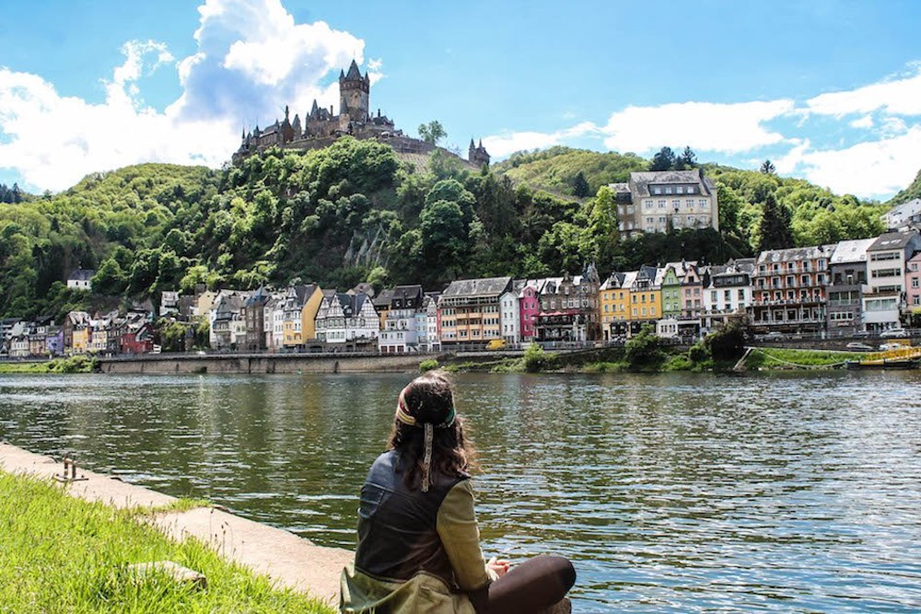 Boat trip with lock: Cochem–Beilstein return
The valley’s most popular stretch by boat, through the lock to medieval Beilstein. Runs during the sailing season, roughly Easter to October.
Check prices & dates →
Best time to visit the Moselle Valley: the short answer
The Moselle Valley isn’t a destination where everything happens in a few weeks of summer. The season is long, but it has clear edges: the boats, Burg Eltz and many wine taverns run roughly from Easter to the end of October. Within that window, the choice comes down to what you want to do and how many other people you’re happy to share it with.
- Wine, autumn colour and festival atmosphere: mid-September to mid-October. This is the valley’s classic high season – book accommodation early, especially for weekends.
- Hiking and cycling with fewer people: May and June. Long days, comfortable temperatures and everything open, but before the German summer holidays.
- Heat and summer buzz: July–August. The warmest and sunniest months, but also the busiest, with the most coach groups in Cochem and Bernkastel-Kues.
- Christmas atmosphere: from around 20 November until Christmas, and in Traben-Trarbach right into January.
- Least rewarding: January–February, when the boats are laid up, Burg Eltz is closed and the Reichsburg in Cochem offers only limited tours.
The Moselle Valley month by month
The table shows the daily mean temperature and hours of sunshine for the DWD weather station at Bernkastel-Kues, in the middle of the valley (1991–2020 climate normals). A daily mean averages day and night together, so a June afternoon is noticeably warmer than 18 degrees.
| Month | Mean temp | Sun (hrs) | What’s happening | Crowds |
|---|---|---|---|---|
| January | 2.8 °C | 38 | Winter lull, many places closed; Reichsburg tours on certain days only | Very low |
| February | 3.4 °C | 67 | Still low season, carnival in the Rhineland | Very low |
| March | 6.8 °C | 120 | Reichsburg switches to summer hours mid-month, Burg Eltz opens at the end of the month | Low |
| April | 10.7 °C | 180 | Easter, fruit trees in blossom, boats start running (often weekends only) | Low–medium (higher at Easter) |
| May | 14.7 °C | 202 | Daily boat services, vineyards turning green, peak month for hiking | Medium (higher on long weekends) |
| June | 17.9 °C | 212 | Longest days, vines in flower, first wine festivals | Medium |
| July | 19.8 °C | 225 | German school summer holidays, wine festivals every weekend | High |
| August | 19.3 °C | 209 | High summer, big wine festivals towards the end of the month | High |
| September | 15.1 °C | 150 | Harvest begins, Weinfest der Mittelmosel, Federweißer | High (especially weekends) |
| October | 10.9 °C | 95 | Riesling harvest, autumn colour, last boat days on 31/10 | High in the first half, then tailing off |
| November | 6.6 °C | 44 | Burg Eltz closes, winter hours at the Reichsburg, Christmas markets from approx. 20/11 | Low, then medium around the Christmas markets |
| December | 3.6 °C | 28 | Christmas markets in Trier, Bernkastel-Kues and Traben-Trarbach | Medium at weekends |
The climate at a glance
The Moselle Valley is one of Germany’s milder corners. The deeply incised river valley is sheltered by the Eifel and Hunsrück hills, and according to the DWD the average annual temperature in Bernkastel-Kues is 11.0 degrees – almost a degree higher than on the Petrisberg above Trier, 260 metres above sea level. Bernkastel-Kues gets around 690 mm of rain a year, spread fairly evenly: April is the driest month (approx. 40 mm) and July the wettest (approx. 70 mm), but summer rain tends to come in heavy showers rather than grey, drizzly days. The summer heat is real: even up on the Petrisberg, the DWD records an average of around 15 days of 25 degrees or more in July. Winter is grey and chilly rather than snowy – the Petrisberg averages about 15 frost days in January, but snow-covered vineyards like the ones in the photo further down are the exception. For more figures and packing tips, see our guide to Moselle Valley weather.
Spring (March–May): blossom, Easter and the first boats
March is still low season, but this is when the valley wakes up. The Reichsburg in Cochem leaves its winter timetable in mid-March and then runs guided tours every day, and Burg Eltz reopened on 29 March in 2026. In April, cherry and other fruit trees blossom in the villages and on the slopes, while the vines themselves are only just budding – the actual flowering of the vines is inconspicuous and usually happens in June.
Easter is the first real peak of the year, and it’s when the boat season begins. In 2026, the Moselrundfahrten company in Cochem ran its lock cruise daily over the Easter weekend (3–6 April), then only on Saturdays and Sundays in April, and every day from 1 May to 31 October. That pattern is typical of the valley: in April the timetable is thinner, so it pays to check sailings before planning a day around a boat trip. The Easter school holidays in Rhineland-Palatinate (2027: 22 March–2 April) bring more German families to the villages.
For many, May is the most underrated month. Everything is open, the boats sail daily, there are around 200 hours of sunshine on average and the daily mean temperature sits at about 15 degrees – ideal for long days on the Moselsteig trail or along the cycle path. Do expect more visitors over the German long weekends around Ascension Day and Whitsun, though.
Summer (June–August): heat, wine festivals and crowds
June has the longest days of the year and is often pleasantly warm. Then high summer takes over: July and August are the warmest and sunniest months, with a daily mean of around 19–20 degrees and roughly 210–225 hours of sunshine. Down in the valley, between steep slate slopes that store the heat, afternoons can get genuinely hot. Visit Mosel advises hikers to choose shadier stages or set off early on hot days – particularly on the Moselsteig stage past the Bremmer Calmont, where the slate heats up fiercely.
Summer is also the big wine-festival season. According to Visit Mosel, July and August are peak time for the larger festivals, and almost every weekend some village is celebrating with wine stalls, live music and fireworks. You’ll find the calendar in our guide to Moselle wine festivals.
The downside is the crowds. Rhineland-Palatinate’s school summer holidays run from 28 June to 6 August in 2027 (2026: 29 June–7 August), at the same time as visitors arrive from neighbouring countries and river cruise ships tie up in Cochem and Bernkastel-Kues. In the middle of the day, Cochem’s lanes can be packed and the car parks full. If you’re tied to UK school holidays, July and August will be busy whatever you do – but you can base yourself in a smaller village and head into the most popular towns early in the morning or late in the afternoon.
Go in June if you want a summer feel without the school-holiday crowds. The days are at their longest, the boats run daily and German schools haven’t broken up yet.
Autumn (September–October): harvest and autumn colour – the classic best time
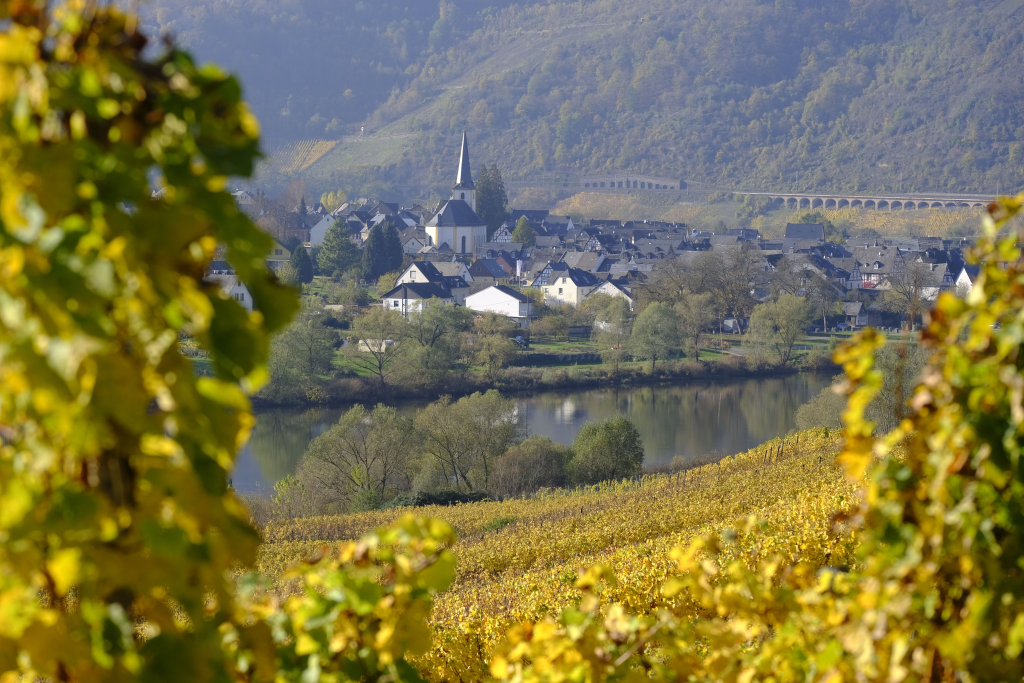
If you’re only going once, go in autumn. In September and October, everything the Moselle Valley is famous for happens at the same time. The grape harvest – the Weinlese – usually starts in September with the early-ripening varieties and finishes with Riesling from the steepest sites in October. On the steepest terraces grapes are still picked by hand, and tractors pulling trailers full of grapes trundle along the roads. Exactly when it all happens depends on the weather; in warm years many estates have already finished by early October.
This is also the season for Federweißer, the cloudy, still-fermenting new wine served with onion tart (Zwiebelkuchen) in the wine taverns. The biggest wine festival, the Weinfest der Mittelmosel in Bernkastel-Kues, is usually held around the turn of August and September – in 2026 it ran from 3 to 7 September, with fireworks on the Saturday and a parade on the Sunday. Harvest and thanksgiving festivals follow in the villages for the rest of September.
The autumn colours arrive a little after the harvest. As the leaves turn yellow and some red-wine vines go crimson, the terraces become a patchwork, usually from mid-October for a few weeks. The weather is still kind: September has a daily mean of about 15 degrees and 150 hours of sunshine, October around 11 degrees. Mornings often bring mist over the river that lifts by mid-morning – lovely light for early-rising photographers.
Two things to plan around. Rhineland-Palatinate’s autumn school holidays fall on 5–16 October 2026 and 4–15 October 2027, and the weekends in September and October are the most heavily booked of the year. On top of that, the season ends abruptly: the boat trips around Cochem run until 31 October, and Burg Eltz closed for the winter on 1 November in 2026. An October half-term trip can work beautifully for autumn colour and quieter villages – but if your break falls in the last week of October, you’ll arrive just as several attractions are shutting for the season.
Winter (November–February): peaceful, but much is closed
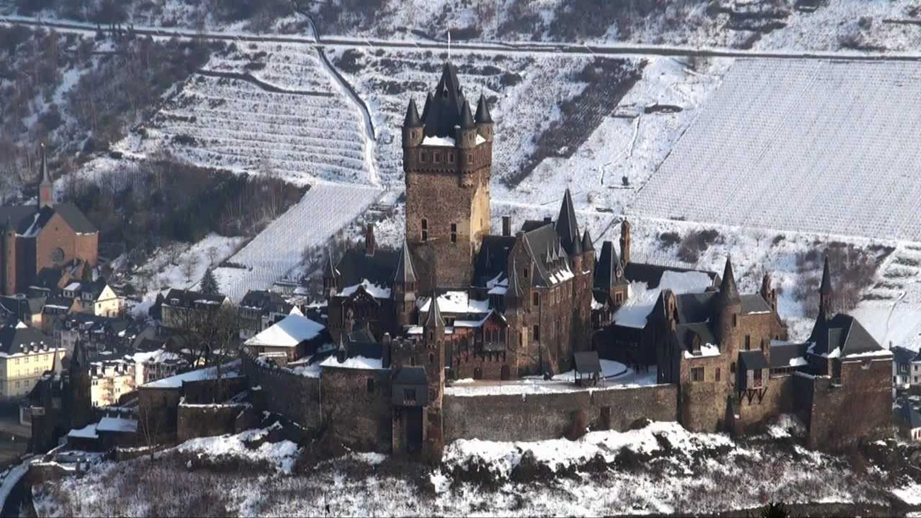
Winter is the valley’s quietest time. Daylight is short – December averages under 30 hours of sunshine in Bernkastel-Kues – and the daily mean is 3–4 degrees. Snow does fall, but rarely settles for long down by the river. The upside is that you’ll have the wine villages almost to yourself, and accommodation is often cheaper outside the Christmas-market weekends.
The downside is that a lot is closed. Burg Eltz is shut from November until the end of March. Reichsburg Cochem stays open, but on winter hours: for the 2026/27 winter season, guided tours run daily from 10am to 3pm (last tour at 3pm) from 2 November, while between 11 January and 12 February 2027 tours run only on Wednesdays, Saturdays and Sundays. There are no tours at all on Christmas Day (25 December). Scheduled boat services are suspended, and some wine taverns, restaurants and small hotels close in January–February.
Planning a winter trip? Check the opening hours of every restaurant, winery and sight before you set off. Reichsburg Cochem can only be visited on a guided tour, so check the tour times on the castle’s website the same week.
Winter is best suited to a city break in Trier, where the Roman sights, museums and wine bars are open all year, ideally combined with tastings at wineries that welcome visitors by appointment.
Moselle Christmas markets 2026

According to Visit Mosel, the first Advent and Christmas markets open around 20 November. Most close just before Christmas, but the last one stays open until early January. The three best known in 2026:
- Trier: 20 November–22 December 2026 on the Hauptmarkt and in front of the cathedral. Open 11am–8.30pm Monday to Thursday, 11am–10pm Friday and Saturday, and 11am–8pm on Sunday. Closed on Totensonntag (Germany’s Sunday of remembrance), 22 November.
- Bernkastel-Kues: 20 November–20 December 2026 in the medieval old town, where a half-timbered house on the square becomes a giant Advent calendar. Open 11am–7pm, until 9pm on Fridays and Saturdays. Closed on 22 November.
- Traben-Trarbach: the Mosel-Wein-Nachts-Markt is held in the town’s old underground wine cellars, at weekends between 20 November 2026 and 2 January 2027. Check opening times on the market’s website.
Christmas-market weekends draw plenty of day-trippers and coach tours, so book early if you want to stay in Bernkastel-Kues or Traben-Trarbach on an Advent weekend. Weekdays are much quieter. There’s more detail in our guide to Moselle Christmas markets.
Crowds, prices and school holidays
What drives the crowds most is German school holidays and weekends, not the weather. Rhineland-Palatinate has no winter or Whitsun school holidays, so the main periods to watch are:
- Autumn holidays: 5–16 October 2026, 4–15 October 2027
- Christmas holidays: 23 December 2026–8 January 2027
- Easter holidays: 22 March–2 April 2027
- Summer holidays: 28 June–6 August 2027
Other German states, such as neighbouring North Rhine-Westphalia, and countries such as the Netherlands and Belgium have their own holiday dates, and many of their residents head for the Moselle. That’s why the whole of July and August is busy. Weekends in September and October are at least as full as high summer, while weekdays at that time are surprisingly calm. As for UK school holidays, term dates are set locally and vary across the UK, so check your council’s dates and compare them with the German ones above.
Prices follow the same pattern. Hotels and guesthouses often charge more – and may insist on a minimum stay – during wine festivals, harvest weekends and Christmas-market weekends. It’s usually cheapest in March, in November outside the Christmas markets, and in January–February. If you’re travelling by motorhome or staying at a campsite you have more flexibility, but even the motorhome pitches in Bernkastel-Kues and Cochem fill up early on a Saturday in September.
If you’re going in September or October, travel Monday to Thursday. You’ll get the same harvest atmosphere and autumn light, but it’s far easier to find a table in the wine taverns and a seat on the boats.
Best time for wine, hiking, cycling and boat trips
- Wine: September–October for the harvest, Federweißer and wine festivals; July–August if the festivals are what you’re after. Read more about the valley’s star grape in our Riesling guide, and consider staying at a winery during the harvest.
- Hiking: May–June and September to early October. The Moselsteig runs for 365 km in 24 stages between Perl and Koblenz; the steep vineyard paths are hard going in summer heat.
- Cycling: May–September. The Mosel-Radweg follows the river for 248 km from Perl to Koblenz and is almost entirely flat. See our Moselle cycle route guide for stages.
- Boat trips and cruises: May–October, when the day boats run every day. Overnight river cruises also mostly operate in this period – more in our guide to Moselle river cruises.
- Families: June or August for long days and swimming weather, or Easter if you want castles and boats without the summer heat.
- On a budget: weekdays in May, June and November. Everything, or nearly everything, is open, but prices are below harvest-time levels.
- you want to experience the harvest, Federweißer and wine festivals
- you love photography and autumn light
- you can travel midweek
- you can only travel at weekends and haven’t booked well ahead
- you’re after swimming weather
- you’re going after mid-October and want to fit in the boats and Burg Eltz
FAQs: when to visit the Moselle Valley
What is the best month to visit the Moselle Valley?
September is the most complete month: the harvest has begun, wine festivals are in full swing, everything is open and the daily mean temperature is around 15 degrees. If you want to avoid the crowds, May and June are the best alternatives.
When is the grape harvest on the Moselle?
The harvest usually starts in September and finishes with Riesling during October. The exact start depends on the weather and varies from year to year; in warm years it comes earlier.
When do the boats run on the Moselle?
Scheduled sightseeing boats run roughly from Easter to 31 October, often at weekends only in April and then daily from May. In winter most are laid up. Always check the current timetable with the operator.
Is the Moselle Valley worth visiting in winter?
Yes, if you enjoy peace and quiet, city life in Trier and Christmas markets. Expect short days, Burg Eltz to be closed, no scheduled boats, and limited tour times at Reichsburg Cochem in January–February.
When are the Moselle Christmas markets in 2026?
Trier from 20 November to 22 December, Bernkastel-Kues from 20 November to 20 December, and the Mosel-Wein-Nachts-Markt in Traben-Trarbach at weekends from 20 November 2026 to 2 January 2027. Trier and Bernkastel-Kues are closed on 22 November.
Is Burg Eltz open all year?
No. In 2026 the castle was open daily from 29 March to 1 November, 9.30am–5pm. It is closed in winter.
- Deutscher Wetterdienst (DWD), 1991–2020 climate normals – mean temperature, rainfall and sunshine for Bernkastel-Kues; summer and frost days for Trier-Petrisberg
- Reichsburg Cochem – opening hours – summer hours and 2026/27 winter season
- Burg Eltz – 2026 season (29 March–1 November) and opening hours
- Moselrundfahrten Cochem – 2026 boat season (Easter, April weekends, daily 1 May–31 October)
- Visit Mosel – wine events – wine-festival season month by month
- Visit Mosel – Advent and Christmas – Christmas-market season
- Visit Mosel – Moselsteig and Mosel-Radweg – lengths, stages and advice on summer heat
- Bernkastel-Kues – Weinfest der Mittelmosel – 2026 dates
- Bernkastel-Kues – Christmas market – 2026 dates and opening hours
- Trierer Weihnachtsmarkt – 2026 dates and opening hours
- Mosel-Wein-Nachts-Markt Traben-Trarbach – 2026/27 dates
- Schulferien.org – Rhineland-Palatinate – German school holidays 2026 and 2027
- GOV.UK – school term and holiday dates – UK term dates are set locally and vary across the UK
Last updated: October 2026. Facts checked against the sources above; prices and opening hours may change.