
Moselle Valley by motorhome: route, stopovers and rules
This article contains affiliate links to GetYourGuide. If you book through them we may earn a small commission, at no extra cost to you.
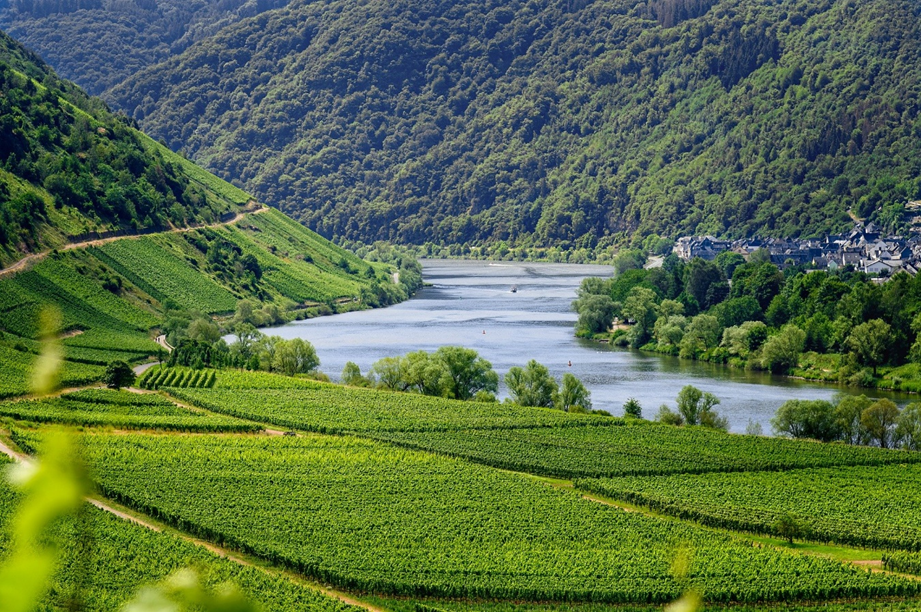
A Moselle motorhome trip is one of the easiest wine journeys in Europe: roughly 200 kilometres of riverside road between Koblenz and Trier, short daily drives and a motorhome stopover in almost every village. Here’s a 5–7 day route with distances and driving times, nine stopovers we’ve checked against the local councils’ and tourist offices’ own pages, the German rules you need to know – and how to go wine tasting without anyone having to drive afterwards.
Three experiences we recommend
The best of the Moselle happens once the motorhome is parked: on the river, in the vineyards and in Trier’s wine cellars.
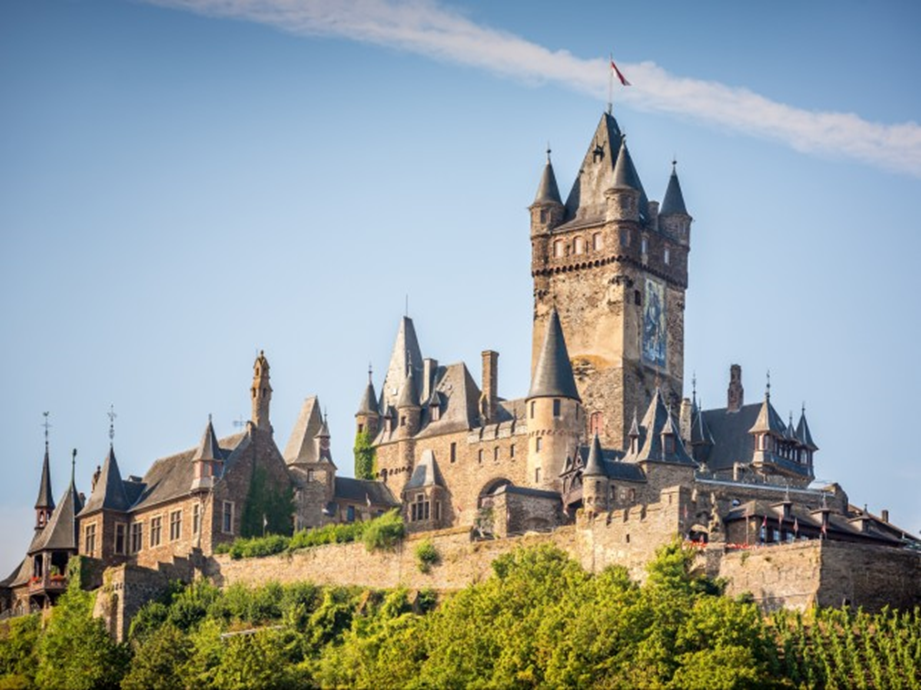 Cochem–Beilstein river cruise through the lock
Park up in Cochem and see one of the river’s loveliest stretches from the water – passing through a lock on the way.
Check prices & dates →
Often sells out
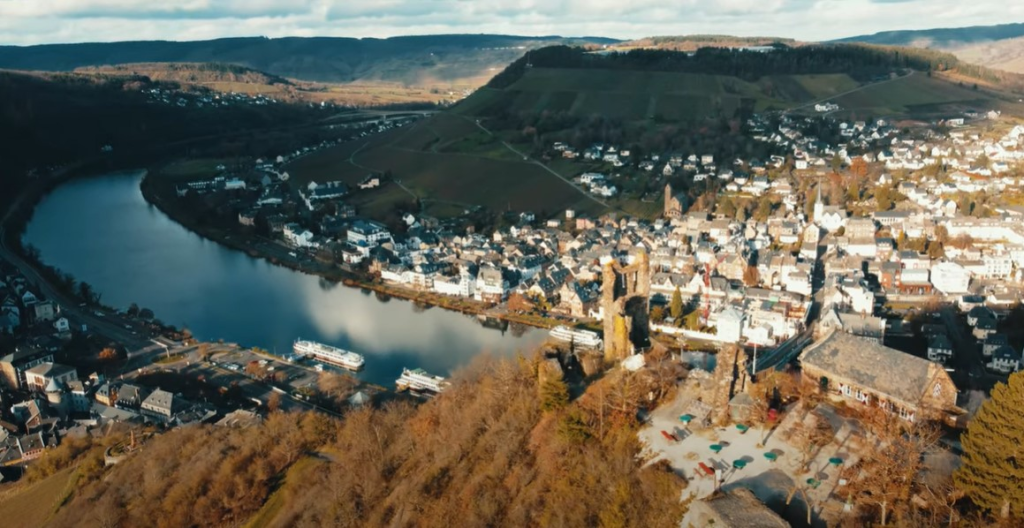 Kröv: covered wagon ride through the vineyards with tasting
Wine tasting out in the vineyards with nobody stuck as designated driver – perfect between Traben-Trarbach and Bernkastel.
Check prices & dates →
Most booked
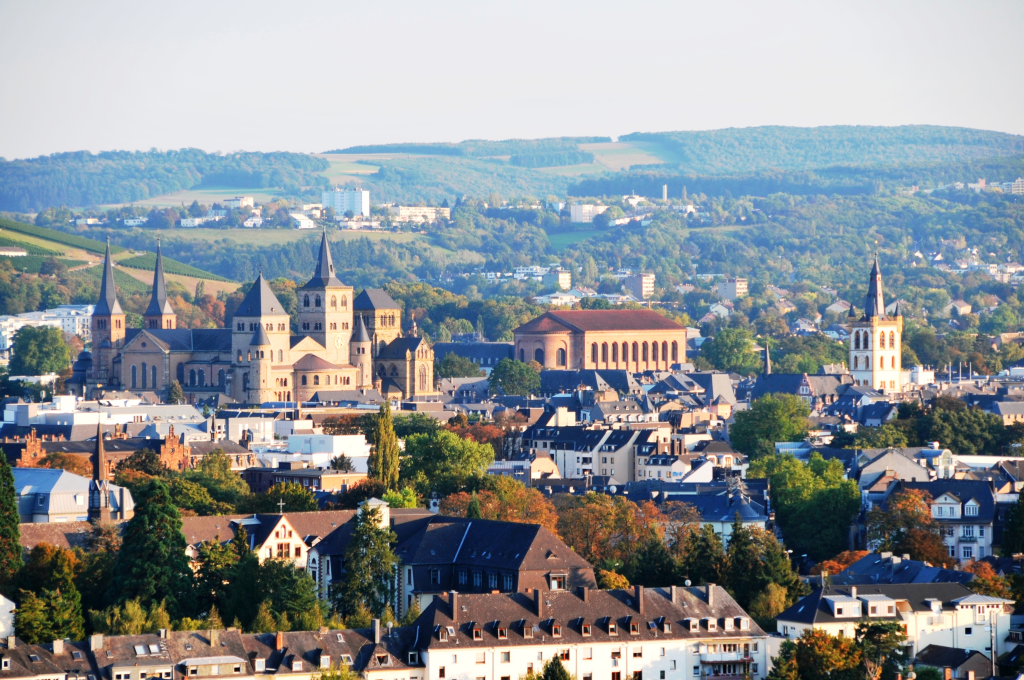 Trier: walking tour with wine tasting
Roman Trier and Moselle wine on foot – a fine way to round off the trip while the motorhome stays on its pitch.
Check prices & dates →
Why the Moselle Valley is made for motorhomes
The Moselle loops so dramatically between Trier and Koblenz that the riverside road is roughly twice as long as the straight-line distance. For motorhomers, that’s a bonus: the stages are short, the view changes at every bend and almost every wine village has a stopover (in German a Wohnmobilstellplatz or Reisemobilstellplatz – the equivalent of a French aire), either down by the river or up at a winery. Many are so close to the centre that you can stroll to the wine tavern and leave the van untouched until the next morning.
What does need a little planning is the crowds. During the grape harvest in September and October, and on wine-festival weekends, the popular stopovers can be full by early afternoon, and most don’t take bookings. Arrive early in the afternoon, or aim for a neighbouring village a few kilometres away.
Moselle motorhome route: Koblenz to Trier in 5–7 days
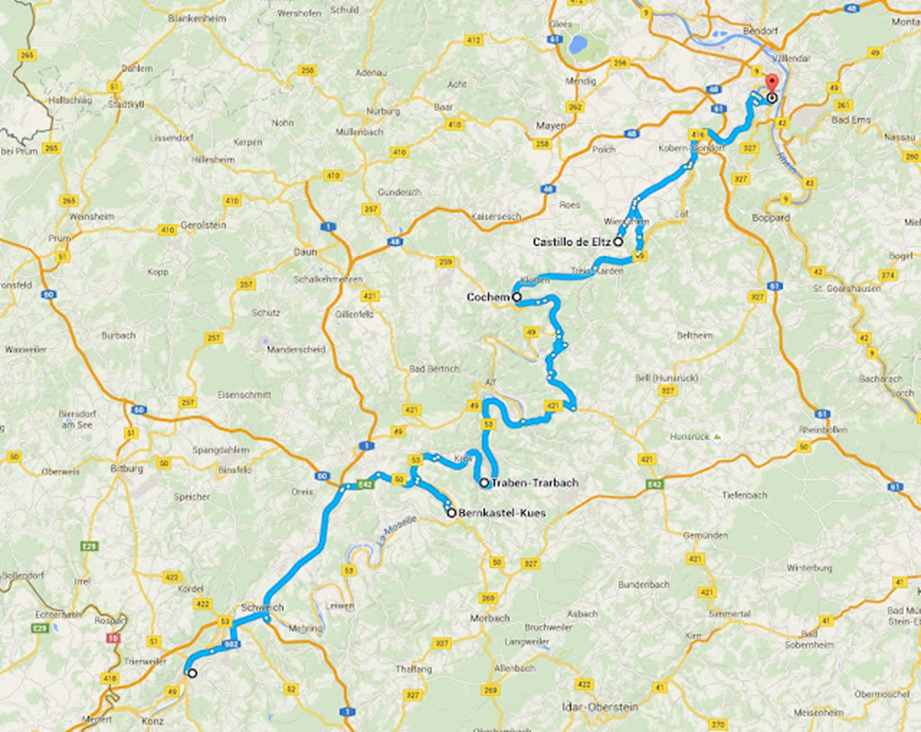
Coming from Calais, Koblenz and Trier are roughly the same distance away, so you can start at either end. The route below runs upstream from Koblenz to Trier, but it works just as well in reverse – which suits you if you’re heading home via Luxembourg. Distances are for the riverside road, and driving times are pure driving without stops – allow more, because you will stop.
| Stage | Distance | Driving time approx. | Road |
|---|---|---|---|
| Koblenz → Cochem | approx. 55–65 km | 1 hr | B416/B49 along the river |
| Cochem → Zell | approx. 30–40 km | 40 min | B49 via Ediger-Eller and Bremm |
| Zell → Traben-Trarbach | approx. 20 km | 25 min | B53 |
| Traben-Trarbach → Kröv → Bernkastel-Kues | approx. 25 km | 30 min | B53 |
| Bernkastel-Kues → Trier | approx. 55–65 km (via the A1: approx. 45 km) | 1–1.5 hrs (A1: 40 min) | Minor roads via Piesport and Leiwen |
| Optional: Trier → Luxembourg City | approx. 50 km | 40 min | Motorway |
| Optional: Trier → Saarburg (Saar) | approx. 25 km | 30 min | B51 |
Day 1: Koblenz and the Deutsches Eck
Start where the Moselle flows into the Rhine. In Koblenz, the municipal motorhome stopover is by the exhibition grounds in the Wallersheim district, right by the B9 exit and about 600 metres from the Rhine. The bus stop is around 100 metres away, so there’s no need to move the van to see the old town and the Deutsches Eck. It’s open all year, which makes it a good first night even in early spring or late autumn.
Day 2: Cochem and the boat to Beilstein
The road to Cochem follows the river past Kobern-Gondorf and Treis-Karden. If you have time to spare, make a detour to Burg Eltz, tucked away in a wooded side valley north of the Moselle just under 30 kilometres from Cochem. Space for motorhomes is tight in Cochem itself: the council’s own list gives only one car park by the Nordbrücke (B49, on the way in from Koblenz) as a parking-only option, with no electricity, water or waste disposal. For the night, Mosel-Camping Cochem on the Cond side of the river or the stopover in the wine village of Ernst a few kilometres upstream work better.
Spend the afternoon on the Reichsburg and the old town, and take the boat to Beilstein rather than driving there. That way you avoid hunting for a space big enough for a motorhome in a tiny village – and you get the classic view of the vineyards from the water thrown in.
Day 3: the Calmont and Zell
The drive to Zell is short but dramatic: past Ediger-Eller and Bremm, where the Calmont rises as one of the steepest vineyard slopes in Europe. Zell has two stopovers in the Kaimt district, one by the footbridge and one by the open-air pool (Römerquelle). From the footbridge it’s about a five-minute walk into the centre. Both have water and waste disposal, but electricity is only available on the upper level at Römerquelle.
Day 4: Traben-Trarbach
The B53 quickly brings you to Traben-Trarbach, one of the best overnight stops for motorhomes on the whole river. The Rissbach stopover, on the Traben side by the water, takes everything from small campervans to vehicles over nine metres long. You drive in through a barrier and pay at a machine. The Art Nouveau villas, the wine cellars beneath the town and the walk up to the Grevenburg ruins easily fill a whole day.
Day 5: Kröv and Bernkastel-Kues
Round the next bend lies the wine village of Kröv, the ideal place to take a break from the wheel. The covered wagon trundles through the vineyards with a wine tasting included, so nobody in your group has to miss out. Then carry on via Ürzig and Zeltingen to Bernkastel-Kues.
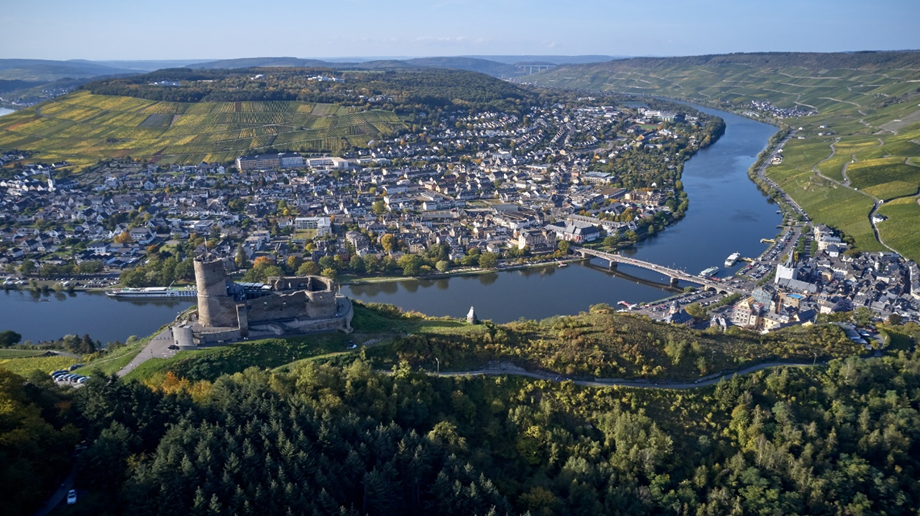
The stopovers listed by the Bernkastel-Kues tourist office lie just outside the centre, and two stand out: Sunpark in Graach, about two kilometres downstream, and the terraces at the Studert-Prüm winery in Wehlen, around three kilometres from Bernkastel. From either, you can walk or cycle into town along the Moselle promenade. The market square with its half-timbered houses is at its loveliest in the evening, once the day-trippers have gone.
Day 6: along the river to Trier
If you have time, take the minor roads via Piesport, Neumagen-Dhron and Leiwen. They follow the great vineyard-lined loops and make this one of the most beautiful stages of the trip. If you’re in a hurry, the A1 is quicker. In Trier, Reisemobilpark Treviris sits by the Moselle in the Euren district and is open all year. A quieter alternative is the stopover at Weingut von Nell. The Porta Nigra, the cathedral and the Roman baths are all within reach on foot or by bus.
Day 7 (optional): Luxembourg or the Saar
From Trier it’s about 50 kilometres to Luxembourg City and around 25 kilometres to Saarburg on the River Saar, with its waterfall in the middle of town and its own vineyards. Either makes a good final day – and Luxembourg is a natural first leg if you’re driving back towards Calais via Belgium. If you’d like to add France, see our guide to Metz, further up the Moselle.
Moselle motorhome stopovers – nine we’ve checked
The details come from the local councils’ and tourist offices’ own pages (October 2026). Prices are only given where the operator publishes them. Almost all have one thing in common: you can’t book ahead – it’s first come, first served.
| Place | Stopover | Setting and facilities | Good to know |
|---|---|---|---|
| Koblenz | Reisemobil-Stellplatz Koblenz (exhibition grounds, Wallersheim) | 38 pitches, electricity at every pitch, water and waste disposal; showers/WC for a fee | Open all year, approx. €13 (without electricity) or €15 (with) for two. No advance booking. |
| Cochem | Car park by the Nordbrücke (B49) | Parking only – no electricity, water or waste disposal | Fine for a day visit. For the night, a campsite or the next village is better. |
| Cochem | Mosel-Camping Cochem (Cond) | Riverside campsite with motorhome pitches | Electricity package and per-person charge extra – see the campsite’s price list. |
| Ernst (near Cochem) | Wohnmobilstellplatz “Im Weinberg” | By the wine co-operative on the edge of the village | A couple of kilometres upstream from Cochem. On the tourist office’s list. |
| Zell (Kaimt) | Römerquelle and the footbridge stopover | Water and waste disposal; electricity only on the upper level at Römerquelle | Open all year, pay at the cash desk in the evening, no advance booking. Five minutes to the centre. |
| Traben-Trarbach | Wohnmobilstellplatz Rissbach | Electricity, water, waste disposal, WC, showers and wifi included | Barrier and pay machine, vehicles over 9 m accepted. No advance booking. |
| Kröv | Motorhome car park and stopovers + Paradies Camp and Kröver Berg campsites | The car park is intended for shorter stops | Contact Kröv tourist office for current conditions. |
| Graach (Bernkastel) | Sunpark | Riverside, 2 km from Bernkastel-Kues; electricity, showers/WC and wifi included | €25 for two (season 1 April–31 October 2026). Bakery van in the morning, no advance booking. |
| Wehlen (Bernkastel) | Studert-Prüm Maximinhof | Terraced pitches of approx. 90 m² with electricity, water and waste disposal | Safe from flooding. 3 km to the old town along the cycle path. |
| Trier | Reisemobilpark Treviris (Euren) and Weingut von Nell | Treviris is by the river; von Nell is at a winery | Both open all year according to Trier tourist office. |
Stopover or campsite?
A German Stellplatz is a simple, often council-run car park for motorhomes, much like a French aire. It’s cheap, central and sometimes has electricity and a service point, but you can’t put out tables, chairs or an awning. A campsite costs more but has washrooms, room for an awning and often a restaurant or kiosk. With children or in bad weather, a campsite is usually worth the difference. Our guide to Moselle campsites covers the best options along the river.
Apps for finding stopovers
Many motorhomers use park4night, where users add places and reviews themselves, and PiNCAMP, the campsite and stopover portal run by the German motoring club ADAC. Both are useful for seeing how busy a stopover tends to get and what others have paid. The information is often out of date, though, so always check prices and seasons on the local council’s or tourist office’s own page.
Many stopovers are on the river meadows and close when the water is high. The Moselle can rise quickly after prolonged rain, mostly in the colder half of the year. Check water levels with the Hochwasservorhersagezentrale Rheinland-Pfalz (hochwasser.rlp.de) and, if there’s been a lot of rain, pick a higher spot such as the terraces at Wehlen or the upper level at Zell.
Driving a motorhome on the B49 and B53
The Moselle roads are well surfaced, but they run straight through the middle of the wine villages. There they narrow between the house fronts, and meeting buses and other motorhomes takes patience. In summer and at harvest time you’ll also be sharing the road with cyclists, tractors and the growers’ narrow vineyard vehicles. A few tips:
- Watch for weight, height and width restriction signs. There are local limits on some bridges and village roads, and the access to stopovers at wineries can be steep and narrow.
- Don’t trust the sat nav blindly in the villages. Follow the signs to the stopover (“Wohnmobilstellplatz”) or use the address the stopover itself gives.
- Drive early in the day. Before 10am you’ll have the roads and stopovers more to yourself.
- Fill up and do your big shop in the larger towns. Not every wine village has a petrol station or a supermarket.
- In a right-hand-drive motorhome, you’re sitting on the kerb side – let your passenger help with overtaking and tight junctions, especially in the villages.
German rules for motorhomes
Low emission zones (Umweltzone)
Neither Koblenz nor Trier has a low emission zone, and the state of Rhineland-Palatinate currently has none at all. Elsewhere in Germany there are still around thirty (the Federal Environment Agency counted 35 in December 2025). If you plan to stop in a bigger German city on the way, you’ll need the green emissions sticker, the Umweltplakette. Order it in advance – gov.uk warns that some city emission stickers need to be bought weeks before you travel.
Overnighting outside stopovers
In Germany, spending a night in your vehicle in a public car park is considered acceptable when it’s needed to restore your fitness to drive – after a long drive, for instance – and as long as no local signs prohibit it. Anything that looks like camping is not allowed: no chairs outside, no barbecue and no awning. Look out for local signs banning motorhomes or overnight parking. Along the Moselle there are so many stopovers that it’s rarely worth taking the chance.
The Sunday driving ban doesn’t apply to motorhomes
Germany’s ban on driving on Sundays and public holidays (section 30 of the road traffic regulations, StVO) applies to lorries over 7.5 tonnes carrying goods commercially or for payment. A private motorhome isn’t covered, not even a heavy one.
Driving a UK motorhome in Germany
According to gov.uk, you can drive in Germany with your UK photocard licence for up to six months. Before you set off, work through gov.uk’s driving abroad checklist: whether you need a UK sticker, headlamp converters, and proof that your insurance covers every country you’re driving through (including any trailer). For Germany’s compulsory and recommended in-vehicle equipment, gov.uk’s Germany travel advice points to the RAC’s country guide – check it before you pack.
Wine tasting with a motorhome – without driving
Germany’s drink-drive limit is 0.5‰ – roughly 50 mg of alcohol per 100 ml of blood. That’s the same as in Scotland but lower than the 80 mg limit in England, Wales and Northern Ireland. For drivers under 21 and those still in their probationary period, the limit is zero. A first offence at 0.5‰ normally costs €500 and a one-month driving ban. The simplest approach is to plan the day so the motorhome is parked before the tasting begins:
- Stay with the winemaker. Several stopovers are at wineries, such as Studert-Prüm in Wehlen and von Nell in Trier, where the tasting room is just a few steps away. Find out more about the wines in our guide to Riesling and our tips for staying at a Moselle winery.
- Cycle. The Moselle Cycle Path passes many of the stopovers, and several have bike hire nearby. See our Moselle cycle route guide.
- Take the boat. Scheduled and excursion boats link the villages in season – see our guide to Moselle river cruises.
Getting to the Moselle by motorhome from the UK
For most British motorhomers the trip starts with a Channel crossing. There are two main options:
- Le Shuttle (Eurotunnel), Folkestone–Calais: around 35 minutes under the Channel. Motorhomes and campervans travel in the single-deck carriages, up to 4.2 metres high, 2.55 metres wide (plus mirrors) and 18 metres long including any trailer. Gas appliances must be switched off for the whole crossing, and there are specific rules for LPG tanks – check them and declare your campervan when you book.
- Ferry, Dover–Calais: a longer crossing, but a chance to stretch your legs and get something to eat on the way. Fares for motorhomes vary a lot with length, height and sailing time, so compare directly with the operators.
From Calais it’s roughly 470 km to Trier and 500 km to Koblenz, largely on motorways through Belgium – around five hours of pure driving time by car, and noticeably longer at motorhome pace. Many people split it with a night on the way. Remember that from Calais onwards you’re driving on the right. If you’d like to pick up some Moselle wine to take home, check your personal allowance on gov.uk before you load up.
Best time for a Moselle motorhome trip
May–June and September are best for motorhomes: pleasantly warm, long evenings and stopovers that usually have space. July–August is the busiest and warmest time. The atmosphere is at its best during the harvest in September and October, but you’ll need to arrive early. Many stopovers and campsites are open roughly April to October, while Koblenz, Zell and Trier, for example, are open all year. Zell becomes a winter motorhome stopover with lower rates from 2 November 2026 to 19 March 2027. Read more about the seasons in our guide to the best time to visit the Moselle and on our Moselle Valley weather page.
A stopover in a neighbouring village, a little away from the big tourist towns, is often quieter and easier to get into. And if you drive into Cochem or Bernkastel on a weekday morning rather than a Saturday, you’ll miss the queues for the car parks.
Can you wild camp in a motorhome in Germany?
Not really. A single night in a public car park is tolerated when it’s needed to restore your fitness to drive and no signs forbid it, but you mustn’t camp (chairs, awning, barbecue). Always follow local signs, and use one of the many stopovers along the river instead.
Do I need an emissions sticker to drive a motorhome on the Moselle?
Not for the Moselle Valley. Koblenz and Trier have no low emission zone, and Rhineland-Palatinate has none. If you’re entering another German city with an Umweltzone on the way, you’ll need the green Umweltplakette.
Can I book a motorhome stopover on the Moselle?
Usually not. Koblenz, Zell, Traben-Trarbach, Sunpark in Graach and Studert-Prüm in Wehlen, among others, state that they don’t take advance bookings. In high season and on wine-festival weekends, arrive early in the afternoon.
How far is the Moselle from Calais?
Roughly 470 km from Calais to Trier and 500 km to Koblenz by road – around five hours’ driving by car without stops, longer in a motorhome. Le Shuttle from Folkestone takes around 35 minutes.
Does Germany’s Sunday driving ban apply to motorhomes?
No. It applies to lorries over 7.5 tonnes in commercial goods transport, not to private motorhomes.
How many days do you need for the Moselle by motorhome?
Five days is enough for Koblenz–Trier with the main stops. Seven gives you time for boat trips, a day on the bike and a detour to Luxembourg or the Saar. See also our Moselle Valley map.
- Koblenz-Touristik – Reisemobil-Stellplatz Koblenz – location, number of pitches, facilities, prices, opening
- VG Cochem – Campingplätze/Wohnmobilstellplätze im Ferienland Cochem 2025 (PDF) – Nordbrücke, Mosel-Camping Cochem, Ernst
- Mosel-Camping Cochem – 2026 prices – campsite pricing model
- Zeller Land Tourismus – Wohnmobilstellplatz Römerquelle – location, electricity, facilities, payment
- Campingpark Zell – 2026 season and winter stopover 2026/27
- Traben-Trarbach – Camping and Wohnmobilstellplatz Rissbach – facilities, payment, vehicle length
- Kröv – Wohnmobil & Camping – motorhome parking and campsites
- Bernkastel-Kues tourist office – camping and stopovers – Sunpark Graach (prices, 2026 season) and Studert-Prüm (location, facilities)
- Trier Tourismus – brochure Wohnmobil-Stellplätze Trier und Region – Treviris and Weingut von Nell, open all year
- StVO § 30 – Sunday and public holiday ban for lorries
- StVG § 24a – 0.5‰ limit
- Bußgeldkatalog – Promillegrenze – zero limit for young/novice drivers, fines
- GOV.UK – The drink drive limit – 80 mg (England, Wales, Northern Ireland) and 50 mg (Scotland) per 100 ml of blood
- GOV.UK – Germany travel advice: driving – UK photocard licence for up to six months, environmental zones, RAC guide for equipment
- GOV.UK – Driving abroad – UK sticker, headlamp converters, insurance, emission stickers bought in advance
- Le Shuttle (Eurotunnel) – campervans and motorhomes – 35-minute crossing, size limits, gas and LPG rules
- Umweltbundesamt – Umweltzonen in Deutschland – number of low emission zones
- Wikipedia – Umweltzone (supporting) – no low emission zones in Rhineland-Palatinate since October 2025
- Wikipedia – Wohnmobilstellplatz (supporting) – rules for overnighting on public land
- Hochwasservorhersagezentrale Rheinland-Pfalz – water levels and flooding
- OpenStreetMap (OSRM route calculation) – approximate distances and driving times for the stages and from Calais
Last updated: October 2026. Facts checked against the sources above; prices and opening hours may change.