
Staying at a winery in the Moselle Valley – prices, booking and tips
This article contains affiliate links to GetYourGuide. If you book through them we may earn a small commission, at no extra cost to you.
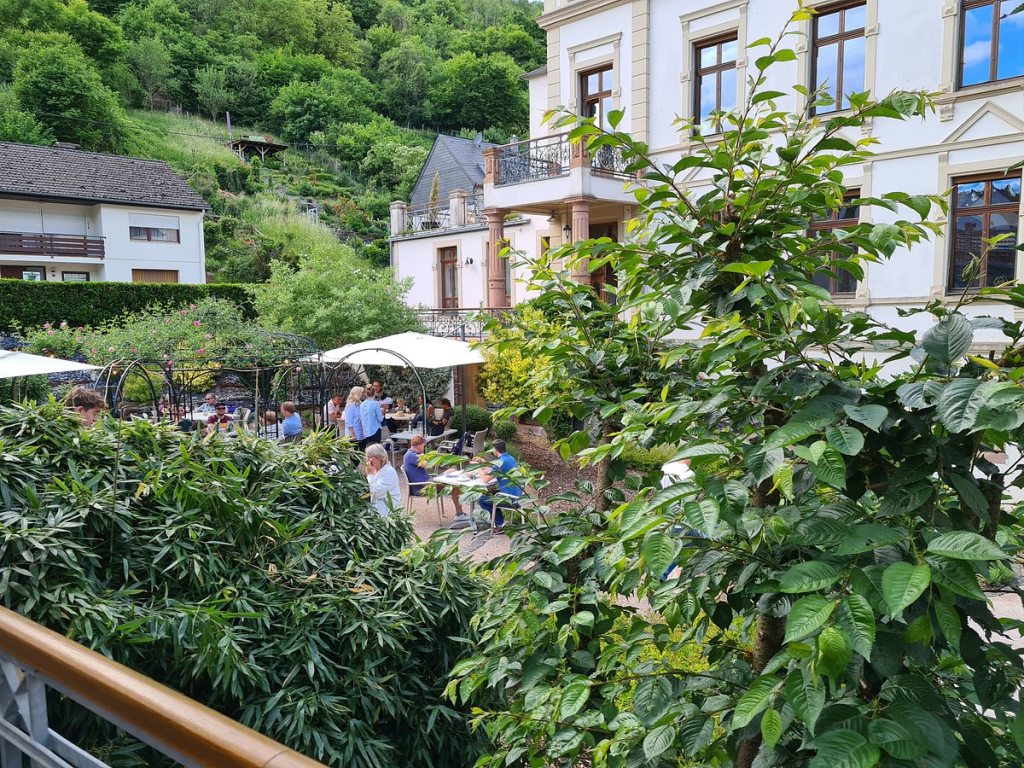
Staying at a winery in the Moselle Valley means sleeping a few metres from the tanks where the wine ferments, eating breakfast with a view of the steep slate slopes and buying your bottles straight from the person who grew the grapes. This guide explains what these places are called in German, what they typically cost and how to book – and introduces six family wineries that offer rooms or holiday flats today.
Three wine experiences to pair with a winery stay
If you’re staying with a winemaker, these tastings and wagon rides make an easy add-on – highly rated and close to the villages we recommend.
Kröv: panoramic wagon ride with sparkling wine and tasting
A covered-wagon ride up into the vineyards above Kröv with a glass of sparkling wine and a tasting at Gut Hermes – views over the Moselle loop included.
Check prices & dates →
Often sells out
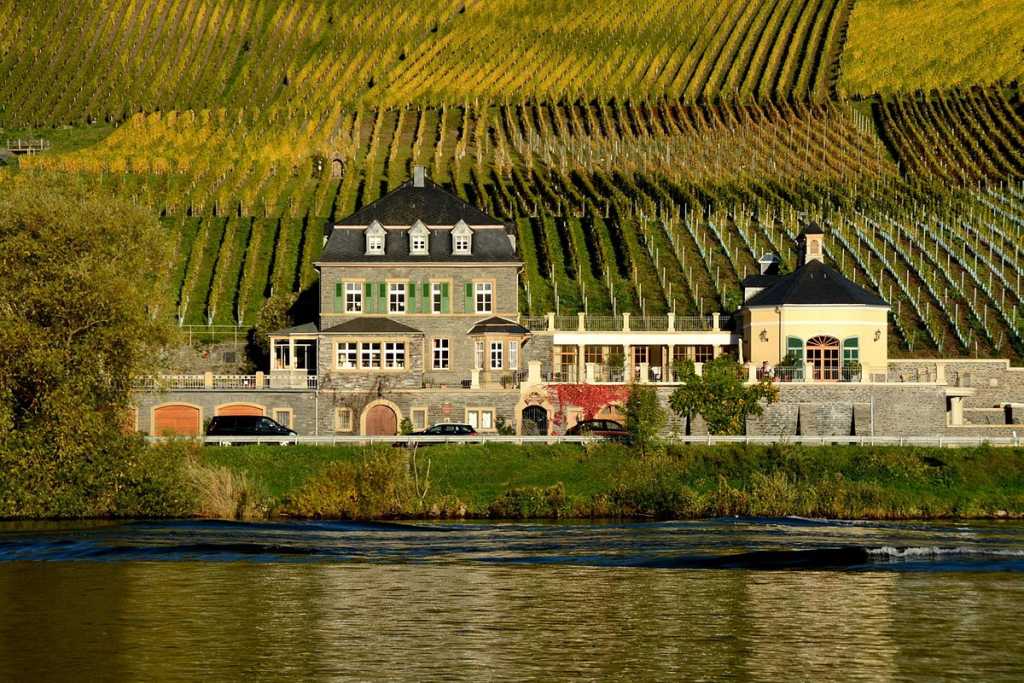 Bernkastel-Kues: rolling wine tasting in a covered wagon with picnic
Three hours in a covered wagon through the vineyards at Lieser, right next to Bernkastel-Kues, with wine and a picnic basket. Ideal if you’re based on the Middle Moselle.
Check prices & dates →
Great value
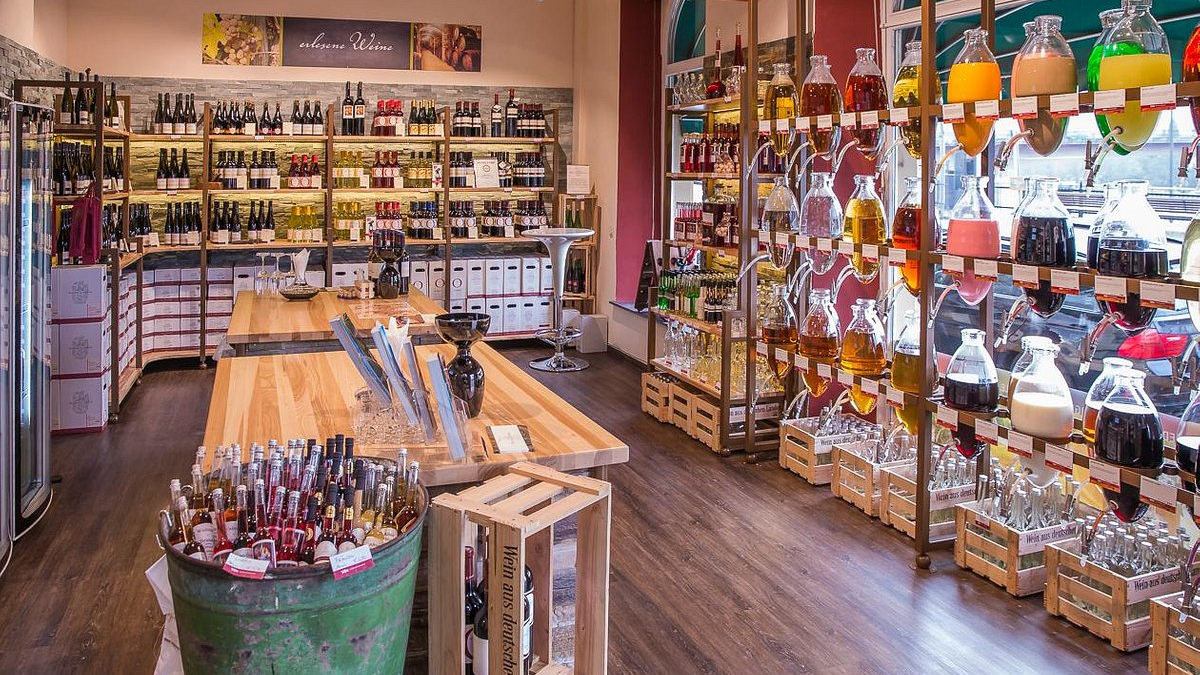 Reil: guided organic wine tasting and cellar tour
Organic Mosel wines and a trip down into the cellar – close to Pünderich and Zell, and an affordable way to learn the difference between dry and fruity.
Check prices & dates →
What does staying at a winery in the Moselle Valley involve?
Around 3,000 winegrowers work along the Moselle, Saar and Ruwer, according to the regional tourist board. Many are small family businesses, and for a good number of them letting rooms is part of how they make a living. That means there’s a huge choice – but it’s rarely labelled “winery hotel”. Learn the German terms instead:
- Weingut mit Gästezimmern / Gästehaus – a winery with guest rooms, often with breakfast. Think of a small B&B where the host also makes the wine.
- Winzerhof – a wine farm. More rustic, often in the heart of the village, with the yard, the press and the cellar all around you.
- Ferienweingut – literally a “holiday winery”: an estate that deliberately caters for guests, with several rooms or flats.
- Ferienwohnung beim Winzer – a self-catering holiday flat at the winemaker’s. Your own kitchen, no breakfast, and often a minimum stay of several nights.
- Weinstube, Gutsausschank and Straußwirtschaft – the winery’s own tavern. Not accommodation, but often what makes the stay: dinner and wine a few steps from your room.
The main difference from a hotel is how close you are to the work. During the harvest, tractors may roll into the yard early in the morning, and it’s the winemaker or a family member who welcomes you. Rooms range from simple and slightly old-fashioned to newly renovated suites in old manor houses.
How much does a winery stay cost?
Prices vary widely, but a few examples from the wineries’ own websites give an idea of the level in autumn 2026:
- Double room at a renowned estate: Dr. Loosen in Bernkastel-Kues quotes approx. €150 for a double and €130 for a single, with a €50 surcharge if you stay just one night.
- Holiday flat for 2–4 people: von Nell in Trier quotes from approx. €115 a night for two, including final cleaning and bed linen, minimum four nights.
- Packages: Walter J. Oster in Ediger-Eller sells low-season packages with two nights in one of its houses, a welcome drink and a walking wine tasting.
- Tourist board packages: visitmosel.de offers “Zu Gast im Weingut” – four nights at a winery with a tasting, dinner and a boat trip, from approx. €379 per person in a double room (2026).
Simpler guest rooms at small family wineries are often below these levels, while large flats and houses for six to ten people cost more per night but work out cheap per head. Weekends during the harvest and wine festival season are the most expensive and the first to sell out – see the dates in our guide to Moselle wine festivals.
Many villages charge a visitor tax (Gästebeitrag/Kurtaxe) per person per night, paid directly to your host. Also check whether the price is per room or per person, and whether breakfast and final cleaning are included – it varies from winery to winery.
What’s included? Breakfast, tastings and wine in the fridge
Breakfast is usually included with guest rooms, but not always – Erbes-Henn in Ürzig serves a regional breakfast every morning, whereas holiday flats are normally self-catering. What sets a winery apart from an ordinary guesthouse is the wine: most estates offer their guests a tasting, sometimes with a cellar visit, and several have their own wine tavern or bistro where you can have dinner with the house wines.
Packages tend to add a welcome glass, a guided tasting and a bottle to take home. If you book just the room, you can almost always add a tasting on the spot – ask when you check in and your host will fit you in when there’s time. To compare several producers’ styles, a tasting at another winery in the next village is a good complement. Not sure about the difference between trocken, feinherb and lieblich? Read our guide to Mosel Riesling first.
How to find and book a winery stay
There are three routes, and they complement each other:
- visitmosel.de – the official search. Mosellandtouristik’s accommodation search lets you filter by type of accommodation, dogs, families and Bett+Bike (cyclist-friendly places that take guests for a single night). The winery packages are listed under “Pauschalen”.
- The winery’s own website. Many small estates have no online booking system – you email or phone. This is often where the best rooms and flats are, and you hear straight back from the family.
- Big booking sites. Handy for comparing and for free-cancellation rooms, but far from every winery is listed, and some flats are only let through their own channels or via platforms such as Airbnb.
Write in simple English (or German if you can) and give your dates, the number of people and whether you’re coming by car, bike or with a dog. Ask at the same time whether a tasting is included or can be booked, and whether there’s parking at the winery – in the narrow village lanes it’s not a given.
The best wine villages to stay in
Where you stay shapes the kind of trip you’ll have. The Middle Moselle around Bernkastel-Kues has the densest concentration of famous vineyards, while the lower stretch towards Cochem and Koblenz – the Terrassenmosel – has the steepest terraces.
- Bernkastel-Kues – the liveliest, with half-timbered houses, restaurants and boats. Easy without a car. See our guide to Bernkastel-Kues.
- Piesport – a quiet village by the amphitheatre-shaped Goldtröpfchen vineyard; a good base for walking.
- Zeltingen-Rachtig – a long riverside promenade and several small wineries with rooms, in the middle of one of the Moselle’s best-known stretches of vineyard.
- Ürzig – a small village beneath the Würzgarten vineyard with its reddish soil; several guesthouses sit right on the riverbank.
- Pünderich – a half-timbered village near Zell with the Marienburg on the ridge above; peaceful, with a good cycle path in both directions.
- Ediger-Eller and Bremm – beneath the Calmont, often called Europe’s steepest vineyard. For anyone who wants to hike or scramble through the vines; Cochem is a short drive away.
- Winningen – the Terrassenmosel wine village closest to Koblenz; convenient if you’re arriving by train or want to combine the trip with the Rhine.
Not sure how it all fits together? Our Moselle Valley map shows where the villages lie in relation to each other.
Six wineries with rooms or holiday flats – checked in 2026
The list follows the river downstream, from Trier towards Cochem. We checked all six on each winery’s own website in October 2026; we only give prices where the estate publishes them itself.
Weingut von Nell – Trier
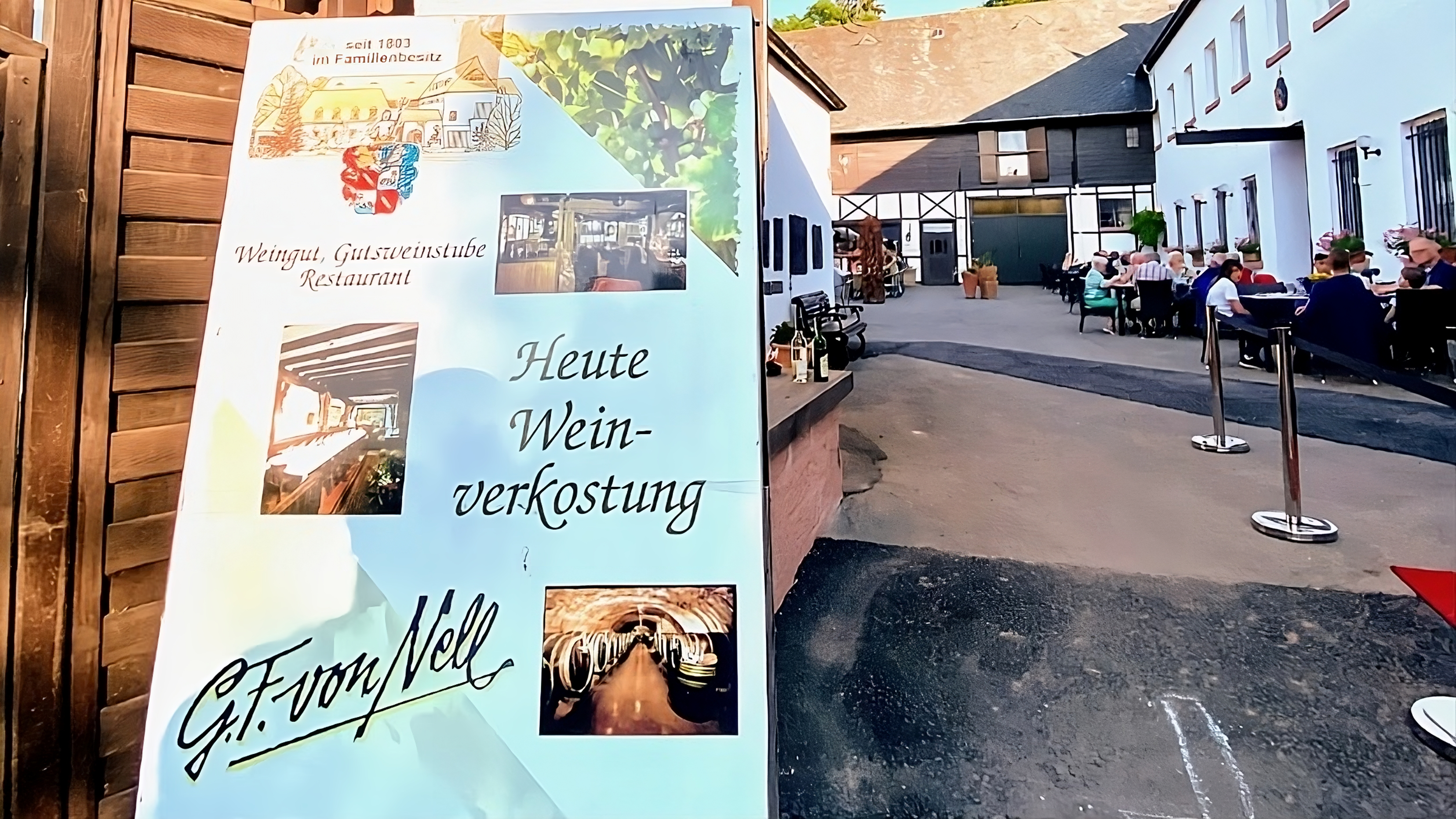
The von Nell family’s estate sits in a green side valley in the Tiergarten district, a short distance from central Trier. It lets a bright holiday flat for 2–4 people, rated four stars by the German Tourism Association (DTV): two bedrooms, a living room, a kitchen and a garden with a summerhouse. The estate also has its own motorhome pitch – handy if you’re travelling as in our Moselle motorhome guide – and a Weinstube serving Mosel wine and hearty food on Wednesday to Saturday evenings. According to the winery, from approx. €115 a night for two, minimum four nights. vonnell.de
Weingut Dr. Loosen – Bernkastel-Kues
One of the Moselle’s best-known Riesling producers internationally has seven guest rooms in a building next to the winery at St. Johannishof, a few minutes’ walk from the river. The rooms are named after the estate’s Grosse Lagen – its top vineyards – and look out over the vines and the valley. There’s a large terrace and tastings of the estate’s Grosse Lage wines. The winery quotes approx. €130 for a single and €150 for a double, plus €50 if you stay only one night. drloosen.de
Wein- und Gästehaus Erbes-Henn – Ürzig
A family winery on the riverbank in Ürzig, with guest rooms in the old manor house, renovated along with the bathrooms. Breakfast is regional, and on the “Mosel terrace” guests sit with a glass after a day’s walking on the Moselsteig trail. The winery’s bistro serves, among other things, stone-oven Flammkuchen (Alsace-style tarte flambée) and dumplings to go with the house wines (kitchen open Tuesday to Saturday evenings, according to the winery). weingut-erbes-henn.de
Weingut C.A. Haussmann – Traben-Trarbach
In Trarbach, a few minutes from the centre, the winery lets flats in an Art Nouveau villa from 1896 next to the estate. There are four: Königsberg (top floor, up to four people), Schlossberg (two), Hühnerberg (four) and Schieferjuwel (up to six). Guests have use of a large garden, and the winery hosts tastings. Three of the flats are booked through the winery’s booking system, Schieferjuwel via Airbnb. Traben-Trarbach lies halfway between Bernkastel-Kues and Zell, so both are within easy reach. ca-haussmann.de
Weingut Lütz – Pünderich
A small family winery in Pünderich with both holiday flats (Laetitia, Silentium and Marienburg, in the historic village centre) and guest rooms (Refugium and Passion). The estate highlights its views across the Moselle to the steep vineyards, its own Riesling and the fact that dogs are welcome. A good choice if you want a quiet village within cycling distance of Zell and Traben-Trarbach. weingut-luetz.de
Weingut Walter J. Oster – Ediger-Eller
This winery has turned holiday lets into a business of its own: its website lists around fifteen flats and houses in Ediger-Eller, from small places for two such as Falkenhorst (with a large terrace and Moselle views) and Isabelle to Jula, which sleeps ten. The Kurfürstliches Amtshaus stands right next to the winery’s wine shop, and Kapellenhof in the village centre was renovated in 2025 and has a sauna. The estate also sells two-night low-season packages with a welcome drink and a walking wine tasting. Bookings are by email or phone. walterjoster.de
Winery or hotel – which suits you?
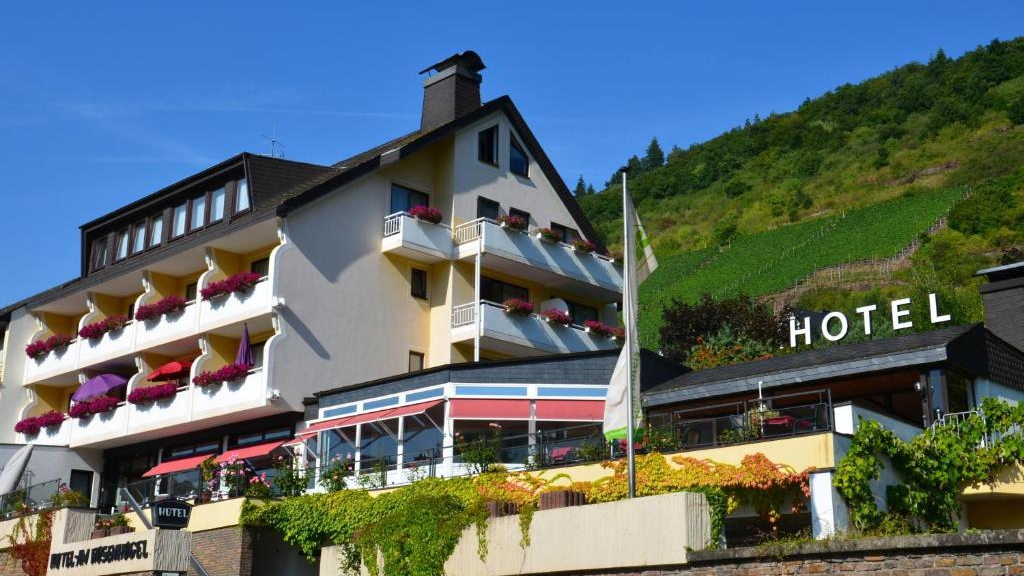
A family-run hotel in a bigger town such as Cochem gives you a reception, a restaurant and often a lift. A winery gives you the wine, the quiet and a host who knows which path has the best view. Plenty of people do both: a few nights in town, a few on a wine estate.
- want to taste and buy wine directly from the producer
- travel by car or bike and like quiet villages
- are staying at least two or three nights
- value personal contact and local tips
- only stay one night (surcharges or minimum stays are common)
- need a 24-hour reception or a lift
- want a wide choice of restaurants in the evening
- arrive late – many small wineries have fixed check-in times
Straußwirtschaft – the winemakers’ seasonal taverns
A Straußwirtschaft is a pop-up tavern that a winemaker opens on their own premises. The name comes from “Strauß”, a broom or bunch of greenery hung by the gate when it’s open. The rules are strict: only the estate’s own wines may be served, the food has to be simple – cheese, sausage, Flammkuchen, open sandwiches – and opening is limited to a maximum of four months a year, in one or two blocks. That’s why the dates move from year to year, and the sign at the gate is often the best information you’ll get.
If you’re staying at a winery, a Straußwirtschaft is the easiest way to eat cheaply and locally. Ask your host which ones in the village are open right now – the neighbours always know.
Etiquette: buying wine, opening hours and cash
- Buy a case if you can. Tastings at a winemaker’s are often free or cheap if you buy afterwards. There’s no obligation, but it’s good manners to buy something if you’ve tried several wines free of charge.
- Phone or email ahead. Small wineries are family businesses – during the harvest in September–October, everyone is out in the vineyards. “Weinprobe nach Vereinbarung” means “tastings by appointment”.
- Carry cash. Card payments have become more common, but in rural wine taverns and Straußwirtschaften cash can still be needed.
- Feel free to spit. A spittoon is completely acceptable, especially if you’re driving. Germany’s drink-drive limit is 0.5 per mille (50 mg of alcohol per 100 ml of blood).
- Check the opening days. Many wine taverns are closed on Sundays and Mondays; look at the winery’s own website.
Taking wine home to the UK
Bringing wine back to Great Britain (England, Scotland and Wales) from Germany, each traveller aged 17 or over has a duty-free allowance of 18 litres of wine, still or sparkling – that’s 24 standard bottles – plus 42 litres of beer or cider. Spirits and other drinks over 22% have a separate 4-litre allowance, and fortified wines such as port or sherry fall under a 9-litre allowance for other drinks up to 22%.
Go over the wine allowance – even by a single litre – and you pay tax and duty on the whole amount, not just the excess. Anything above the allowance must be declared, either online before you travel or at the border; undeclared goods can be seized. Northern Ireland has its own rules, and if you’re heading home to the US or elsewhere, check your own customs authority before you fill the boot.
If you’d like the winery to ship wine to you in the UK, excise duty is charged on alcohol sent from abroad – whether you bought it or it was a gift – along with customs duty and usually VAT, collected by the delivery company before it hands over the parcel. Ask the winery whether it ships to the UK at all. The simplest option is to load the car yourself.
If you’re flying home, your airline’s checked-baggage rules apply; wrap the bottles in protective sleeves or buy a case with bottle inserts at the winery. When it’s nicest to go – and when everything is booked up – is covered in our guide to the best time to visit the Moselle.
FAQ: staying at a winery on the Moselle
How much does it cost to stay at a winery in the Moselle Valley?
As examples, Dr. Loosen in Bernkastel-Kues quotes approx. €150 for a double room, and von Nell in Trier from approx. €115 a night for a flat for two (minimum four nights). Simpler guest rooms at small family wineries are often cheaper; large houses for groups work out cheap per person. Add the local visitor tax.
Is a wine tasting included when you stay at a winery?
Not automatically. Packages often include a tasting and a welcome glass, and almost every winery will arrange a tasting for its guests if you ask. If you book only the room, ask when you book.
How much wine can I bring back to the UK from Germany?
Into Great Britain, the duty-free allowance is 18 litres of still or sparkling wine per person aged 17 or over – 24 standard bottles. If you exceed it you pay duty and tax on the whole amount, so declare it. Check GOV.UK for the current rules before you travel.
Which village is best to stay in?
Bernkastel-Kues if you want restaurants and boats within walking distance; Ürzig, Zeltingen-Rachtig or Piesport for peace and quiet on the Middle Moselle; and Ediger-Eller or Bremm for the steep terraces near Cochem.
Can I stay just one night?
Often, but expect a surcharge or a minimum stay. Holiday flats frequently require two to four nights. Cyclists can filter for Bett+Bike in the visitmosel.de accommodation search – those places accept one-night stays.
What is a Straußwirtschaft?
A seasonal tavern at a winery serving only the estate’s own wines and simple food, for no more than four months a year. A broom or wreath of greenery by the gate means it’s open.
- visitmosel.de – Unterkünfte suchen & buchen – accommodation search, filters, Bett+Bike
- visitmosel.de – Zu Gast im Weingut – package contents, 2026 price, visitor tax
- visitmosel.de – Vinotheken & Weingüter – approx. 3,000 winegrowers on the Moselle, Saar and Ruwer
- Weingut von Nell – holiday flat, price, minimum stay, motorhome pitch, Weinstube
- Weingut Dr. Loosen – Gästezimmer and English version – seven rooms, prices, surcharge
- Wein- und Gästehaus Erbes-Henn – guest rooms, breakfast, terrace, bistro
- Weingut C.A. Haussmann – flats in an 1896 Art Nouveau villa
- Weingut Lütz – holiday flats and guest rooms in Pünderich
- Weingut Walter J. Oster – flats and houses in Ediger-Eller, packages
- GOV.UK – Bringing goods into Great Britain – alcohol allowances, minimum age 17, duty on the whole amount if exceeded, declaring
- GOV.UK – Tax and duty on goods sent from abroad – excise duty, customs duty and VAT on alcohol sent to the UK
- Wikipedia (de) – Straußwirtschaft – rules and origin of the name (supporting source)
Last updated: October 2026. Facts checked against the sources above; prices and opening hours may change.