
Things to Do in Metz – Cathedral, Pompidou and the Moselle
This article contains affiliate links to GetYourGuide. If you book through them we may earn a small commission, at no extra cost to you.
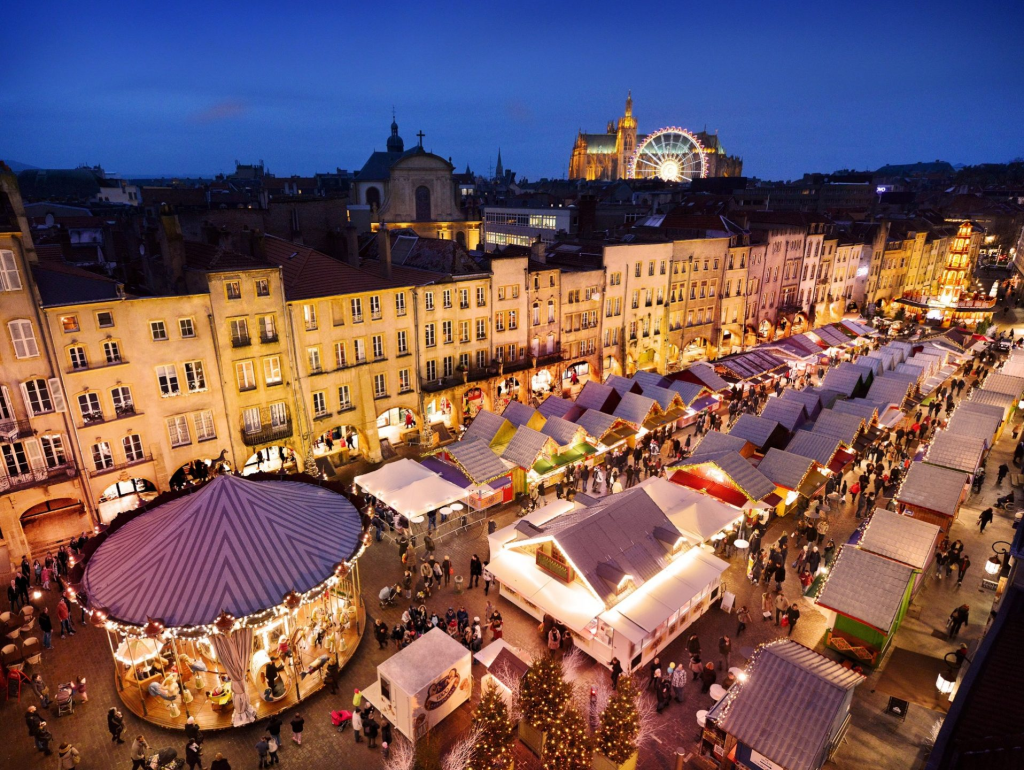
Metz sits in French Lorraine on the same river that later winds past Trier and Cochem – here it is the Moselle rather than the Mosel. The city has a Gothic cathedral with one of Europe’s largest expanses of stained glass, a Centre Pompidou beneath a rippling timber roof and an entire district built under the German Kaiser. These are the best things to do in Metz, and at roughly an hour and a half’s drive from Trier, it makes an easy day trip or a stop in its own right on a Moselle Valley holiday.
Three experiences we recommend
There aren’t many guided tours in Metz – these are the ones best suited to a first visit, plus a full day in neighbouring Luxembourg.
 Small-group walking tour of Metz legends
Three hours through the old town, focusing on the city’s legends and folk tales. A small group, so there’s time for questions.
Check prices & dates →
 Metz without detours – with a professional guide
A no-nonsense tour of the highlights with a professional guide – ideal if you only have a few hours in Metz and want to understand what you’re looking at.
Check prices & dates →
Full day
 Luxembourg: nature, history and castles day tour
The capital, castles and countryside in a single day. A good add-on if you’re staying in Metz or Trier and want to see the third Moselle country.
Check prices & dates →
Metz and the Moselle Valley – same river, different country
It’s easy to think of the Moselle Valley as a purely German affair, but the river actually starts in France. The Moselle rises at the Col de Bussang in the Vosges and flows for around 300 km (about 190 miles) through Lorraine – past Épinal, Toul and Metz – before reaching the border at Schengen, where France, Luxembourg and Germany meet. For the next stretch it forms the border between Luxembourg and Germany. Just beyond Wasserbillig it becomes entirely German, passing Konz and Trier before cutting through steep vineyards all the way to the Rhine at Koblenz.
Be realistic about what to expect: Metz is no terraced wine village like Bernkastel or Zell. It’s a French city with a garrison past and big-city architecture. There is wine here, though – the small Moselle AOC is grown around Metz, and out on the river you can sip a glass from the local slopes. The family resemblance to the German valley shows in the cityscape, too. Metz was German from 1871 to 1918, and that period left behind a whole district, a Protestant church on an island and a railway station that looks like a fortress.
If you’re driving the Moselle from Koblenz towards Trier, Metz is the natural turning point to the south. Use our Moselle Valley map to plan the route, and allow a full day in Metz – two if you also want time for the Centre Pompidou and a boat trip.
Saint-Étienne Cathedral – “the Good Lord’s Lantern”
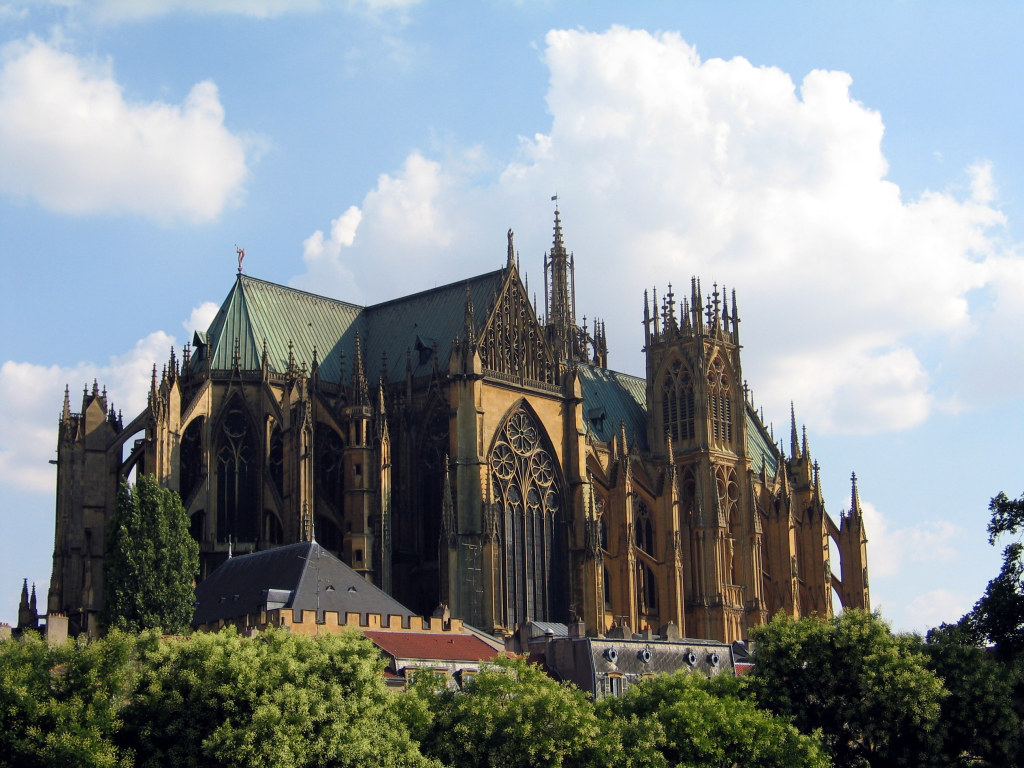
The cathedral is the reason many people come to Metz at all. The Gothic church is built of golden Jaumont limestone, which makes the whole building glow in the afternoon sun, and the nave rises to around 42 metres – one of the tallest in France. But it’s the light inside you’ll remember. The cathedral has some 6,500 m² of stained glass, according to the tourist office the largest such expanse in Europe, and its nickname, “La Lanterne du Bon Dieu” – the Good Lord’s Lantern – is no exaggeration on a sunny morning.
The windows span seven centuries. In the west front is the work of Hermann von Münster from the late 14th century, followed by Renaissance glass by Valentin Bousch and his workshop, and then a cross-section of 20th-century art: Jacques Villon’s vivid windows in the Chapel of the Holy Sacrament (1957), Roger Bissière’s mosaic-like glass above the side entrances and – for most visitors the highlight – Marc Chagall’s windows from the 1960s in the north transept and the ambulatory. Chagall’s scenes come from the Old Testament, in his trademark deep blues and clear reds. Among the newest additions is glass by the South Korean artist Kimsooja.
According to the tourist office, the cathedral is open daily from 8am to 6pm in 2026. You can wander the nave freely, but avoid service times if you want to walk around. The crypt and treasury are visited separately – check times on site or at the tourist office next door.
Centre Pompidou-Metz – modern art under a timber roof
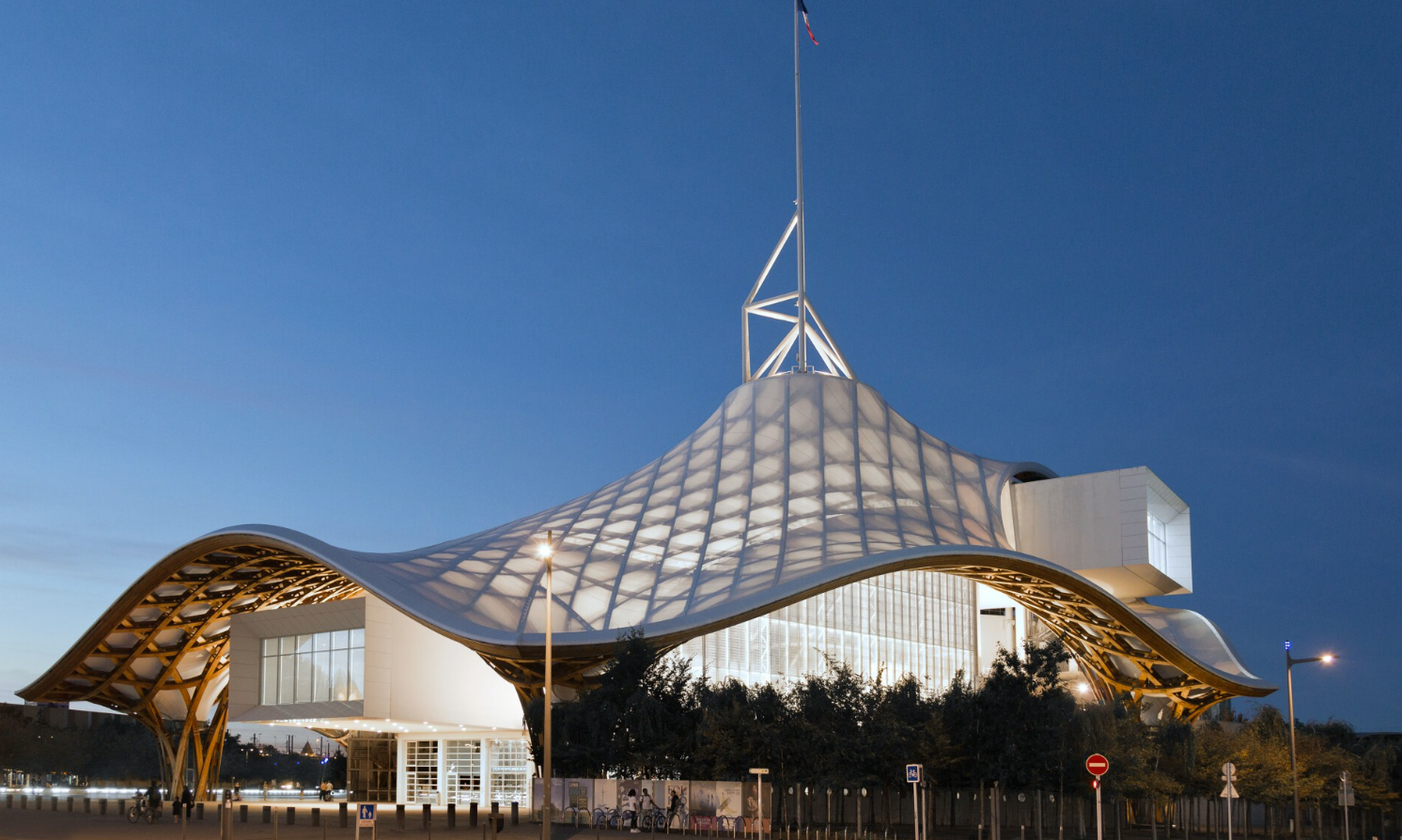
A few minutes’ walk from the railway station stands Centre Pompidou-Metz, an offshoot of the Centre Pompidou in Paris that opened in 2010. It was designed by Japanese architect Shigeru Ban with Frenchman Jean de Gastines, and it’s the roof that stops people in their tracks: a hexagonal structure of glued laminated timber, roughly 90 metres across and covering 8,000 m², clad in a pale membrane that glows at dusk. Beneath it, three 80-metre galleries are stacked at different angles, and the spire reaches 77 metres – a nod to 1977, the year the Pompidou Centre in Paris opened.
There’s no permanent collection in the Paris sense; instead, large temporary exhibitions fill around 5,000 m² in total. In autumn 2026 the programme includes Marina Abramović (until 23 November) and, from 31 October, an exhibition on the naïve painter Séraphine Louis. Tickets cost roughly €7–14 depending on how many exhibitions you want to see, and visitors under 26 get in free.
Centre Pompidou-Metz is closed on Tuesdays (and on 1 May). In winter, from 1 November to 31 March, it opens 10am–6pm on the other days. If your day trip to Metz falls on a Tuesday, focus on the cathedral and the old town instead.
Place Saint-Louis, Outre-Seille and the Porte des Allemands
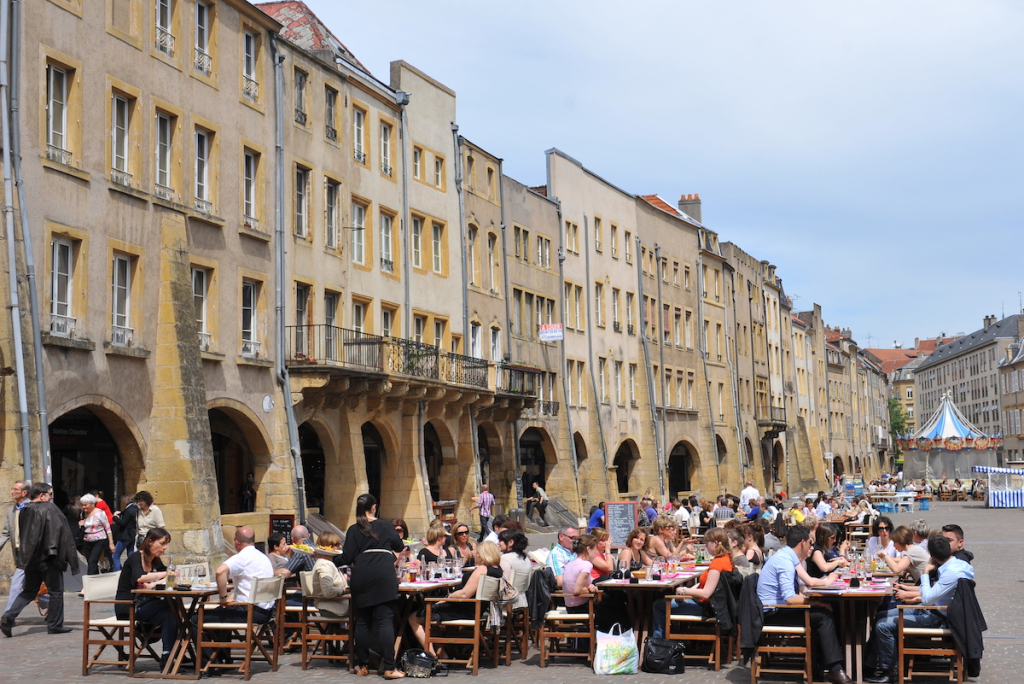
Walk downhill from the cathedral and you’ll come to Place Saint-Louis, the most photographed square in Metz. Its tall yellow houses rest on medieval arcades where money changers sat at their stone benches when Metz was an independent city republic. Today the arcades are lined with cafés, and on a sunny day the square is the city’s living room.
Carry on east into the Outre-Seille district – literally “beyond the Seille” – with narrow streets and a more laid-back feel. At the far end stands the Porte des Allemands, the Germans’ Gate: a small castle with battlements and towers spanning the River Seille. It was built in stages between the 13th and 15th centuries, and you can still see the scars of old battles in its walls. Today it hosts exhibitions. On the way you’ll pass the church of Saint-Maximin, which has stained glass by Jean Cocteau – a little gem most tourists miss.
Keep an eye out, too, for the Graoully, the dragon that serves as the city’s mascot. Legend has it that the first bishop of Metz defeated it, and the dragon now “lives” in the narrow rue Taison. It pops up everywhere – on souvenirs, signs and in the stories guides love to tell.
The Moselle islands: Temple Neuf, Jardin des Amours and the Plan d’Eau
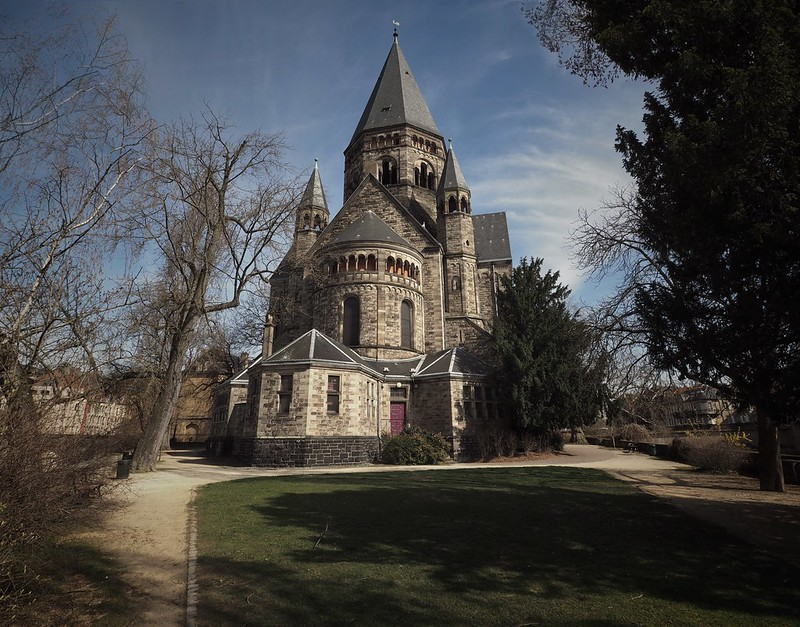
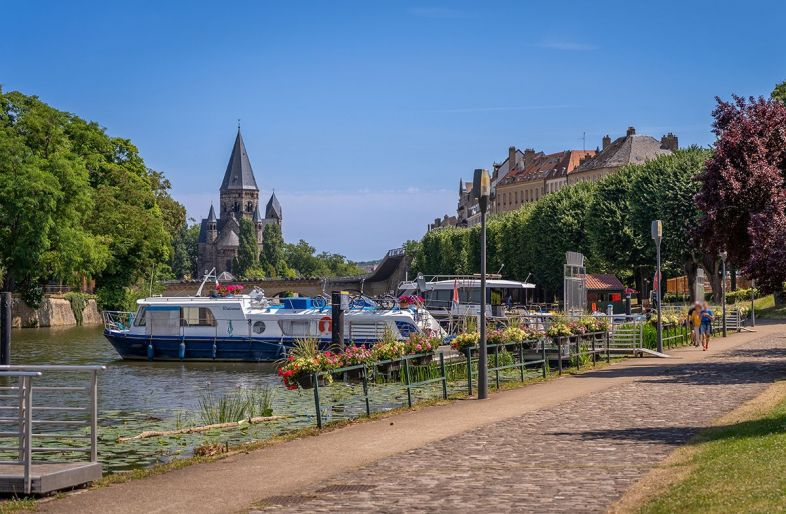
It’s on the islands in the Moselle that the link with the wider Moselle Valley is most obvious. On the island of Petit-Saulcy stands the Temple Neuf, a neo-Romanesque Protestant church built in 1901–1904 during the German period. Its grey stone and pointed towers look more Rhineland than Lorraine, and that was exactly the point. The church is reflected in the water like a fairytale castle and is best seen from the Moyen Pont bridge.
Behind the church, on the south-western tip of the island, lies the little Jardin des Amours – the Garden of Love – with paths out to the point and views over the river. From here it’s a few minutes’ walk to Place de la Comédie and the Opéra-Théâtre of 1732, according to the tourist office the oldest working theatre in France.
A little further south is the Plan d’Eau, a dammed stretch of the Moselle right in town with promenades, lawns and the romantic Jardins des Régates. Sightseeing boats leave from here, including solar-powered boats for shorter trips and aperitif cruises where you can try a local Moselle wine. It’s a gentle way to see the city from the water – and a nice contrast if you’ve already done a river cruise on the German Moselle. In early September the sky here fills with hot-air balloons during the Montgolfiades.
The Imperial Quarter and Metz railway station
Metz became German after the Franco-Prussian War in 1871, and around 1900, under Kaiser Wilhelm II, the new rulers set out to show who was in charge. The result is the Quartier Impérial, a brand-new district south of the old town with broad avenues, villas and grand public buildings in a mix of neo-Romanesque, Jugendstil and German historicism. The district was completed between the wars, by which time Metz was French again.
Its crown jewel is the railway station, Gare de Metz-Ville, built in 1905–1908 in Rhenish neo-Romanesque style to designs by Berlin architect Jürgen Kröger. It looks more like a castle or a church than a station, the clock tower is almost 40 metres high, and there’s even a lounge that was reserved for the Kaiser. The public has voted it “France’s most beautiful station” three times. Arrive by train and your sightseeing starts on the platform.
Metz is not a World Heritage Site. The “Metz Royale et Impériale” bid – combining the medieval and royal city with the German Imperial Quarter – has been on France’s UNESCO Tentative List since 2014, but no decision on inscription has been made. Metz was, however, named a UNESCO Creative City of Music in 2019, which is a different thing.
The covered market and mirabelles – Metz on a plate
Right next to the cathedral is the covered market, the Marché Couvert, and the building has an unusual history. Work began in 1785 on a new bishop’s palace, but the Revolution halted construction, and in 1833 it became the city’s market hall instead. Today it sells fruit, vegetables, cheese, charcuterie and regional wines. A good plan is to have lunch in the hall and order a plate of local specialities. The market is open Tuesday to Saturday, roughly 7am–5.30pm, and closed on Sundays and Mondays.
The fruit Lorraine is proudest of is the mirabelle, a small yellow plum with protected status (IGP Mirabelle de Lorraine). Most of the world’s mirabelles are grown in the region, and the harvest runs for about six weeks from mid-August. That’s when you’ll find them fresh in the market, in tarts (tarte aux mirabelles) and as a clear fruit brandy, eau-de-vie de mirabelle.
The harvest is celebrated with the Fêtes de la Mirabelle, usually held over the last two weekends of August. In 2026 the festival ran from 21 to 30 August, with a market on the Esplanade, the crowning of the Mirabelle Queen, a tart competition and a big night of concerts and fireworks at the Plan d’Eau. Dates for 2027 have not yet been published – keep an eye on metz.fr. If you’d like to catch wine festivals on the German side at the same time, see our guide to Moselle wine festivals.
Metz Christmas market
The photo at the top of this article says it all: during Advent, Metz becomes one of north-eastern France’s great Christmas cities. The 2026 Christmas market runs from Friday 20 November to Wednesday 30 December (closed on Christmas Day), with around 130 stalls spread across several squares in the centre, including Place Saint-Louis, Place Saint-Jacques, Place de la République, Place de la Comédie and Place d’Armes beside the cathedral. That’s also where you’ll find the big wheel, and this year an 81-metre observation tower has been announced too. In Square Boufflers, the Sentier des Lanternes is a lantern-lit trail.
Opening hours for 2026 have not yet been published. In 2025 the market was open roughly 11am–9pm Sunday to Thursday and until 10pm on Fridays and Saturdays, so expect something similar. An Advent weekend combines easily with the Christmas markets in Trier and Luxembourg – read more about the best time to visit the Moselle.
How to get to Metz
| From | How | Journey time (approx.) |
|---|---|---|
| Paris (Gare de l’Est) | Direct TGV | 1 hr 25 min |
| Luxembourg City | TER regional train, frequent on weekdays | 45–50 min |
| Luxembourg Airport (Findel) | Car | 45 min |
| Trier | Car, motorway via Luxembourg, approx. 95–105 km | 1 hr 15 min–1 hr 30 min |
| Saarbrücken | Car | 1 hr |
By air. Luxembourg Airport is the closest, about 45 minutes from Metz by car, and also handy for the German Moselle. From there you can pick up a hire car, or take public transport into Luxembourg City and catch a train on to Metz.
By train. Metz is an easy rail destination from the UK: take the Eurostar to Paris Gare du Nord, walk the short distance to Gare de l’Est, and a direct TGV gets you to Metz-Ville in just under an hour and a half. From Trier, the simplest route is to change in Luxembourg – allow a couple of hours in total depending on connections. Public transport in Luxembourg is free in second class, but only as far as the border; you’ll need a ticket for the French section.
By car. If you’re touring the Moselle Valley by car or motorhome, the easiest route from Trier is the motorway via Luxembourg. Diesel is often cheaper in Luxembourg, so many drivers fill up on the way. In Metz there are several multi-storey car parks near the cathedral and the station, and the old town is best explored on foot. Travelling in a motorhome? Read our Moselle motorhome guide before heading into a French city centre.
Combining Metz with Luxembourg and the German Moselle
Metz, Luxembourg and Trier form a triangle with no side longer than about an hour and a half, which makes it easy to plan a three-country trip along a single river. A suggested four-to-five-day itinerary:
- Days 1–2: Metz. The cathedral, Place Saint-Louis and Outre-Seille on day one; the Centre Pompidou, the Imperial Quarter and a boat trip on the Moselle on day two.
- Day 3: Luxembourg. Drive north or take the train. The capital, with its casemates and old town, easily fills a day – or join a guided day tour out to the castles.
- Day 4: Schengen and the wine route. Follow the Moselle from the tri-border point at Schengen along the Luxembourg wine route towards Trier.
- Day 5 onwards: the German Moselle. Trier and the Porta Nigra, then on to Bernkastel-Kues, Zell and Cochem, where the vineyards really take over.
Want to compare more places along the river before you decide? Our overview of towns in the Moselle Valley will help you choose.
Where to stay in Metz
Stay central – everything worth seeing in Metz is within walking distance of the cathedral. Two hotels for different budgets:
Hôtel de la Cathédrale
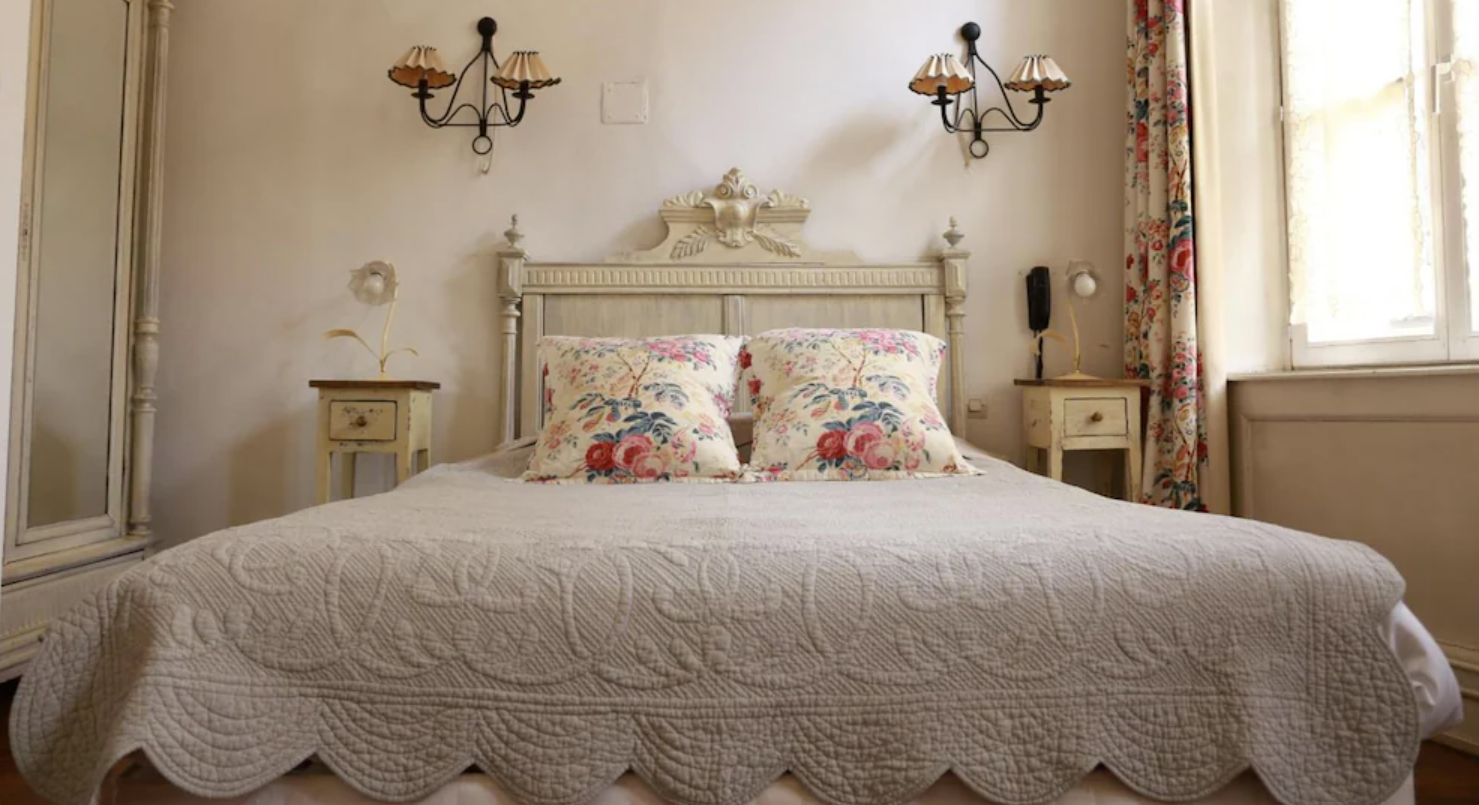
A three-star hotel with 30 rooms in a 17th-century house on Place de Chambre, opposite the cathedral. The rooms are traditionally furnished with antiques, and the location is hard to beat if you want to see the cathedral in the morning light before the crowds arrive. Reception is staffed 24 hours. Book through the hotel’s own website, hotelcathedrale-metz.fr.
ibis Metz Centre Cathédrale
A simpler and usually cheaper option on rue Chambière in the Pontiffroy district, close to the Moselle and under ten minutes’ walk from the cathedral. The hotel holds France’s Accueil Vélo cycle-friendly label, with locked bike storage – useful if you’re following the Moselle cycle route – and has a restaurant and 24-hour reception.
Metz FAQs
Is Metz in the Moselle Valley?
Yes and no. Metz is on the Moselle – the same river that’s called the Mosel in Germany – but it’s in France and lacks the steep vineyards most people associate with the Moselle Valley. From Metz the river flows north to Schengen and then on through Luxembourg and Germany to Koblenz.
How far is Metz from Trier?
Around 95–105 km (60–65 miles) depending on the route, which takes 1 hr 15 min–1 hr 30 min by car via Luxembourg. By train you’ll need to change in Luxembourg.
How many days do you need in Metz?
One full day is enough for the cathedral, Place Saint-Louis and a walk along the Moselle. With two days you can add Centre Pompidou-Metz, the Imperial Quarter and a boat trip without rushing.
Is Metz Cathedral free to visit?
You can visit the nave freely – according to the tourist office it’s open daily 8am–6pm in 2026. The crypt and treasury have separate visits, and guided tours need to be booked in advance.
Where are the Chagall windows in Metz?
In Saint-Étienne Cathedral, in the north transept and the ambulatory around the choir. The windows date from the 1960s and depict scenes from the Old Testament.
When is the Metz Christmas market in 2026?
From 20 November to 30 December 2026, closed on 25 December. Opening hours will be published by the city closer to the start.
- Inspire Metz tourist office: the cathedral’s stained glass – 6,500 m², Chagall (1962–69), artists, 2026 opening hours
- Inspire Metz – 2026 press kit (French) – nave height, Porte des Allemands, Place Saint-Louis, the station, Opéra-Théâtre, boat trips, journey times
- Inspire Metz – Covered market – history and opening hours
- Centre Pompidou-Metz – architecture – roof, galleries, spire, floor area, opening year
- Centre Pompidou-Metz – opening hours and prices – winter hours, Tuesday closing, ticket levels
- UNESCO – Tentative List: Metz Royale et Impériale – on the Tentative List since 2014
- Ville de Metz – Fêtes de la Mirabelle 2026 and summer round-up – dates and programme
- Ville de Metz – Marché de Noël 2026 – dates, number of stalls, big wheel, observation tower
- Hôtel de la Cathédrale – address, number of rooms, age of the building
- France Vélo Tourisme – ibis Metz Centre Cathédrale – location and Accueil Vélo label
- Frontaliers Grand Est – TER Metz–Luxembourg – free public transport in Luxembourg applies only up to the border
- Wikipedia (supporting): Moselle (rivière) – source, course and length in France
Last updated: October 2026. Facts checked against the sources above; prices and opening hours may change.